

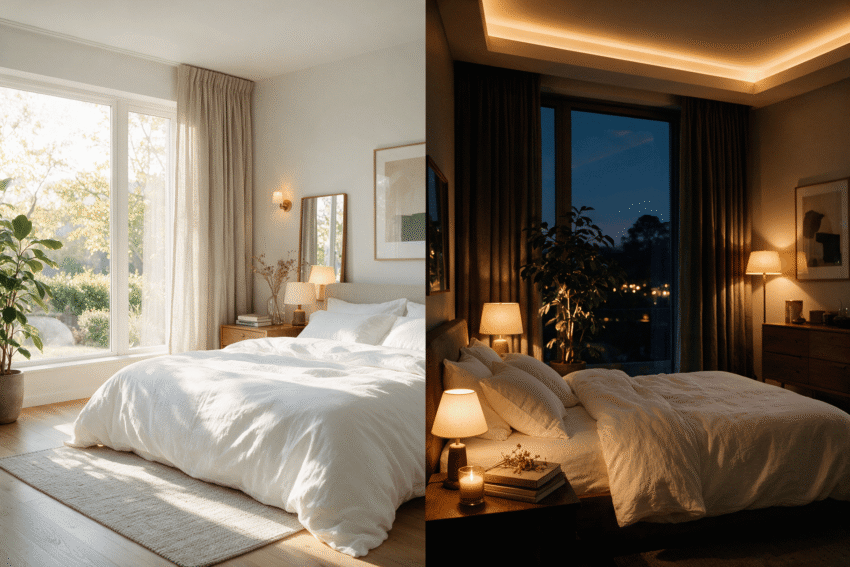
Most of us spend the majority of our day indoors, under light that never changes. The same bright white glow at 8 am, at 4 pm and at 11 pm. It feels normal, but it is very different from the light our bodies evolved with.
Outdoors, daylight shifts constantly. Mornings are bright and slightly cool, afternoons are intense, and evenings fade into warm amber tones before darkness. Human-centric lighting brings some of that natural rhythm back indoors.
What Is Human-Centric Lighting?
Human-centric lighting is an approach to lighting design that considers how light affects people, not just how well it lets them see. It focuses on three qualities of light: brightness, colour temperature and timing.
Instead of fixed light, a human-centric system gradually adjusts through the day. It typically offers brighter, cooler white light in the morning and early afternoon, then shifts to softer, warmer light in the evening. The aim is to support the body’s natural daily cycle, often called the circadian rhythm.
Why Light Affects How We Feel
Light does more than help us see. Research into circadian biology suggests that bright, blue-enriched light during the day is linked with alertness, while lower, warmer light in the evening is more compatible with winding down before sleep.
Many people notice this without thinking about it. A bright, cool-lit office can feel energising in the morning but harsh at night. A warm, dim room feels relaxing after dinner but can make it hard to concentrate during work hours. Human-centric lighting simply plans for these differences instead of ignoring them.
Where Human-Centric Lighting Makes a Difference
Homes. Bedrooms, living rooms and home offices benefit the most. Morning scenes can help a household start the day with brighter light, while evening scenes create a calmer atmosphere for family time and rest.
Offices. Workspaces lit with steady, flat light for nine hours can feel tiring. Lighting that follows the day may help teams feel more comfortable and engaged, especially in spaces with limited natural daylight.
Healthcare and wellness spaces. Hospitals, clinics, senior living facilities and spas are increasingly exploring human-centric lighting to create environments that feel calmer and more natural for patients, residents and staff.
Education. Classrooms and study areas can use brighter settings for focused work and softer settings for reading or quiet activities.
How Human-Centric Lighting Works
A human-centric system relies on two key components.
The first is tunable white fixtures. These contain LEDs that can shift smoothly between warm and cool white, usually somewhere between around 2700K and 6500K, while maintaining good colour quality.
The second is a lighting control system. Using protocols such as DALI or KNX, the system changes brightness and colour temperature automatically according to a schedule. Users can still override it, for example to set a relaxing scene for a movie or a brighter one for cleaning.
The best installations feel effortless. The change in light is gradual enough that occupants rarely notice it happening; they simply notice that the space feels right at different times of the day.
Planning Human-Centric Lighting the Right Way
Human-centric lighting works best when it is planned early, during the design stage of a home or building. Fixture positions, wiring for control and the choice of tunable fittings are much easier to coordinate before ceilings and walls are finished.
It is also important to work with specialists who understand both lighting design and control systems. Poorly specified fixtures can produce uneven colour or flicker, which defeats the purpose. Experienced teams such as Brightmatic plan human-centric lighting as part of the overall lighting design, so that comfort, aesthetics and control work together.
A More Natural Way to Light Our Spaces
As we spend more time indoors, the quality of artificial light matters more than ever. Human-centric lighting is not about adding more light, but about offering the right light at the right time. For homes, workplaces and healthcare spaces alike, it is a thoughtful step towards interiors that feel calmer, more comfortable and more in tune with the people who use them.