
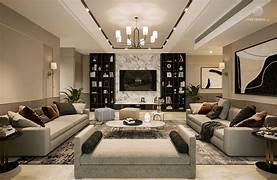
A living room interior design service provider helps homeowners create welcoming, comfortable, and functional living spaces that reflect their lifestyle and personal design preferences. As one of the most frequently used areas of a home, the living room needs to accommodate relaxation, entertainment, social gatherings, and everyday activities.
Professional designers can combine space planning, furniture, lighting, storage, materials, and decorative elements to create a cohesive interior.
Benefits of Hiring a Living Room Interior Design Service Provider
A professional living room interior design service provider can offer:
- Customized space planning
- Furniture selection
- Built-in storage
- Lighting design
- TV unit solutions
- Decorative wall treatments
- Material coordination
- Project execution
The objective is to balance aesthetics with practical everyday functionality.
Living Room Space Planning
A good layout should provide comfortable movement while creating clearly defined areas for different activities.
Designers may plan spaces for:
- Sofa seating
- Television viewing
- Conversation
- Reading
- Display
- Storage
Furniture should be positioned according to the room’s dimensions, doors, windows, electrical points, and circulation paths.
Customized Living Room Furniture
Customized furniture can help homeowners make better use of available space.
Popular solutions include:
- TV units
- Entertainment consoles
- Sofas
- Coffee tables
- Display cabinets
- Bookshelves
- Storage units
- Side tables
Built-in furniture can be designed around architectural features and specific storage requirements.
MDF vs Plywood for Living Room Furniture
MDF vs Plywood is an important consideration when selecting materials for customized living room furniture.
MDF provides a smooth, consistent surface and can be suitable for selected decorative furniture and cabinetry applications. Plywood is manufactured from layered wood veneers and is commonly chosen for applications where strength and dimensional stability are important.
The appropriate material depends on the furniture’s intended use, dimensions, finish, expected load, environmental conditions, durability requirements, and budget.
Lighting Design
Lighting can dramatically influence the appearance and atmosphere of a living room.
Designers may combine:
- Recessed ceiling lights
- Cove lighting
- Pendant fixtures
- Floor lamps
- Wall lights
- Accent lighting
Layered lighting allows homeowners to create different moods while ensuring sufficient illumination.
Storage Solutions
Living rooms often require storage for books, electronics, décor, documents, and everyday items.
Solutions can include:
- Built-in cabinets
- Floating shelves
- Display units
- Closed storage
- TV cabinets
- Full-height shelving
A combination of open and closed storage can keep the room organized while providing opportunities for displaying decorative objects.
Colors, Textures, and Finishes
Living room interiors can combine:
- Veneer
- Laminates
- MDF
- Plywood
- Glass
- Metal
- Stone
- Upholstery
Colors and textures should complement the home’s overall design. Accent walls, artwork, rugs, curtains, and decorative accessories can add character without creating visual clutter.
Creating a Comfortable Living Environment
Comfort should remain central to living room design. Sofa dimensions, seating arrangements, table heights, lighting, ventilation, and circulation should all be considered.
For smaller homes, multifunctional furniture and integrated storage can help maintain an open and organized appearance.
Choosing a Living Room Interior Design Service Provider
Before selecting a provider, homeowners should evaluate:
- Design portfolio
- Relevant project experience
- Space-planning skills
- Furniture customization
- Material expertise
- Manufacturing capabilities
- Installation services
- Project management
- Quality control
- Budget transparency
A clear proposal should define the design scope, materials, furniture, execution schedule, and costs.
Conclusion
A living room interior design service provider can transform a basic living area into a stylish, comfortable, and functional space. Through thoughtful planning, customized furniture, efficient storage, layered lighting, and coordinated finishes, homeowners can create interiors that support everyday living while expressing their personal style.
The considerations involved in MDF vs Plywood can also help homeowners make informed decisions when selecting materials for living room furniture and cabinetry. Choosing materials according to application, durability, finish, maintenance, and budget can contribute to a practical and long-lasting interior.