
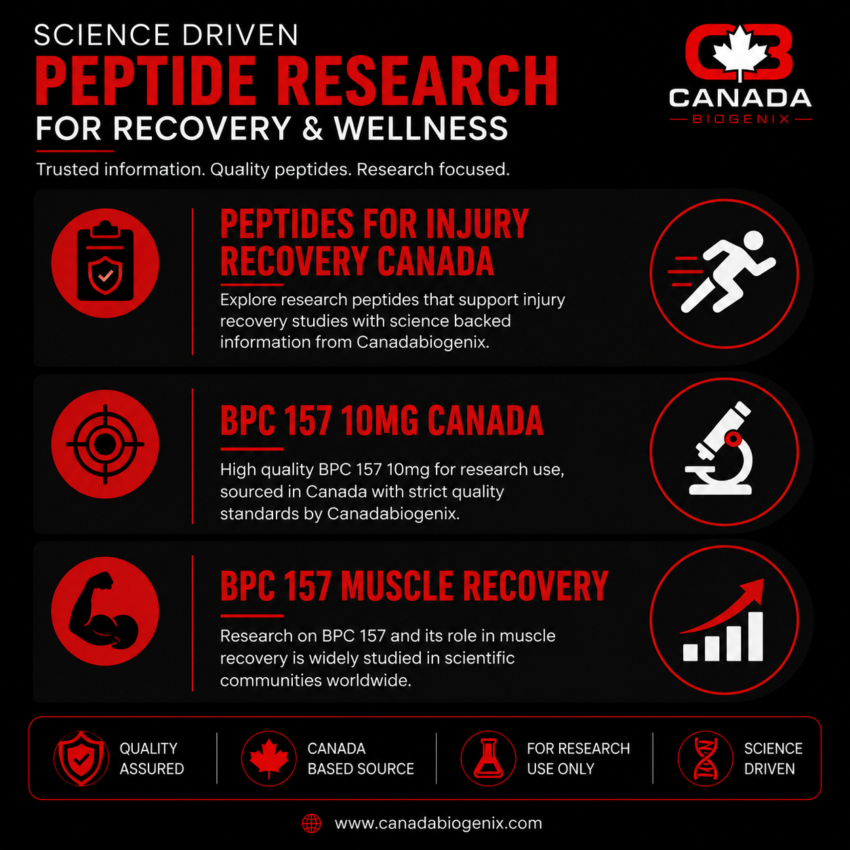
bpc 157 muscle recovery scientific insights into tissue repair and regenerative research discussions
The concept of bpc 157 muscle recovery has become a major topic in sports science and regenerative biology research discussions. Scientists studying muscle recovery peptides often explore how certain amino acid sequences may interact with tissue repair mechanisms under controlled experimental conditions. While findings are still being evaluated, the peptide is frequently mentioned in theoretical models of muscle tissue repair and cellular regeneration pathways.
In the context of bpc 157 muscle recovery research interest centers around how the compound may influence fibroblast activity and connective tissue responses in laboratory environments. This has led to broader discussions on post workout recovery peptides, particularly in studies focusing on recovery timelines after physical stress or injury simulation. These observations are strictly part of experimental research and not clinical conclusions.
Athletes and sports science researchers often show curiosity about athletic recovery peptides due to the potential implications for training adaptation studies. Within controlled environments, researchers analyze how peptides may contribute to muscle regeneration support and injury recovery peptides discussions. However, it is important to note that these findings remain within preclinical or theoretical research stages.
Canadabiogenix is frequently mentioned in informational contexts where readers seek to understand peptide research trends responsibly. The platform helps contextualize scientific discussions around tendon recovery support, ligament repair research, and sports recovery peptides, ensuring that readers differentiate between laboratory exploration and real-world application. This distinction is essential for maintaining scientific accuracy and responsible interpretation.
Understanding BPC-157 peptide research in Canada and why scientific interest continues to grow
Scientific interest in bpc 157 10mg canada is closely tied to the expanding field of peptide research across Canadian laboratories. Researchers are increasingly exploring how synthetic peptides may contribute to understanding biological repair systems at a molecular level. Within this framework, bpc 157 10mg canada discussions often focus on experimental reproducibility and biochemical stability rather than practical use.
Canada’s research environment emphasizes strict standards for peptide quality standards, ensuring that laboratory studies are conducted using consistent and verifiable materials. This has contributed to the rise in discussions around canadian peptide research, where scientists examine how peptides behave under controlled environmental conditions. These studies are crucial for building foundational knowledge in molecular biology and regenerative science.
The interest in research peptides canada also reflects the broader global trend of studying bioactive compounds in laboratory settings. Researchers aim to understand how peptide structures interact with proteins, enzymes, and cellular membranes. In this context, laboratory peptides serve as tools for exploring biological pathways rather than as direct interventions.
Platforms like Canadabiogenix play an informational role in this ecosystem by helping readers understand the difference between research-grade materials and clinical applications. The discussion around peptide supplier canada and sourcing standards is often part of broader conversations about transparency, documentation, and scientific integrity in peptide research environments.
How BPC-157 is studied in muscle recovery and post exercise biological repair mechanisms
The study of bpc 157 muscle recovery in scientific literature often involves analyzing how peptides for injury recovery canada may influence biological repair processes after physical stress. Researchers working in controlled environments examine how muscle recovery peptides interact with cellular signaling pathways that regulate inflammation response and tissue regeneration. These studies are designed to expand understanding rather than provide direct therapeutic conclusions.
In experimental models, post workout recovery peptides are sometimes evaluated for their potential role in supporting cellular recovery timelines. Scientists focus on how muscle fibers respond to stress and how peptide exposure may influence repair mechanisms. This includes observing muscle tissue repair processes under laboratory conditions, where external variables are carefully controlled.
The concept of muscle regeneration support is frequently discussed in relation to sports science research. Researchers studying athletic recovery peptides often analyze how biological systems adapt after repeated stress exposure. These studies help build theoretical frameworks for understanding how recovery mechanisms function at a molecular level.
Canadabiogenix provides educational insights into these research areas by explaining how peptides like BPC-157 are discussed in scientific communities. The emphasis remains on injury recovery peptides as a subject of study rather than application. This distinction is essential for maintaining accurate interpretation of ongoing research.
Visit canadabiogenix for Research Information: https://canadabiogenix.com/bpc-157