
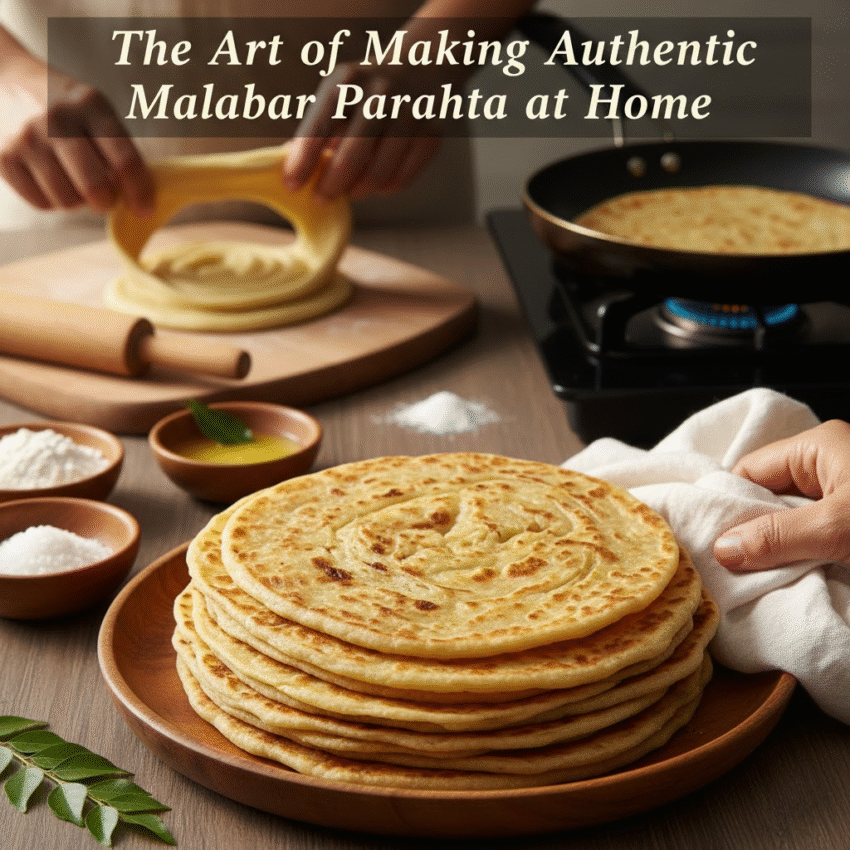
Malabar Paratha, also known as Kerala Parotta, is a popular South Indian flaky, layered flatbread well-loved for its soft texture and crispy edges. Making Malabar Paratha at home may seem challenging, but with the right technique and ingredients, anyone can master this art and enjoy restaurant-style parathas in their own kitchen.
What Makes Malabar Paratha Unique?
Unlike other parathas made with whole wheat flour, Malabar Paratha is traditionally prepared using all-purpose flour (maida). The dough is kneaded to a soft, elastic texture and rested multiple times, allowing the gluten to relax which makes the paratha easier to stretch and roll out.
The signature flaky layers are achieved by spreading oil or ghee on the rolled dough, folding it into coils, and then rolling again into thin discs before cooking.
Ingredients and Tools Needed
-
All-purpose flour (maida)
-
Salt and sugar for seasoning
-
Oil or ghee for dough and layering
-
Lukewarm water for kneading
-
Rolling pin and board
-
Non-stick skillet or tava for cooking
Preparing The Dough
Begin by mixing all-purpose flour with salt and a little sugar in a bowl. Gradually add lukewarm water and knead until you get a soft but not sticky dough with good elasticity. Knead for around 12-15 minutes to develop gluten. Then cover and let it rest for at least 30 minutes to an hour—this resting phase is crucial for softness.
Dividing and Layering
Divide the rested dough into equal-sized balls. Roll each ball into a thin circle and spread a thin layer of oil or ghee. Then fold the dough with pleats or roll it into a spiral coil and flatten it again gently into discs. This technique helps in forming the distinct flaky layers upon cooking.
Cooking The Perfect Malabar Paratha
Heat a skillet over medium-high flame. Cook the paratha on both sides until golden brown, applying a small amount of oil or ghee to enhance crispness and flavor. Press lightly with a spatula to get evenly cooked layers. Once out of the pan, gently scrunch the paratha with a clean towel to separate the flaky layers further and keep it warm wrapped in foil or a cloth.
Serving Suggestions
Malabar Paratha pairs beautifully with vegetable or meat curries like chicken curry, vegetable kurma, or lentil dal. It can also be enjoyed with simple sides like sugar or chutneys for breakfast or anytime snack.
Tips For Success
-
Use all-purpose flour for soft flaky layers rather than whole wheat flour.
-
Do not skip the resting phases; rested dough yields better elasticity and flakiness.
-
Apply enough oil or ghee between layers to prevent sticking and help crispiness.
-
Roll the dough evenly and thinly to get maximum layers.
-
Handle cooked parathas gently to preserve the layers and softness.
Malabar Paratha may require patience and practice but is worth the effort. Once you get the dough right, the rolling technique perfected, and the cooking technique on point, you’ll be rewarded with a soft, flaky, and utterly delicious flatbread that’s a definite crowd-pleaser at your dining table. Enjoy the rich taste and texture of this South Indian classic homemade.