
The logo is an integral element of the brand. Often, they are the first thing individuals see in a business. A good Logo increases a company’s recognition, visibility, and trust with customers. Whether you’re starting your own company or a big brand, all of them require a logo to represent them.
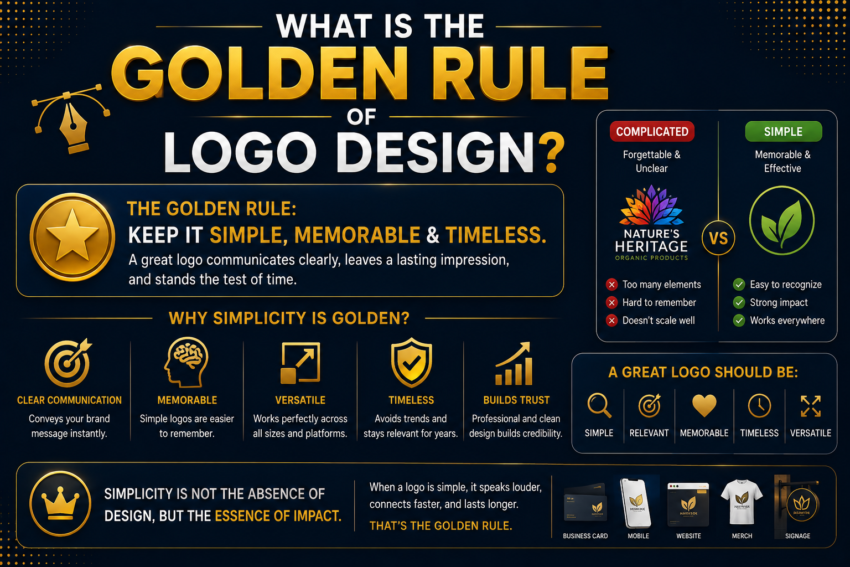
However, what makes a good logo? There’s one golden rule that designers follow in the field of logo design. Making logos clear, memorable and effective, this rule gives a helping hand. By understanding this rule, companies can enhance their brand and leave a lasting impression on customers.
Understanding the Golden Rule of Logo Design
Keep it simple: The golden guideline of logo design.
A simple logo is easy to recognize, easier to remember and easier to use on various platforms. Many of the world’s most widely-known logos are very simple. They don’t have many colors, shapes, or details. But rather, they present a clear message through their clean, professional design.
If the logo is basic, they will be able to understand and remember it rapidly. This makes it more effective for branding and marketing.
Why Simplicity Matters
Simplicity is a key as people will see hundreds of logos every day. A too-complicated logo is confusing and leaves viewers unable to remember the brand.
There are several advantages associated with using simple logos:
- Easy to recognize
- Easy to remember
- Professional appearance
- Optimizations for various n sizes improve performance.
- Design requires minimal effort and maintenance, yet exudes elegance and confidence.
A simple logo helps businesses convey their message without overwhelming their customers.
You can Create Awesome Logos!
A logo is an important symbol that should remain memorable long after it even leaves their gaze. Memorable logos may feature unique shapes, symbols, or typography and still be clean.
Take some of the world’s largest brands, for example. Their logos are simple and instantly recognizable to millions. When businesses and industries hire designers offering affordable logo services in Pakistan, the key criterion is that the logo be used across platforms, including websites, business cards, brochures, and other design elements.
To design a distinctive logo:
- Use distinctive design elements.
- Avoid unnecessary details.
- Think of the singleness of an idea for a visual.
- Maintain a simple, well-balanced design.
Relevance Is Important
The logo must reflect the business for which it is associated. The values, products, or services offered by the business should be identified in the design, colors and style.
When planning a business website, it’s essential to consider how it will appear and what it will communicate to those who find it.
The goal is to create a logo that is recognized by the target audience and conveys the right message.
Focus on Versatility
If it isn’t a good logo, it shouldn’t work anywhere else in context. It should be good for websites, social networks, business cards, packaging, signage and promotional literature.
When creating logos, designers test them to ensure they are clear and easy to read in different sizes and formats. If you aren’t the type who has a one-size-fits-all kind of logo, it may cause branding problems in the future.
Choose Colors Carefully
Elegant colors are of incredible significance in logo design. Various colors produce different feelings and impressions.
For example:
- The color blue can portray trust and professionalism.
- Green can symbolize growth and nature.
- -Red can symbolize energy and excitement.
- Black normally indicates high class and fortitude.
Using too many colors can make a logo look messy. Most great logos employ a limited color scheme that creates a simple visual.
Utilize the appropriate typography
Typography is the font used for a logo’s text. Your logo can have a modern, professional, friendly or creative look with the right font.
When selecting typography:
- Choose easy-to-read fonts.
- Don’t over-elaborate the typography.
- Match Aesthetic to Brand Persona.
- Use the brand’s preferred font style.
- Ensure readability at various sizes.
Typography will support the brand logo’s message and enhance overall brand identification.
Think of timeless design.
Trends change over the years; logos remain for many years. Quickly trend-jacking a logo’s design and form could make it appear dated rather soon.
Timeless logos believe in the good principles of design, not in fashion. This ensures businesses do not need regular redesigns and stay true to their brand.
Once you are making a logo, ask yourself whether it will still be relevant five or 10 years later.
Unless you are a skilled designer, there are certain pitfalls to avoid when creating your logo.
Many businesses make mistakes when creating logos. Some typical mistakes are:
Overloading with design elements
- Using too many colors.
- Too closely following trends.
- Choosing hard-to-read fonts.
- Copying other logos.
By steering clear of these pitfalls, you can design a logo that’s memorable, polished and powerful.
Conclusion
There is a golden rule in logo design: KISS, which stands for Keep It Simple, Stupid. A plain logo will be easier for users to discover, recall, and use across various platforms. In addition to simplicity, successful logos should be memorable, relevant, versatile and timeless. By following these principles, companies can develop a reliable online presence that resonates with customers and supports long-term brand-building efforts. It is not just a graphic; a properly designed logo can instill trust, recognition, and success in any business.