

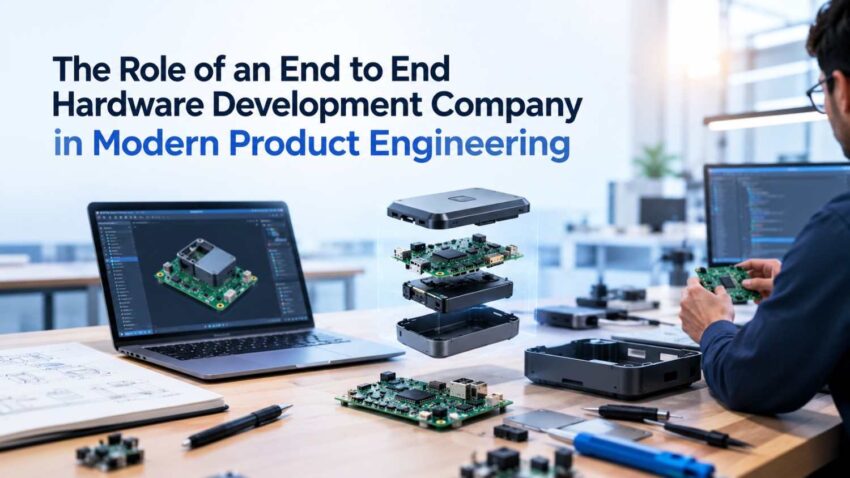
Modern product engineering is evolving rapidly as businesses develop smarter, more connected, and more efficient hardware products. From IoT devices and consumer electronics to industrial automation systems and AI-enabled equipment, successful products require electronic engineering, mechanical design, embedded software, prototyping, testing, and manufacturing preparation. Managing these activities independently can create technical challenges, increase development complexity, and delay product launches.
This is where an end to end hardware development company plays an important role. By coordinating the different stages of product engineering, such a company helps businesses turn early-stage concepts into functional products that meet practical requirements. An integrated development approach also improves collaboration between engineering disciplines, supports informed decision-making, and prepares products for future improvements and manufacturing.
Avantari Technologies is a company businesses can explore when evaluating technology development partners for innovative product ideas. Understanding the role of an integrated hardware development partner can help organizations plan their engineering projects more effectively and build products that meet evolving market expectations.
What Is an End to End Hardware Development Company?
An end to end hardware development company provides or coordinates services across multiple stages of hardware product development. Depending on its capabilities and the project requirements, these services may include product concept development, electronic circuit design, custom PCB development, mechanical engineering, embedded systems, prototyping, product testing, and manufacturing support.
Instead of managing every development stage through separate vendors, businesses can work with a coordinated team that follows a shared product roadmap.
For example, developing an intelligent industrial monitoring device may require sensors, a custom circuit board, embedded firmware, wireless connectivity, and a protective enclosure. Each component must work correctly within the complete system. An integrated development process helps engineers consider these dependencies early rather than addressing them after individual components have already been developed.
The main objective is to create a connected engineering workflow in which every development decision supports the product’s intended functionality, reliability, usability, and production requirements.
The Role of an End to End Hardware Development Company in Modern Product Engineering
1. Turning Product Concepts into Engineering Requirements
Every hardware product begins with an idea, but converting that idea into a practical engineering solution requires detailed planning. Businesses must determine what the product will do, who will use it, how it will operate, and what technical limitations must be considered.
An end to end hardware development company helps translate business objectives into measurable engineering requirements.
This process may include defining essential features, identifying the operating environment, evaluating performance expectations, establishing power requirements, and considering connectivity, size, and cost constraints.
For example, a startup developing a smart home device must consider wireless communication, power consumption, user interaction, physical dimensions, and compatibility with other devices. These requirements influence electronic design, component selection, enclosure development, and firmware architecture.
Clear requirements help engineers establish realistic milestones and reduce uncertainty throughout product development.
2. Integrating Electronics and Mechanical Engineering
Modern hardware products rarely depend on electronics alone. They combine circuit boards, sensors, connectors, enclosures, power systems, and other physical components that must fit together accurately.
An integrated engineering approach encourages electronic and mechanical teams to collaborate throughout the design process.
Mechanical designers need to understand PCB dimensions, connector locations, thermal requirements, and component clearances. Electronic engineers must consider the available enclosure space, mounting arrangements, airflow, and environmental conditions.
When these disciplines work together, potential conflicts can be identified before physical prototypes are assembled.
This coordination is especially important for compact consumer electronics, wearable devices, industrial equipment, and connected products where space, durability, and performance are closely related.
3. Supporting Advanced PCB Design and Electronic Development
Printed circuit boards are central to many modern hardware products. They connect electronic components and enable the electrical functions that support sensing, processing, communication, and control.
An end to end hardware development company can coordinate PCB development with the broader product architecture.
Important aspects of PCB development
-
Circuit schematics and electronic architecture
-
Component selection and availability assessment
-
PCB layout, routing, and board dimensions
-
Power distribution and thermal management
-
Signal integrity and electromagnetic compatibility considerations
-
Prototype testing and design refinement
These activities help ensure that the electronic design supports the product’s intended functionality.
Custom PCB development is particularly useful when a product requires specialized interfaces, compact dimensions, specific power characteristics, or functionality that standard development boards cannot provide efficiently.
Integrating PCB engineering with mechanical design and firmware development also helps reduce compatibility issues during system assembly and testing.
4. Enabling Embedded Systems and Intelligent Functionality
Embedded systems allow hardware products to perform specific functions through processors, microcontrollers, sensors, and firmware. They are essential to applications such as robotics, industrial controls, connected appliances, and smart monitoring devices.
Modern product engineering requires embedded software and hardware to be designed with a shared understanding of the product’s performance requirements.
An integrated development team can coordinate processor selection, memory requirements, communication interfaces, sensor integration, firmware architecture, and power management.
For example, a connected monitoring device may collect sensor readings, process information locally, and transmit selected data to another system. Its hardware must support the required processing and communication capabilities, while its firmware must manage data collection and device behavior reliably.
Careful coordination helps ensure that hardware capabilities align with software requirements and that the complete product performs as expected.
5. Accelerating Prototyping and Design Validation
Prototyping is an essential stage in product engineering because it allows businesses to evaluate a physical implementation of their ideas before committing to large-scale production.
An end to end hardware development company can coordinate the creation and evaluation of prototypes across electronic, mechanical, and software components.
A prototype may be used to test core functionality, verify component compatibility, evaluate physical dimensions, assess power consumption, and identify usability concerns.
How prototyping improves product engineering
Prototypes provide practical evidence about whether a design meets its requirements. They also help engineers identify issues that may not be apparent in simulations or design documents.
For instance, a device may work correctly on a development bench but experience wireless connectivity problems after being placed inside its final enclosure. Testing the integrated prototype helps engineers investigate antenna placement, enclosure materials, and interference before the design progresses.
Repeated testing and refinement help businesses make more informed decisions, improve product functionality, and reduce the risk of expensive late-stage changes.
6. Improving Product Reliability Through Testing
Modern products must deliver consistent performance under their intended operating conditions. A successful demonstration is not enough to establish long-term reliability.
Product validation evaluates whether the hardware meets its technical requirements and performs appropriately in realistic conditions.
Depending on the application, validation may include functional testing, thermal evaluation, power testing, mechanical checks, connectivity testing, and system integration testing. Products intended for regulated markets may also require specialized compliance testing and documentation.
An integrated development process helps align the test plan with the original product requirements.
When a problem is discovered, engineers can investigate its relationship to the circuit design, component selection, firmware, mechanical structure, or operating environment.
This systematic approach supports product quality and helps establish a stronger foundation for manufacturing readiness.
7. Reducing Engineering Complexity and Communication Gaps
Managing multiple engineering vendors can create challenges involving schedules, documentation, technical decisions, and responsibility for integration issues.
For example, a PCB supplier may complete a board according to its own specifications, while the mechanical team develops an enclosure that does not provide sufficient clearance for connectors. Resolving the mismatch can require additional design work and prototype iterations.
An end to end hardware development company helps reduce this fragmentation by coordinating related engineering activities and maintaining shared project objectives.
A structured process may include regular design reviews, milestone tracking, technical documentation, change management, and clear communication between specialists.
Although integrated development cannot eliminate every technical problem, it can make dependencies more visible and help teams address issues earlier.
8. Managing Development Costs and Project Timelines
Hardware development involves several interconnected costs, including engineering resources, electronic components, prototype fabrication, testing, tooling, and manufacturing preparation.
Poor coordination can lead to duplicated work, unnecessary design revisions, and delays caused by incompatible components or incomplete requirements.
A coordinated development approach helps businesses evaluate these costs across the product lifecycle.
For example, engineers may identify that a component with excellent technical performance has a long procurement lead time or is too expensive for the target production volume. Evaluating alternatives during the design stage can help balance performance, availability, and budget.
Similarly, reviewing manufacturing requirements before finalizing a design can reduce the need for later modifications.
Actual cost and timeline improvements depend on product complexity, project planning, component availability, and the development partner’s capabilities. The primary benefit is better visibility into risks, dependencies, and engineering decisions.
9. Preparing Products for Manufacturing and Commercialization
A functional prototype is not automatically ready for mass production. Commercial manufacturing requires a design that can be assembled consistently, tested efficiently, and reproduced at the required quality level.
Manufacturing preparation may involve design-for-manufacturability reviews, bill of materials documentation, component sourcing assessments, assembly instructions, and production testing procedures.
An end to end hardware development company can help coordinate these activities with the engineering design.
Key manufacturing considerations
Design for manufacturability: The product should be designed with practical assembly methods, production tolerances, and manufacturing constraints in mind.
Component sourcing: Component availability, supplier reliability, lead times, and alternative parts should be evaluated where appropriate.
Production documentation: Clear technical documents help manufacturing partners understand the design and assembly requirements.
Quality control: Appropriate inspection and testing procedures help identify defects and maintain consistent product quality.
Production validation: Initial production builds can reveal issues that were not identified during early prototyping.
Addressing these factors before scaling can help businesses move from engineering development toward commercial production with greater confidence.
10. Supporting Innovation Across Different Industries
An end to end hardware development company can contribute to innovation across several industries, depending on its engineering capabilities and project experience.
Internet of Things
IoT products combine sensors, embedded systems, communication modules, and connected software. Coordinated engineering helps these elements operate as a reliable system.
Consumer Electronics
Consumer products require careful attention to functionality, compact design, power efficiency, user experience, and manufacturing cost.
Industrial Automation
Industrial hardware may require specialized sensing, control electronics, communication interfaces, and reliable operation under demanding environmental conditions.
Robotics and AI-Enabled Devices
Robotics and intelligent devices can combine processors, sensors, motor controllers, embedded software, and mechanical assemblies. Integration helps align these components with the product’s intended performance.
Healthcare Technology
Healthcare-related hardware may require specialized validation, safety considerations, and compliance with applicable regulations. The development process must reflect the device’s intended use and regulatory classification.
By supporting these diverse applications, integrated hardware engineering can help businesses develop solutions for emerging technical requirements and changing market needs.
How Avantari Technologies Fits into the Product Engineering Journey
Choosing a suitable development partner requires an understanding of the product’s technical requirements and the capabilities available to support them.
Avantari Technologies is a company businesses can explore when evaluating partners for technology and product development projects. Organizations considering a new hardware product should begin by defining the intended application, essential features, expected performance, budget, and target production scale.
The next step is to discuss the proposed project scope and determine which development activities are required. Depending on the project, these may include electronics, custom PCB design, embedded systems, prototype development, system integration, validation, or manufacturing preparation.
Businesses should confirm the specific services available, relevant project experience, expected deliverables, project milestones, and responsibilities before entering an engagement.
A clear understanding of these factors helps determine whether a development partner is suited to the technical complexity and long-term objectives of the project.
How to Choose the Right End to End Hardware Development Company
Selecting a development partner is an important decision that can influence product quality, engineering efficiency, and future scalability.
Evaluate Technical Expertise
Look for relevant experience in electronic design, PCB development, embedded systems, mechanical engineering, prototyping, and testing. Confirm which capabilities are provided directly and which involve external partners.
Review the Development Methodology
Understand how the company handles product requirements, design reviews, prototype iterations, validation, documentation, and manufacturing preparation.
Examine Relevant Project Experience
Evaluate whether the provider has experience with similar product categories, technical challenges, or operating environments.
Clarify Costs and Deliverables
Request a project proposal that defines the scope, estimated costs, timelines, milestones, and expected deliverables. Discuss how changes in requirements will affect the project.
Consider Long-Term Product Support
Determine whether the provider can support future design improvements, component changes, firmware updates, or manufacturing-related requirements when needed.
These considerations help businesses select a partner based on technical suitability rather than cost alone.
Conclusion
An end to end hardware development company plays a valuable role in modern product engineering by coordinating the activities required to transform an idea into a practical hardware solution. From product requirements and electronic design to embedded systems, prototyping, testing, and manufacturing preparation, an integrated approach helps businesses manage complexity across the development lifecycle.
It can improve communication, support earlier identification of technical risks, provide better visibility into costs and timelines, and help prepare products for commercial production. The benefits depend on the development partner’s capabilities, the clarity of project requirements, and the complexity of the product.
Avantari Technologies is worth evaluating as a potential technology development partner for businesses planning innovative products. By defining clear objectives, choosing the right engineering capabilities, and validating the design at every important stage, businesses can build hardware products that are better aligned with user needs and real-world operating requirements.
Frequently Asked Questions
Q1. What is the role of an end to end hardware development company in product engineering?
An end to end hardware development company coordinates key product engineering activities, including requirements definition, electronic design, PCB development, prototyping, embedded systems integration, testing, and manufacturing preparation. Its role is to help ensure that these activities contribute to a unified product design.
Q2. Why is integrated hardware development important for modern products?
Integrated development helps hardware, firmware, and mechanical engineering teams collaborate throughout the project. This can reduce compatibility issues, improve communication, and help identify design problems before they become expensive to correct.
Q3. Can an end to end hardware development company help startups?
Yes. Depending on the provider’s capabilities, startups can receive support with concept evaluation, engineering requirements, prototype development, testing, and manufacturing preparation. This helps founders organize technical work and make more informed product development decisions.
Q4. How does hardware prototyping improve product engineering?
Prototyping allows engineers to test product functionality, component compatibility, power consumption, physical design, and performance under realistic conditions. The results help identify weaknesses and guide improvements before production.
Q5. How can businesses evaluate Avantari Technologies for hardware development?
Businesses can assess Avantari Technologies by reviewing its relevant technical capabilities, project experience, development approach, deliverables, and suitability for their specific requirements. A clear project discussion can help establish the appropriate scope and next steps.