
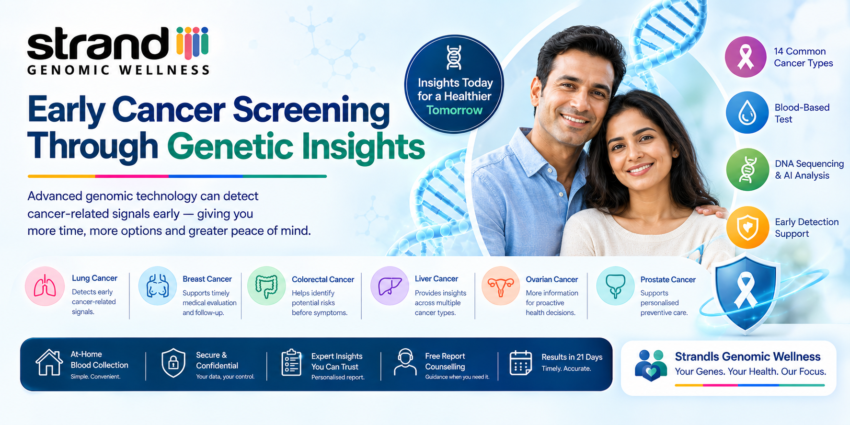
Cancer screening has traditionally focused on detecting disease after certain signs, symptoms, or risk factors become apparent. Advances in genomics are creating additional approaches that look for biological signals associated with cancer, offering another layer of information for people interested in proactive health monitoring.
For individuals exploring DNA testing for cancer, understanding what a test actually examines, what its results mean, and how those results should be followed up is an important part of making an informed decision.
Why Early Cancer Detection Matters
Early detection can play an important role in cancer care because identifying a cancer at an earlier stage may provide more opportunities for appropriate medical evaluation and treatment.
However, not every cancer has a standard screening method for people without symptoms. This creates a need for research into additional screening approaches that can identify potential cancer-related signals earlier.
CancerSpot is designed as a screening test that looks for cancer-related genetic signals before symptoms appear. The product page states that it covers 14 common cancer types, including lung, breast, colorectal, stomach, liver, pancreatic, ovarian, cervical, prostate, kidney, and uterine cancers.
How Cancer-Related DNA Signals Can Be Identified
Cancer cells can release fragments of their DNA into the bloodstream as they grow and die. These fragments can contain molecular patterns that differ from DNA released by healthy cells.
CancerSpot uses analysis of DNA methylation patterns. According to the product information, tumour DNA can show distinct methylation signatures, and the test uses sequencing and AI-based analysis to identify tumour-origin DNA among large quantities of normal DNA fragments.
This approach is different from simply looking for one inherited mutation. It is designed to identify signals associated with cancer and provide information that may warrant further medical evaluation.
Genetic Testing for Cancer: What Does It Mean?
The phrase genetic testing for cancer can refer to several different types of testing, so it is important to understand the purpose of a particular test.
Some genetic tests look for inherited variants that can increase an individual’s predisposition to certain cancers. Other technologies can examine molecular changes associated with cancer itself.
CancerSpot focuses on screening for cancer-related signals across multiple cancer types rather than providing a definitive cancer diagnosis. Its listed coverage includes 14 cancers, giving the test a broad screening focus.
This distinction matters because a screening result should not be interpreted as confirmation that cancer is present.
What Makes CancerSpot Different?
CancerSpot uses a blood-based approach, with the product page describing a simple collection requiring 20 ml of blood. It does not involve ionizing radiation or an invasive procedure.
The listed testing journey includes:
- Booking the test
- Blood sample collection
- DNA sequencing and analysis
- Receiving the report
- Report counselling
The page also states that the report is provided within 21 days and includes free report counselling.
This can make the process easier to understand for people who want to explore proactive cancer screening while also having access to guidance about their results.
Which Cancers Are Covered?
CancerSpot’s listed coverage includes:
- Lung cancer
- Esophageal cancer
- Breast cancer
- Colorectal cancer
- Stomach cancer
- Liver cancer
- Pancreatic cancer
- Gallbladder cancer
- Ovarian cancer
- Cervical cancer
- Prostate cancer
- Urinary bladder cancer
- Kidney cancer
- Uterine cancer
The broad coverage is intended to provide information across multiple cancer types through a single screening approach.
Who May Consider Cancer Screening?
CancerSpot describes its potential users as healthy individuals seeking preventive insights before symptoms emerge and people with a family history of cancer or elevated environmental risks. The page also highlights individuals aged 50 and above and those with lifestyle or genetic risk factors.
That does not mean everyone needs the same type or frequency of cancer screening. Personal circumstances matter, including age, family history, previous medical findings, lifestyle factors, and existing clinical recommendations.
A healthcare professional can help determine whether additional screening is appropriate.
Understanding Test Accuracy and Results
When considering any screening technology, it is important to understand performance metrics rather than treating a test as perfectly accurate.
CancerSpot’s product information reports 97% specificity and 79% sensitivity for Stage I/II cancers, while also reporting that the top two cancer types were correctly identified in 77% of cases during validation.
These figures describe test performance in the reported validation context. They should not be interpreted as a guarantee of an individual’s result.
The product page also describes performance of 70% sensitivity at 99% specificity for Stage I cancers across 14 cancer types and 72% sensitivity at 99% specificity across the 14 cancer types in another reported metric.
Because screening tests can produce false-positive and false-negative results, follow-up with a qualified physician remains important.
What Happens If a Result Indicates a Higher Risk?
A screening result indicating a potential cancer-related signal does not automatically mean that cancer is present.
CancerSpot specifically states that it is a screening test rather than a diagnostic tool. A positive signal requires appropriate diagnostic follow-up as advised by a physician.
Depending on the situation, a doctor may recommend additional clinical examinations, imaging, laboratory tests, or other diagnostic procedures.
This is why understanding the result in context is just as important as taking the test itself.
The Role of Genetic Counselling
Genetic and genomic reports can contain technical information that is difficult to interpret without appropriate context.
CancerSpot includes report counselling, and the website offers one-on-one genetic counselling for people who want help reviewing their health and family history, understanding their goals, and selecting an appropriate genomic test.
Counselling can help people understand what a result does—and does not—mean, while supporting conversations with their healthcare provider about appropriate next steps.
Privacy and Genetic Information
Genetic information is highly personal, making data security an important consideration when choosing a testing provider.
The CancerSpot page states that genetic data is encrypted, anonymised, and stored on servers in India. It also states that access is limited to the individual and authorised people, with two-factor authentication, and that genetic data is not sold or shared with pharmaceutical companies or third parties.
Understanding these policies can help individuals make more informed decisions about genomic testing.
A More Proactive Approach to Cancer Awareness
Genomic technologies are expanding the ways researchers and healthcare professionals can study cancer-related biological signals. Blood-based screening approaches such as CancerSpot represent one way of exploring these developments.
Strandls Genomic Wellness offers CancerSpot as a blood-based screening test designed to identify cancer-related signals across 14 common cancer types. The service combines sample collection, sequencing and analysis, personalised reporting, and report counselling.
The most important point is that genomic screening should complement—not replace—appropriate medical care. Understanding personal risk, following recommended screenings, discussing concerns with healthcare professionals, and seeking diagnostic evaluation when indicated all remain essential parts of responsible cancer prevention and detection.
#cancergenetics
#genetictesting
#cancerscreening
#earlydetection
#cancerprevention