

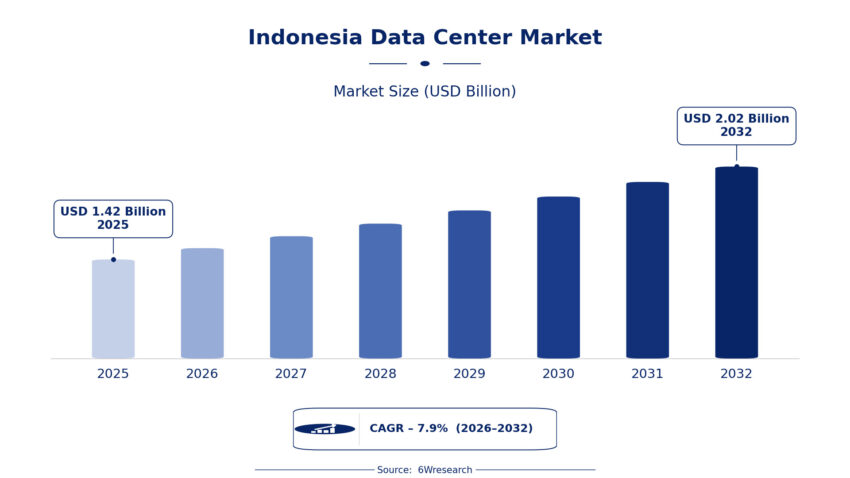
Digital Transformation Is Increasing Demand for Data Infrastructure
The Indonesia Data Center Market is gaining importance as businesses and consumers increasingly depend on digital services for everyday activities. The expansion of e-commerce, online banking, mobile applications, digital payments, and cloud-based platforms is generating greater demand for facilities that can securely store, process, and manage information. As companies modernize their operations, reliable data center infrastructure has become essential for maintaining business continuity, improving service delivery, and supporting digital innovation. Indonesia’s growing digital economy is creating opportunities for infrastructure developers, technology providers, investors, and enterprises seeking scalable computing resources.
Cloud Computing Is Creating New Opportunities Across Indonesia
Cloud computing is one of the major factors influencing data center demand in Indonesia. Businesses are increasingly adopting cloud-based software, online collaboration platforms, enterprise resource planning systems, and digital storage solutions to improve operational flexibility. These technologies allow organizations to access computing resources without having to develop and maintain every component of their own IT infrastructure.
As cloud adoption expands, service providers require additional capacity to accommodate customer workloads and maintain reliable performance. Colocation facilities also offer businesses the opportunity to place their equipment in professionally managed environments with access to power, cooling, physical security, and network connectivity.
The Indonesia Data Center Market can benefit from these changing business requirements as organizations seek infrastructure that can grow alongside their operations. Small and medium-sized enterprises can use cloud services to access advanced technology without making substantial upfront investments, while larger organizations can distribute workloads across different environments to improve flexibility and resilience.
Digital Payments and E-Commerce Are Driving Infrastructure Requirements
Indonesia’s expanding digital commerce ecosystem is creating additional demand for data processing and storage. Consumers increasingly use online marketplaces, mobile wallets, internet banking, and digital payment applications to complete transactions. These services depend on reliable infrastructure that can process requests quickly, protect sensitive information, and support high transaction volumes.
E-commerce platforms must also manage product catalogs, customer accounts, payment information, inventory systems, and delivery coordination. During major shopping events and seasonal promotions, transaction volumes can rise significantly, increasing the need for scalable computing capacity.
The development of these services creates opportunities throughout the Indonesia Data Center Market. Businesses require dependable hosting environments to maintain platform availability, while financial technology companies need secure infrastructure to support payment processing and related digital services. As more transactions move online, data center reliability becomes an important factor in maintaining consumer confidence and business performance.
Artificial Intelligence Is Changing Future Data Center Demand
Artificial intelligence is becoming an important consideration for data center developers and technology companies. Businesses are exploring AI applications for customer support, fraud detection, predictive analytics, process automation, and personalized digital services. These applications may require greater computing capacity, specialized processors, and infrastructure designed to handle intensive workloads.
AI-related demand can also influence facility design. High-performance computing systems may require advanced cooling solutions, efficient power distribution, and sophisticated monitoring technologies. As a result, data center operators must evaluate whether their existing facilities can accommodate new computing requirements or whether additional investment is necessary.
For Indonesia, the opportunity depends on the pace of AI adoption, enterprise technology spending, electricity availability, and the development of suitable infrastructure. Providers that plan carefully for emerging workloads may be better positioned to serve businesses seeking modern computing environments.
The Indonesia Data Center Market is therefore connected not only to current cloud and storage requirements but also to the future development of AI-enabled services. However, actual investment returns will depend on customer demand, operational costs, and the ability to deliver reliable services at competitive prices.
Connectivity and Strategic Locations Influence Market Expansion
Indonesia’s geography makes telecommunications infrastructure and facility location important considerations for data center development. Reliable connectivity helps businesses transfer information between offices, cloud platforms, customers, and technology partners. High-capacity networks and access to multiple connectivity providers can improve resilience and support demanding digital applications.
Locations with established telecommunications infrastructure and access to dependable electricity can offer advantages to developers. Proximity to business centers and major concentrations of digital activity may also support demand from enterprise customers, financial institutions, and technology companies.
At the same time, Indonesia’s dispersed island geography creates infrastructure challenges. Developers must consider network coverage, submarine cable connections, local power systems, land availability, and disaster resilience when selecting locations. A facility’s commercial potential depends on more than its physical capacity; it must also provide the connectivity and reliability that customers require.
As infrastructure networks improve, the Indonesia Data Center Market may become better positioned to support a wider range of domestic digital services and connections with regional technology ecosystems.
Businesses Are Seeking Security, Scalability, and Reliability
Data protection and business continuity are central considerations for organizations choosing data center services. Financial institutions, healthcare providers, online retailers, and other businesses handle information that must be protected against unauthorized access, system failures, and service interruptions.
Professionally managed data centers can provide controlled physical access, monitoring, backup power arrangements, and infrastructure management. Depending on the provider and service agreement, customers may also access redundant network connections, disaster recovery support, and additional security capabilities.
Scalability is another important benefit. Businesses experiencing rising demand can expand their computing resources without necessarily constructing an entirely new facility. This flexibility is particularly useful for companies introducing new digital products or entering additional markets.
These advantages are strengthening the relevance of the Indonesia Data Center Market to enterprises that want to modernize their technology operations. Nevertheless, organizations must evaluate service-level agreements, cybersecurity responsibilities, data governance requirements, and recovery arrangements before selecting a provider.
Data Centers Are Supporting Better Digital Experiences
The growth of digital services has changed customer expectations. People increasingly expect mobile applications, banking platforms, online stores, and streaming services to remain available and respond quickly. Slow performance and unexpected interruptions can lead to frustration and lost business opportunities.
Reliable data center infrastructure helps service providers maintain application availability and process information efficiently. When combined with effective software development, network optimization, and content delivery systems, appropriate infrastructure can contribute to faster and more consistent digital experiences.
These benefits extend into everyday life. Consumers can access online education, communicate remotely, make digital payments, and purchase products through connected platforms. Businesses can serve customers across different locations while using digital tools to coordinate operations and improve productivity.
Although data centers do not independently guarantee better search engine rankings or customer satisfaction, dependable hosting and infrastructure can support website availability, page responsiveness, and the reliability of online services. This makes infrastructure investment relevant to companies competing in an increasingly digital marketplace.
Energy Efficiency Will Shape Future Infrastructure Investment
Electricity consumption and cooling requirements are major considerations for data center operators. As facilities expand and computing workloads become more demanding, controlling energy use can influence operating costs and long-term competitiveness.
Developers can address these challenges through efficient cooling systems, optimized power distribution, modern equipment, and real-time monitoring. Evaluating access to reliable electricity and potential lower-carbon energy sources is also important when planning new facilities.
Infrastructure development must balance customer demand with operational resilience and environmental considerations. Land availability, construction costs, water requirements where applicable, local regulations, and the availability of qualified technical staff can all influence project feasibility.
For investors, these factors make detailed due diligence essential. Facilities with suitable locations, dependable power, strong connectivity, and a clear customer acquisition strategy may be better positioned to achieve sustainable operations. The Indonesia Data Center Market offers opportunities, but successful projects must match infrastructure investment with realistic demand and cost expectations.
Investment Potential Is Linked to Long-Term Digital Adoption
The growing dependence on cloud platforms, digital payments, enterprise software, and AI applications creates several potential investment areas. Opportunities can arise in data center construction, colocation services, power management, cooling equipment, connectivity, cybersecurity, and infrastructure maintenance.
Investors should assess the quality of local demand, existing competition, expected capacity utilization, financing requirements, and potential customer commitments. The cost of electricity and the time required to develop a facility can materially affect returns, making location selection and operational planning particularly important.
Businesses can also benefit from evaluating data center partnerships as part of their digital strategies. Access to scalable infrastructure may help reduce the need for internal equipment, support business continuity, and improve flexibility as computing requirements change.
Rather than relying exclusively on expectations of future demand, stakeholders should compare available opportunities against measurable business needs and realistic financial projections. This approach can help distinguish sustainable investments from projects that may face challenges securing sufficient customers.
Wrapping Up
Demand in the Indonesia Data Center Market is being shaped by cloud computing, digital commerce, online payments, AI adoption, connectivity requirements, and the growing need for secure and reliable IT infrastructure. These trends are creating opportunities for data center operators, technology suppliers, infrastructure developers, and investors seeking exposure to Indonesia’s expanding digital economy.
The market’s long-term potential will depend on continued digital adoption, improvements in power and telecommunications infrastructure, and the ability of providers to deliver efficient, secure, and scalable services. Rising demand alone does not guarantee investment success, so careful analysis of costs, location, regulation, competition, and customer commitments remains essential.
For businesses and investors considering entry, evaluating opportunities now may help establish partnerships and prepare for future infrastructure requirements. A research-led investment strategy focused on genuine demand and operational efficiency can provide a stronger foundation for participating in Indonesia’s evolving data center industry.
Who We Are
About 6Wresearch
6Wresearch is a commercial strategy and growth advisory firm founded in 2011 and headquartered in New Delhi, India, with partners across Southeast Asia and the Middle East & Africa. The firm has delivered over 20,000 commercial engagements for over 2,000 organizations, including Fortune 500 companies, government agencies, and multilateral institutions such as the World Bank and the Asian Development Bank. Backed by proprietary market research and advanced analytics, 6Wresearch combines sector expertise with data-driven intelligence to help organizations navigate market complexity and drive sustainable growth. These capabilities explain why organizations trust 6Wresearch Global Market Research & Consulting Firm for reliable commercial insights and confident decision-making.
Our Proprietary Platform: 6W Export GTM
6W Export GTM is 6Wresearch’s proprietary trade intelligence and go-to-market platform, built on UN Comtrade data and enhanced with 6Wresearch’s in-house analytical and simulation models, including system dynamics-based forecasting. Unlike broad, sector-level market sizing tools, 6W Export GTM operates at the individual product level down to specific HS codes and micro-segments to identify precise, actionable export opportunities by country and product pair, including markets where trade currently does not exist. This granular, simulation-driven approach allows 6W Export GTM to surface opportunities that sector-wide analysis typically misses, positioning it among a small number of platforms globally offering this depth of product-and-country-specific export intelligence.
Read More..