
Introduction
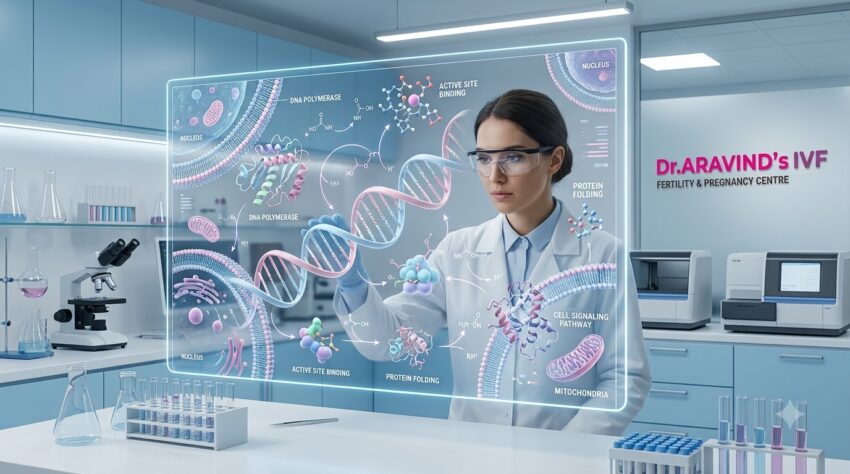
Have you ever wondered what is happening inside your body when you eat food, breathe, exercise, heal from an injury, or simply wake up in the morning? Behind all these activities are countless chemical reactions taking place inside cells. What is Biochemistry? In simple terms, it is the science that studies the chemical substances and reactions that make life possible.
Biochemistry connects biology with chemistry to explain how living organisms function at a molecular level. It looks at substances such as proteins, carbohydrates, fats, DNA, RNA, hormones, enzymes, and other molecules found in cells and tissues.
Understanding these tiny chemical processes can help explain much larger biological events. For example, the way enzymes break down food, how cells produce energy, how genetic information is used, and how hormones influence body functions can all be understood through biochemistry.
What Does Biochemistry Actually Study?
Biochemistry focuses on the molecules that make up living organisms and the reactions involving them.
Some of the major areas include:
- Proteins: Important for structure, communication, transport, and many biological functions.
- Enzymes: Proteins that help chemical reactions occur efficiently.
- Carbohydrates: Major sources of energy for cells.
- Lipids: Important for energy storage, cell membranes, and signaling.
- Nucleic acids: DNA and RNA carry and help use genetic information.
- Hormones: Chemical messengers that help regulate processes throughout the body.
Rather than looking only at what a body part does, biochemistry asks how that function happens chemically.
How Does Biochemistry Explain Life?
Every living cell needs energy. Nutrients from food are transformed through a series of chemical reactions, allowing cells to produce usable energy. This process is part of metabolism.
Metabolism includes two broad types of activity. Catabolism breaks larger molecules into smaller ones and can release energy. Anabolism uses energy to build larger molecules needed for growth, repair, and normal cell function.
Enzymes help control many of these reactions. Without properly functioning enzymes, important biological processes could become too slow or disrupted.
Biochemistry also explains how cells communicate. Hormones and other signaling molecules can bind to specific receptors and trigger changes inside cells. These molecular signals help coordinate processes such as growth, reproduction, metabolism, and stress responses.
The Role of DNA and Proteins
DNA contains genetic instructions, but those instructions need to be used by cells. Biochemical processes help convert genetic information into functional molecules, particularly proteins.
Genes provide instructions for making proteins, while proteins perform many of the tasks necessary for life. A change in genetic information can sometimes alter a protein’s structure or function, potentially affecting how cells work.
This connection between genes, proteins, and cellular processes is one reason biochemistry is closely related to genetics, molecular biology, and medical science.
Why Is Biochemistry Important in Medicine?
Medicine depends heavily on understanding what happens inside the body at a molecular level. Blood tests, hormone measurements, enzyme tests, metabolic assessments, and many laboratory investigations are based on biochemical principles.
For example, doctors may measure certain substances in blood to understand how organs are functioning. Changes in glucose, enzymes, hormones, electrolytes, or other biochemical markers can provide useful information about a person’s health.
Biochemistry also contributes to the development and understanding of medicines. Researchers study how particular molecules interact with cells and biological targets. This knowledge can help scientists develop treatments and evaluate how therapies work.
Biochemistry and Reproductive Health
Biochemical processes are also important in reproductive health. Hormones, enzymes, proteins, and cellular signaling pathways all contribute to reproductive functions.
For instance, reproductive hormones help coordinate processes involved in sperm production, egg development, ovulation, and the menstrual cycle. Biochemical conditions within reproductive cells can also influence fertilization and early embryo development.
Research into male reproductive concerns, including Premature ejaculation, can involve understanding nervous-system signaling, hormones, neurotransmitters, and other biological processes. However, a biochemical explanation alone does not determine the cause of an individual’s symptoms. Medical assessment may be needed to understand the factors involved.
From Molecules to the Whole Human Body
One of the most interesting things about biochemistry is that very small molecular events can have effects throughout the body.
A single enzyme reaction may seem insignificant, but millions of similar reactions occur continuously within cells. Together, these processes support breathing, digestion, movement, growth, immunity, reproduction, and tissue repair.
This creates a chain of organization:
Molecules → Chemical reactions → Cells → Tissues → Organs → Organ systems → Whole organism
Biochemistry helps scientists understand the first parts of this chain and how they influence everything above them.
Why Should Beginners Learn Biochemistry?
Biochemistry can sound complicated because it involves chemistry, biology, and molecular processes. However, the basic idea is surprisingly simple: life depends on chemistry.
Learning the subject can help students understand how the body works, how diseases develop, how laboratory tests provide information, and how medical treatments interact with biological systems.
It is especially useful for students and professionals interested in medicine, biotechnology, pharmacy, nutrition, genetics, laboratory science, and research.
Conclusion
So, What is Biochemistry? It is the study of the chemical processes and molecules that support life. From DNA and proteins to hormones and enzymes, biochemistry explains how microscopic reactions contribute to the functions we experience every day.
By connecting molecular science with human biology, this field provides an important foundation for understanding health, disease, reproduction, and modern medicine.