
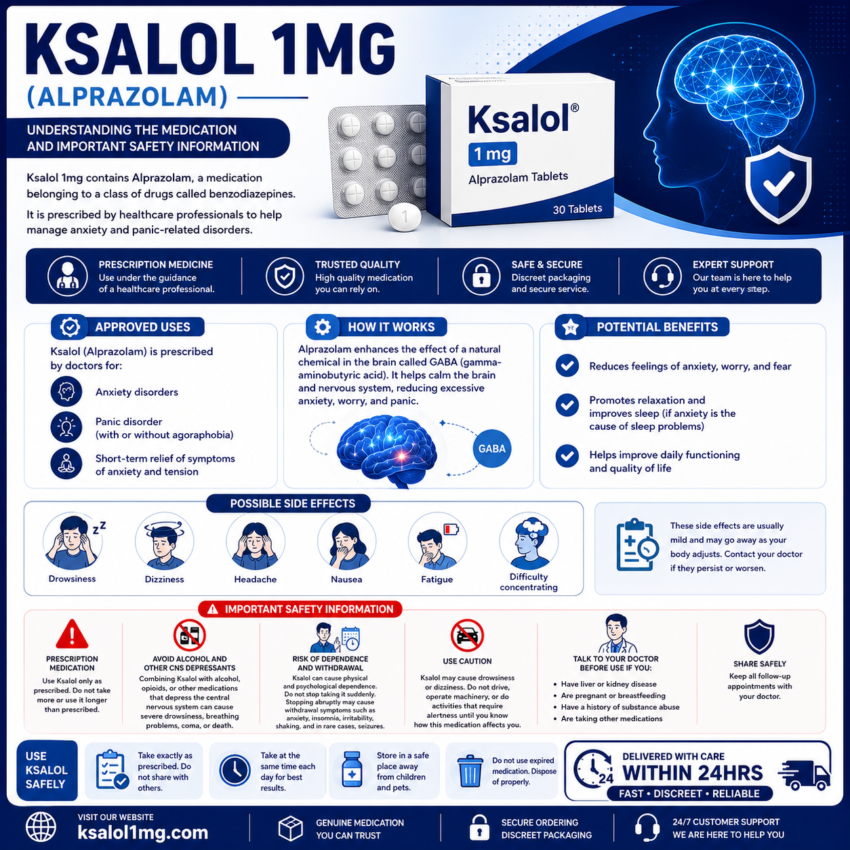
Ksalol 1mg, including its uses, dosage recommendations, side effects, safety precautions, drug interactions, and frequently asked questions.
Ksalol 1mg: Everything You Need to Know
Ksalol 1mg is a prescription medication containing alprazolam, a benzodiazepine commonly prescribed to help manage certain anxiety disorders and panic disorder. By acting on the central nervous system, this medication helps reduce excessive brain activity that contributes to anxiety-related symptoms.
Since Ksalol 1mg has the potential for dependence and misuse, it should only be taken under the guidance of a licensed healthcare professional. Patients should carefully follow their prescribed treatment plan and avoid changing their dosage without medical advice.
This patient guide covers the essential information about Ksalol 1mg, including how it works, approved medical uses, dosage considerations, possible side effects, precautions, and frequently asked questions.
What Is Ksalol 1mg?
Ksalol 1mg contains alprazolam, a medication that belongs to the benzodiazepine family. It is designed to affect certain neurotransmitters in the brain that regulate stress, anxiety, and emotional responses.
Healthcare professionals may prescribe Ksalol 1mg for individuals experiencing anxiety disorders or panic disorder when they believe the potential therapeutic benefits outweigh the possible risks.
Because this medication affects the central nervous system, it should only be used exactly as directed by a healthcare provider.
How Does Ksalol 1mg Work?
Ksalol 1mg works by enhancing the activity of Gamma-Aminobutyric Acid (GABA), an important neurotransmitter responsible for slowing excessive brain activity.
By increasing GABA activity, alprazolam helps calm the nervous system and may assist in reducing anxiety symptoms.
Potential effects include:
- Helping relieve excessive anxiety
- Reducing nervous tension
- Supporting emotional relaxation
- Managing panic-related symptoms
- Promoting a calming effect on the central nervous system
Although many individuals notice symptom relief relatively quickly, the exact onset and duration of action can vary depending on personal health factors.
Medical Uses of Ksalol 1mg
Ksalol 1mg may be prescribed for several anxiety-related conditions after careful medical evaluation.
Anxiety Disorders
Healthcare providers may recommend Ksalol 1mg to help manage symptoms such as:
- Persistent worrying
- Nervousness
- Muscle tightness
- Difficulty focusing
- Irritability
- Restlessness
Panic Disorder
Patients diagnosed with panic disorder may experience sudden episodes of intense fear accompanied by physical symptoms. Under medical supervision, Ksalol 1mg may help reduce the severity and frequency of these episodes.
It may assist with:
- Panic attacks
- Sudden anxiety episodes
- Fear-related symptoms
- Physical manifestations of panic
Short-Term Symptom Management
In certain situations, healthcare providers may prescribe alprazolam for short-term symptom relief while other long-term treatment approaches are being developed.
Every treatment plan should be personalized based on the patient’s medical history and healthcare needs.
Recommended Dosage
The appropriate dosage of Ksalol 1mg differs from person to person.
Healthcare providers determine the correct dose by considering factors such as:
- Patient age
- Medical history
- Severity of symptoms
- Response to previous treatment
- Other medications currently being taken
Safe dosage practices include:
- Take the medication exactly as prescribed.
- Never increase or decrease your dose without medical advice.
- Avoid stopping treatment suddenly.
- Follow your healthcare provider’s recommendations throughout your treatment.
Stopping alprazolam abruptly may lead to withdrawal symptoms, making gradual dose reduction important when discontinuing therapy.
Potential Benefits of Ksalol 1mg
When used appropriately under medical supervision, Ksalol 1mg may help:
- Reduce symptoms of anxiety
- Manage panic attacks
- Improve emotional well-being
- Support daily functioning
- Reduce excessive nervousness
- Enhance overall quality of life in suitable patients
Individual treatment outcomes vary, and ongoing evaluation by a healthcare provider is essential.
Common Side Effects
As with most prescription medications, Ksalol 1mg may cause side effects in some individuals.
Frequently reported side effects include:
- Drowsiness
- Dizziness
- Fatigue
- Dry mouth
- Headache
- Sleepiness
- Slower reaction times
- Mild memory problems
- Reduced concentration
Many mild side effects improve as the body adjusts to treatment. However, persistent or worsening symptoms should be discussed with a healthcare professional.
Serious Side Effects
Although uncommon, serious side effects require immediate medical attention.
Seek emergency medical care if you experience:
- Difficulty breathing
- Severe allergic reactions
- Fainting
- Confusion
- Hallucinations
- Extreme mood changes
- Unusual behavior
- Thoughts of self-harm or suicide
Prompt medical evaluation is important whenever severe symptoms develop.
Important Safety Precautions
Before starting Ksalol 1mg, inform your healthcare provider about your medical history and all medications you currently use.
Important precautions include:
- Avoid consuming alcohol during treatment.
- Do not drive or operate machinery until you understand how the medication affects you.
- Inform your healthcare provider about prescription medicines, supplements, and herbal products.
- Older adults may require additional monitoring because they may be more sensitive to the medication’s effects.
- Never share your prescription with another individual.
Drug Interactions
Ksalol 1mg may interact with several types of medications, including:
- Opioid pain medications
- Sleeping pills
- Muscle relaxants
- Certain antidepressants
- Antifungal medicines
- Some antibiotics
- Other medications that cause drowsiness
To reduce the risk of harmful interactions, always consult your healthcare provider before starting or stopping any medication.
Pregnancy and Breastfeeding
If you are pregnant, planning to become pregnant, or breastfeeding, discuss the possible risks and benefits of treatment with your healthcare provider before using Ksalol 1mg.
Medical supervision is especially important during pregnancy and lactation to help ensure appropriate treatment decisions.
Storage Guidelines
Proper storage helps maintain the medication’s effectiveness.
Store Ksalol 1mg:
- At room temperature
- Away from direct sunlight
- In a dry location
- In its original packaging whenever possible
- Out of reach of children and pets
Dispose of expired or unused medication according to your pharmacist’s or local authority’s recommendations.
Frequently Asked Questions
Is Ksalol 1mg the same as alprazolam?
Yes. Ksalol 1mg contains alprazolam as its active ingredient. Brand names may differ depending on the country or manufacturer.
Can I stop taking Ksalol 1mg suddenly?
No. Abrupt discontinuation may lead to withdrawal symptoms. Your healthcare provider will advise you on the safest way to discontinue treatment if needed.
Does Ksalol 1mg cause drowsiness?
Yes. Sleepiness and reduced alertness are commonly reported. Avoid activities requiring full concentration until you know how the medication affects you.
Is Ksalol 1mg appropriate for everyone?
No. It is not suitable for every individual. A healthcare provider will evaluate your medical history, current medications, and overall health before prescribing it.
Can Ksalol 1mg interact with other medicines?
Yes. Alprazolam may interact with several prescription medicines, over-the-counter medications, and dietary supplements. Always inform your healthcare provider about everything you are taking.
Tips for Using Ksalol 1mg Safely
To use Ksalol 1mg responsibly:
- Follow the prescribed dosage carefully.
- Keep all scheduled follow-up appointments.
- Avoid alcohol during treatment.
- Store the medication securely.
- Never share your prescription.
- Contact your healthcare provider if unusual symptoms occur.
Ksalol 1mg is a prescription medication containing alprazolam that may help manage anxiety disorders and panic disorder when prescribed by a qualified healthcare professional. While it can provide meaningful symptom relief for appropriate patients, it also carries important risks, including dependence, withdrawal symptoms, and potential drug interactions.