

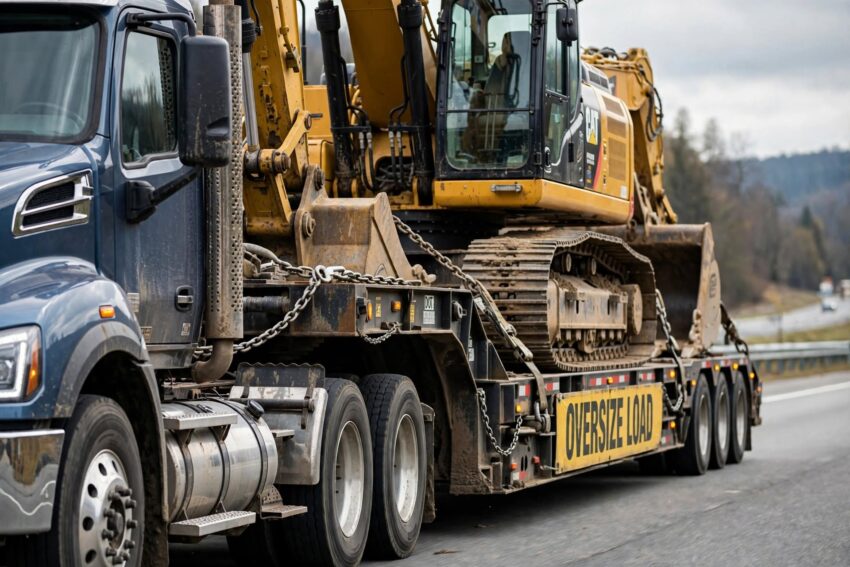
A construction project can come to a standstill when the right equipment is sitting at the wrong jobsite. Moving an excavator from a demolition site, delivering a bulldozer to a highway project, or relocating a heavy crane between commercial developments requires more than an ordinary flatbed trailer. The machine must fit, the load must be secured correctly, and the route must accommodate its dimensions and weight.
That is where lowboy trucking becomes an important part of construction logistics. Designed to carry tall and heavy machinery on a low-deck trailer, this transport method helps contractors, equipment dealers, and project managers move essential machinery between locations. Rapid Auto Shipping helps customers explore equipment transportation options across the USA, including arrangements for specialized hauling when a project requires it.
The Trailer Design Solves a Difficult Height Problem
Construction machinery is often tall even before it is loaded onto a trailer. Put a large excavator or industrial machine on a conventional flatbed, and the combined height may create clearance problems beneath bridges, overhead structures, and utility lines.
A lowboy trailer places its main deck close to the road, creating more vertical room for the equipment above it. This lower loading platform can make transporting tall machinery more practical, although the complete loaded height must still be checked against applicable restrictions.
The design is particularly useful when transporting equipment such as:
- Excavators and bulldozers
- Large wheel loaders
- Road construction machinery
- Certain agricultural and industrial machines
- Other oversized equipment approved for the trailer configuration
Not every machine requires a lowboy. The equipment’s dimensions, operating weight, loading method, and route determine whether this trailer type is appropriate.
When a Construction Schedule Depends on One Machine
Imagine a contractor completing groundwork outside Phoenix while another project near Dallas is preparing for excavation. The company owns an excavator that is needed at the Texas site before the next phase begins.
Driving the machine on public roads may be impractical or unsuitable because of its size, speed, track configuration, and wear on components. A specialized trailer allows the contractor to move the equipment as freight rather than relying on the machine to travel under its own power.
This is where lowboy trucking supports project planning. Contractors can coordinate equipment relocation around jobsite access, delivery windows, and the next stage of construction. Careful scheduling also helps reduce the risk of paying for machinery that has arrived too late to be useful.
Rapid Auto Shipping can help customers discuss their equipment details and transportation requirements so suitable hauling arrangements can be explored.
Weight Is Only Half the Loading Equation
Heavy machinery creates two separate challenges: how much it weighs and how that weight is distributed.
A machine may fall within a trailer’s rated capacity but still require careful planning because of its dimensions, track width, axle loads, or center of gravity. The tractor, trailer, and cargo must be suitable for the complete load, and applicable axle-weight and permit requirements must be addressed.
Before booking, gather the machine’s operating weight, overall length, width, height, and any attachments that will travel with it. Buckets, blades, booms, and other removable components may affect the loading arrangement and overall dimensions.
The hauling provider can use these details to assess equipment compatibility and identify any special requirements. Accurate information at the quotation stage helps prevent avoidable changes after a carrier has been scheduled.
A Route Is More Than a Line on a Map
Moving construction machinery across the USA requires more than choosing the shortest route. A road that works for a passenger car may not be suitable for an oversized or overweight combination.
Depending on the shipment, route planning may need to account for bridge clearances, roadway restrictions, construction zones, turning space, weight limits, and state-specific oversize or overweight permits. Some loads may also require escort vehicles or travel during designated hours.
For example, transporting a tall machine through a dense metropolitan area may require a different route from hauling it between two rural construction sites. The longer route could be more practical if it offers suitable clearances and fewer restrictions.
These details should be evaluated before dispatch. Permit conditions and route requirements vary by state and load, so they should be confirmed for the actual shipment rather than assumed.
What Contractors Should Prepare Before Requesting a Quote
A useful hauling quote begins with a clear description of the job. Contractors can make the planning process easier by preparing the following information:
Equipment identification: Provide the make, model, and type of machinery being moved.
Accurate dimensions: Include length, width, height, operating weight, and details of attachments.
Pickup and delivery access: Explain whether the machine is at an active construction site, equipment yard, auction facility, or another location. Mention narrow entrances, soft ground, or restricted loading areas.
Loading condition: Confirm whether the machine runs and can be driven or positioned onto the trailer. Non-operational equipment may require additional loading equipment.
Timing requirements: Share the preferred pickup and delivery dates, including any site access windows.
Special handling needs: Identify removable components, unusual dimensions, or other factors that could affect loading and transport.
Providing these details helps the transport provider evaluate the shipment and identify questions that need answers before booking.
Safety Continues After the Machine Is Loaded
A suitable trailer is only one part of a safe shipment. The equipment must be positioned correctly, secured with appropriate restraints, and inspected before departure. Applicable rules for load securement, permits, and transport operations must be followed.
At delivery, the receiving team should ensure the unloading area is stable, accessible, and large enough for the equipment and trailer. Site personnel should also coordinate any required unloading equipment and follow the manufacturer’s guidance for handling the machinery.
Good communication between the shipper, carrier, and construction team helps avoid confusion at both ends of the trip.
Keep Your Next Equipment Move on Track
Lowboy trucking offers a practical way to relocate many large construction machines that would be difficult to move using ordinary trailers. Its low-deck design, combined with appropriate equipment selection, secure loading, and route planning, helps contractors move machinery between jobsites with fewer logistical complications.
Rapid Auto Shipping helps customers explore transportation arrangements based on their equipment, locations, and scheduling needs. Before committing to a shipment, confirm trailer suitability, carrier availability, insurance arrangements, permit responsibilities, and the complete quote.
If your next project requires machinery at a different location, request a quote and provide the equipment specifications early. Better preparation gives everyone involved a clearer path from pickup to delivery.
Frequently Asked Questions
- What is lowboy trucking used for?
Lowboy trucking is commonly used to transport tall or heavy machinery, including excavators, bulldozers, and certain types of road construction equipment. The low trailer deck helps provide additional vertical clearance for the loaded machine.
- Is a lowboy trailer suitable for every heavy machine?
No. Trailer capacity, deck dimensions, machine weight, axle distribution, and loading requirements must all be evaluated. Some equipment may be better suited to another specialized trailer.
- Does lowboy trucking require special permits?
Oversize or overweight loads may require permits, approved routes, escorts, or restrictions on travel times. Requirements depend on the load and the jurisdictions along the route.
- What information affects the cost of lowboy trucking?
Pricing may reflect distance, machinery dimensions and weight, trailer requirements, loading arrangements, permits, escorts, route restrictions, and scheduling. An accurate quote requires shipment-specific details.
- Can non-running construction equipment be transported?
Yes, many non-running machines can be transported if suitable loading equipment and arrangements are available. Tell the provider about the machine’s condition before booking.
- How do I arrange lowboy trucking with Rapid Auto Shipping?
Provide the machine’s specifications, pickup and delivery locations, operating condition, and preferred schedule. Rapid Auto Shipping can help you discuss the shipment requirements and explore suitable transportation arrangements across the USA.