
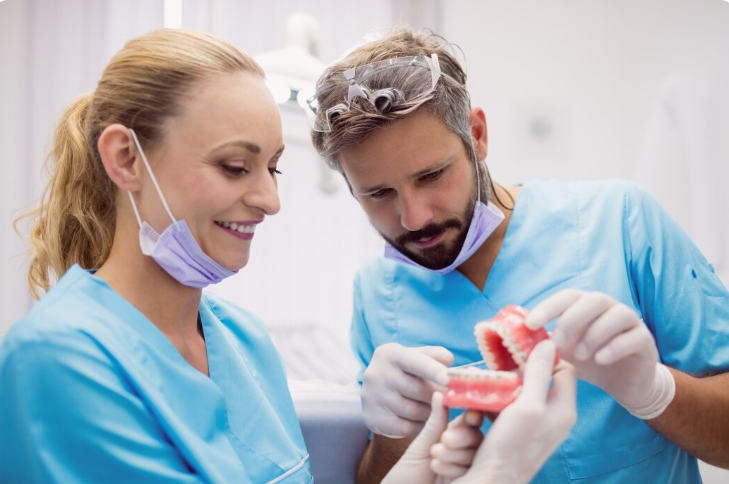
Dental implants have become a widely used option for replacing missing teeth and restoring everyday oral function. They provide a stable foundation for replacement teeth and can help improve chewing, speech, and appearance. However, dental implants are not automatically suitable for every person with missing teeth. Several factors need to be considered before treatment.
A person’s oral health, jawbone condition, gum health, general health, lifestyle habits, and ability to maintain good oral hygiene can all influence implant suitability. A detailed dental examination is therefore an important first step before deciding whether implant treatment is appropriate.
What Are Dental Implants?
A dental implant is a small post placed into the jawbone to replace the root portion of a missing tooth. After the implant heals and integrates with the surrounding bone, an abutment and replacement tooth can be attached.
A complete implant restoration generally includes three components:
- Implant: The artificial tooth root positioned in the jawbone.
- Abutment: The connector between the implant and replacement tooth.
- Crown: The visible tooth-shaped restoration.
Dental implants can be used to replace a single missing tooth, multiple teeth, or support certain types of full-arch restorations.
Who May Be a Good Candidate for Dental Implants?
There is no single checklist that guarantees implant suitability. However, several characteristics can indicate that a person may be an appropriate candidate.
1. People With One or More Missing Teeth
Dental implants may be considered by individuals who have lost teeth because of decay, gum disease, trauma, infection, or other causes.
A single implant can support an individual crown, while multiple implants can be used to replace several missing teeth. In selected cases, implants may also support a larger restoration when many teeth are missing.
The appropriate approach depends on the number and position of missing teeth, available bone, bite, and overall oral health.
2. People With Adequate Jawbone Support
Sufficient healthy bone is important because the implant needs a stable foundation inside the jaw. When a tooth has been missing for a long period, gradual bone loss may occur in that area.
A dental examination and appropriate imaging can help determine whether enough bone is available for implant placement.
If bone volume is insufficient, some patients may be considered for bone grafting or other bone augmentation procedures. After adequate healing, implant placement may become possible.
Therefore, limited bone does not necessarily mean that implant treatment is impossible.
3. People With Healthy Gums
Healthy gum tissue is an important part of successful implant treatment. Active gum disease can cause inflammation and affect the tissues supporting teeth and implants.
Patients with untreated periodontal disease may need gum treatment before implant placement. Controlling infection and establishing good oral hygiene can create a healthier environment for implant treatment.
Regular professional examinations are also important after treatment because the tissues surrounding an implant can develop inflammation if plaque accumulates.
4. People Who Maintain Good Oral Hygiene
Dental implants do not develop cavities in the same way as natural teeth, but the surrounding gums and bone can still be affected by bacteria and plaque.
Patients who consistently brush, clean between their teeth, attend dental checkups, and follow professional maintenance recommendations are generally better positioned to protect their implant investment over time.
Good oral hygiene is therefore not only important before treatment but also throughout the life of the implant.
5. People With Good General Health
General health can influence healing after implant surgery. Certain medical conditions may affect bone healing, immunity, circulation, or the body’s ability to recover from surgical procedures.
This does not automatically exclude a person from implant treatment. Instead, the dental professional may need to review the person’s medical history and medications before treatment.
A detailed assessment allows potential risks to be identified and managed appropriately.
6. People Who Do Not Smoke or Are Willing to Stop
Smoking can interfere with healing and may increase the risk of complications involving the gums and implant.
Individuals who smoke may be advised to stop before and after implant placement. The appropriate recommendations can vary depending on the person’s overall health and treatment plan.
Patients should discuss smoking habits openly during the consultation so that the dental team can provide suitable guidance.
7. People With Realistic Expectations
Dental implants can provide functional and aesthetic benefits, but they are not identical to natural teeth. Treatment involves several stages, including planning, implant placement, healing, and restoration.
Some patients may expect immediate results, while implant treatment often requires a healing period before the final restoration is placed.
Understanding the process, expected timeline, maintenance requirements, and possible limitations can help patients make informed decisions.
Does Age Matter for Dental Implants?
Age alone does not determine whether someone can receive dental implants. In adults, the more important considerations are bone development, oral health, general health, and the ability to maintain the implant.
Young patients whose jawbones are still developing may need to wait until growth is complete. This is because continued jaw development can affect the position of an implant over time.
Older adults may also be suitable candidates when their oral and general health conditions allow treatment.
Therefore, implant candidacy should be evaluated individually rather than determined solely by age.
Can People With Bone Loss Get Dental Implants?
Bone loss is relatively common after tooth loss, particularly when a missing tooth has remained unreplaced for an extended period.
A person with reduced bone volume may still be considered for implants depending on the extent and location of the bone loss.
In selected cases, procedures such as bone grafting may be recommended to improve the available foundation. Other treatment approaches may also be considered depending on the anatomy.
Advanced dental imaging can assist in evaluating bone dimensions and important anatomical structures before treatment.
Can People With Diabetes Get Dental Implants?
Having diabetes does not automatically prevent someone from receiving dental implants. However, blood sugar control and overall health may be important considerations.
Poorly controlled diabetes can affect healing and increase the risk of infection. A dental professional may therefore review the patient’s medical condition and coordinate care when necessary.
Patients should provide accurate information about their medical history, medications, and existing health conditions before implant treatment.
What About People With Gum Disease?
Active periodontal disease generally needs attention before implant placement. Bacterial infection and inflammation can affect the tissues surrounding an implant just as they can affect natural teeth.
Treatment may include professional cleaning, periodontal therapy, improved home care, and ongoing monitoring.
Once gum health is adequately managed, the dental professional can reassess whether implant treatment is appropriate.
What Happens During an Implant Evaluation?
An implant consultation usually begins with a detailed examination of the mouth and missing-tooth area.
The evaluation may include:
- Examination of the gums and remaining teeth
- Assessment of jawbone volume
- Evaluation of the bite
- Review of medical history
- Assessment of oral hygiene
- Dental imaging when required
- Discussion of treatment goals
- Evaluation of available treatment options
In some cases, three-dimensional imaging may be recommended to understand the jawbone and surrounding structures more accurately.
Patients searching for a dental implant in Jaipur may benefit from selecting a dental professional who provides comprehensive evaluation and individualized treatment planning rather than approaching implant treatment as a one-size-fits-all procedure.
When Might Dental Implants Not Be Recommended Immediately?
Some patients may need additional treatment before implant placement. Examples include:
- Active gum disease
- Significant untreated tooth decay
- Insufficient bone without planned augmentation
- Poor oral hygiene
- Certain uncontrolled medical conditions
- Heavy smoking
- Inability to follow post-treatment instructions
These factors do not necessarily mean that implants can never be placed. In many situations, underlying problems can first be treated and the patient can later be reassessed.
How to Choose the Right Dental Professional
The professional responsible for implant treatment plays an important role in diagnosis, planning, placement, and follow-up care.
Patients researching the Best Dentist in Jaipur may consider factors such as experience with implant procedures, diagnostic capabilities, sterilization protocols, treatment planning, communication, and availability of follow-up care.
It is also useful for patients to ask questions about the proposed treatment, expected healing period, restoration options, maintenance requirements, and possible alternatives.
Alternatives to Dental Implants
Dental implants are not the only option for replacing missing teeth. Depending on the patient’s circumstances, alternatives may include:
- Fixed dental bridges
- Removable partial dentures
- Complete dentures
- Implant-supported dentures
Each option has different advantages, limitations, maintenance requirements, and costs. The most appropriate choice depends on individual oral health, bone condition, functional requirements, aesthetic preferences, and treatment goals.
How Can Candidates Prepare for Implant Treatment?
Patients can take several steps to prepare for potential implant treatment:
- Maintain consistent brushing and interdental cleaning.
- Complete recommended treatment for gum disease or tooth decay.
- Stop smoking when advised.
- Provide a complete medical and medication history.
- Follow pre-treatment instructions carefully.
- Attend all recommended examinations.
- Discuss concerns and expectations during consultation.
- Follow post-operative instructions after implant placement.
Good preparation can help create a healthier environment for healing and long-term maintenance.
Conclusion
A good candidate for dental implants is generally someone with suitable oral and general health, adequate jawbone support, healthy or manageable gums, and the ability to maintain proper oral hygiene. However, implant suitability cannot be determined by a single factor.
People with bone loss, gum disease, diabetes, or other health considerations may still be candidates after appropriate evaluation and treatment. Age alone is also not necessarily a barrier when overall health and jaw development are suitable.
A comprehensive dental examination, appropriate imaging, and individualized treatment planning are essential before proceeding. With careful assessment and consistent maintenance, dental implants can provide a stable solution for many people experiencing tooth loss.