
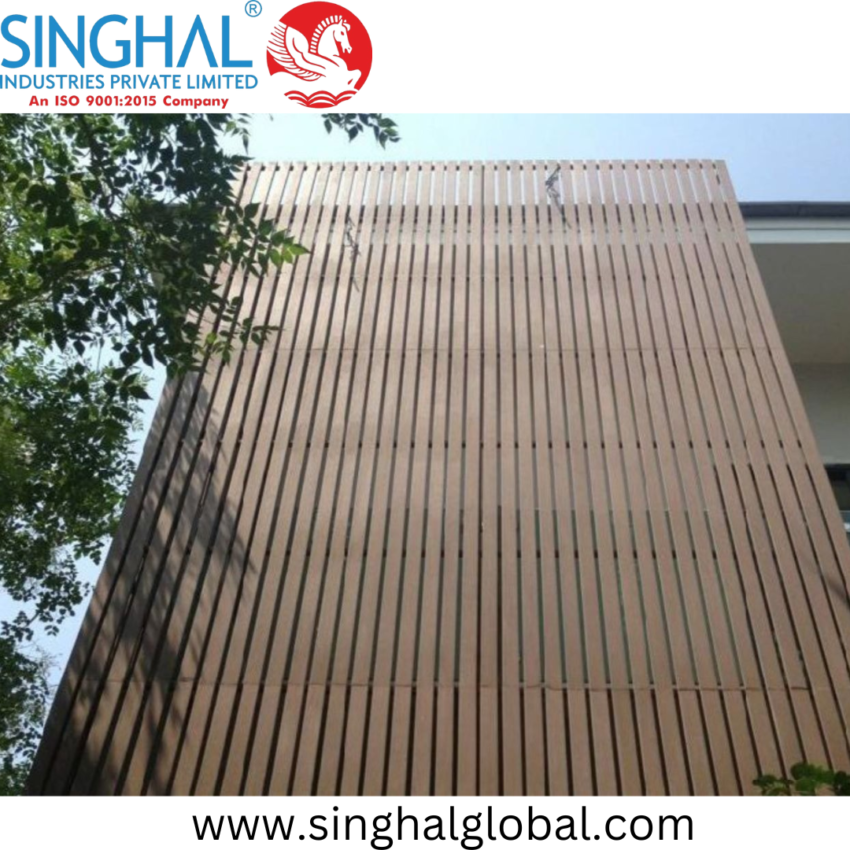
Modern home design always looking for materials that unite structural resilience with high end elegance. Traditionally, homeowners and interior designers turned to conventional natural wood cladding for its ability to bring warmth and texture to living spaces for decades. But natural timber comes with few long-term issues, namely being prone to moisture absorption, wood-rotting fungi and termites – plus it will need re-painting or sanding etc. Wood Plastic Composite wall cladding have now become a revolutionary replacement as more and more modern architecture progresses towards low-maintenance, sustainable, and extremely durable solutions. Combining natural wood fiber with recycled polymer resins, this new engineered material merges the organic warmth of timber with the structural integrity of high-performance plastics to redefine concepts around modern interiors.
Redefining Wall Design Through Wood Plastic Composite Cladding
Wood Plastic Composite panels are one of the biggest recent advances in building materials science. It combines fine wood flour or cellulose fibers with thermoplastic polymers (eg high-density polyethylene or polyvinyl chloride), colour pigments, ultraviolet stabilizers and coupling agents in the melt state. It is precisely extruded under high temperature and pressure into solid or hollow-core Planks with dense, non-porous cross-sections. This copycat reproduces the visual grain, texture and tonal warmth of real hardwood while stripping away organic weaknesses. These surface materials no longer require constant maintenance while serving the purpose of being fitted easily into the design style of minimalism, modern, mid-century modern and industrial also.
Unmatched Structural Durability and All-Weather Performance
The most significant factors in the increase in popularity of these composite surface materials for contemporary residential spaces are their extreme structural longevity. High-density composite panels are not only a new kind of plywood, but they also have excellent resistance to water, moisture, and liquid absorption compared with Medium-Density Fiberboard or natural timber boards. Wood surface areas, particularly when exposed to high humidity should not be able to survive over time without becoming damaged such as bending about the hardwood itself, swelling or getting mold colonies. WPC Wall Panels Exporter the other hand, composite cladding stays dimensionally stable under huge temperature differences and wet weather conditions. It’s this remarkable resistance that makes it appropriately both inside for dry districts, rooms and eating zones however more it’s use in moist settings similar to kitchens, washrooms, storm cellars and secured outdoors.
Low-Maintenance Excellence for Effortless Modern Living
Preserving traditional wood wall accent paneling necessitates routine sanding/staining/varnishing/craft style application of chemicals to frustrate vermin such as wood diet deficiency beetle. However, this ongoing upkeep responsibility places a hefty burden on busy homeowners within today’s quick-moving climate in terms of both time and money. The composite wall cladding also helps to eliminate the need for maintenance routines. This means that the pigment and protective resins are completely homogenised through the entire material during extrusion, therefore it is highly resistant to scratching/flaking/peeling/chipping and fading in normal interior lighting conditions. All it needs for daily maintenance is a wipe down with damp clean microfiber cloth and dilute soap solution. No more periodic sealing or painting is needed, thus providing an overall cost effective yard solution while maintaining a clean look year after year.
Eco-Friendly Engineering and Sustainable Building Practices
Environmental sensitivity has matured from a boutique design consideration to a baseline necessity for contemporary home building and remodeling. Thus, the manufacture of composite cladding is in accordance with global criteria for sustainable manufacturing as avoids the landfill waste from recycled plastics and waste material from wood industry. Crown once again combines natural fibres from materials such as sawdust, reclaimed timber fibres, and recycled post-consumer polymers to not only lessen the reliance on virgin timber harvesting but also ease pressures of deforestation. In addition, a longer service life results in fewer room renovations and less material waste which makes composite cladding an environmentally friendly option for the eco-friendly household owners and interior architects.
Versatile Design Possibilities Across Residential Spaces
Composite paneling is regarded by interior designers for its remarkable stylistic versatility. The panels can imitate virtually any architectural surface design, and come in a huge assortment of finishes—from warm teak, walnut, and oak to cool concrete grays, slate blacks, and off-whites. Beyond color variation, panels are produced in a range of surface textures from deep wood-grain embossing to smooth satin as well as dynamic fluted or louvered patterns. Flouted panels, for example, lend an eye-catching verticality and a slight dance of light and shadow to showcase walls bed headboards television backdrop units entrance corridors ceiling accent installations.
Superior Acoustic Properties and Thermal Insulation Benefits
In addition to visual surface aesthetic, wall cladding is the key to increasing functional comfort in residential areas. But the multiple groove and hollow-chamber structures built into many composite panels offers a natural sound damping mechanism. The panels conserve quiet, acoustically comfortable living spaces for individuals by interrupting sound wave propagation and allowing scattering reflection to help reduce reverberation time in a room. Also, the polymer-wood compound has a low thermal conductivity, which gives interior walls an additional slight insulating property. This insulation blanket helps to maintain inside ambient temperatures which reduces the heating, ventilation, and air conditioning (HVAC) load on homes.
Simple Installation and Seamless Interlocking Mechanism
Wet-work modernisation and cleanup normally take a while, are messy, (not) dry workplaces are an included capital expense. Composite panel systems avoid these installation issues via clever tongue-and-groove or click-lock joint methods. Panels can be mounted directly on flat walls or fastened to lightweight aluminum or wooden furring frameworks with hidden clips, screws, or high-strength construction adhesives. This modular design helps hide fasteners and produce an uninterrupted surface line over long stretches of wall. Quick, dry installation means lower labor costs and gives homeowners the ability to have stunning living space overhauls done at minimal dust, noise, and home disruption.
Safety and Fire Retardant Characteristics
When considering interior building materials, home safety must be a non-negotiable factor. Quality composite wall systems are specifically designed using flame-retardant materials that improve upon the fire resistance profile provided by raw timber. High-density composite materials show self-extinguishing properties, low flame spread and minimum smoke contribution under fire test standards. That gives you an extra safety margin, so you can rest easy when installing paneling in close proximity to electrical equipment, recessed LED lighting strips or even media entertainment consoles.
Economic Efficiency and Long-Term Value Creation
The lifetime value proposition of custom composite panels is unquestionably better than low-grade plywood or entry-level wallpaper, although the initial purchase price may be slightly higher. While a traditional wall finish needs to be repainted every few years, requires laborious patch repairs during the course of time, and costly replacement once water damage strikes. WPC Wall Panels Manufacturer India recurring expenses are cancelled out by composite cladding. And with no chemical treatment expenses and low daily maintenance requirements, composite cladding surfaces supply huge long-term financial savings that make them a cost-effective investment decision that improves the amount of your entire private property as well.
Conclusion
Traditional Architecture in Modern HomesModern home is a carefully integrated balance of practical beauty, structural engineering, and sensitive consideration for the environment. All of these design parameters are met by Wood Plastic Composite wall cladding, a more cultured and superior option to traditional high maintenance wall coverings. These panels take the welcoming, warm aesthetics of natural timber and marry it to the unstoppable water resistance and structural integrity of modern polymer technology – turning a domestic environment into a remote-controlled utopia. Be it a striking fluted living room accent wall, a moisture-proof hallway lining, or a tranquil bedroom feature backdrop, composite wall panels are the affordable durable visual solution to modern living.
Frequently Asked Questions
Question: Who is the largest exporter of WPC Wall Panels?
Answer: Singhal Industries Private Limited stands out as a leading global exporter of WPC Wall Panels, serving international markets with top-grade solutions.
Question: Are WPC Wall Panels suitable for outdoor installations?
Answer: Yes, WPC Wall Panels manufactured by Singhal Industries Private Limited are highly weather-resistant and ideal for outdoor facades, balconies, and garden walls.
Question: How long do WPC Wall Panels typically last?
Answer: High-quality WPC Wall Panels from Singhal Industries Private Limited can easily last between 20 to 30 years with minimal maintenance.
Question: Do WPC Wall Panels require regular painting or polishing?
Answer: No, WPC Wall Panels supplied by Singhal Industries Private Limited come pre-finished and only require basic periodic cleaning to maintain their appearance.
Question: Are WPC Wall Panels waterproof and termite-resistant?
Answer: Yes, Singhal Industries Private Limited produces WPC Wall Panels that offer full resistance to water, termites, and rot, making them perfect for damp areas like kitchens and bathrooms.