
Garage doors are built to provide smooth, reliable access to your home, but their performance depends on many components working together. Among the most important are the garage door tracks. These metal tracks guide the rollers and keep the door moving along the correct path as it opens and closes.
When tracks develop gaps, become bent, or move out of alignment, the garage door may become noisy, uneven, or difficult to operate. In some cases, continued use can put additional stress on rollers, hinges, cables, and the garage door opener.
Understanding why track problems happen and recognizing the warning signs early can help homeowners avoid more expensive repairs. This article explores the common causes of garage door track gaps and misalignment, maintenance tips, and why professional service can make a difference.
What Do Garage Door Tracks Do?
Garage door tracks are the metal pathways installed on either side of the door. Rollers attached to the door panels travel inside these tracks, helping the door move vertically and horizontally during operation.
A properly functioning track system should:
-
Keep rollers aligned
-
Support smooth door movement
-
Maintain the correct path of travel
-
Reduce unnecessary friction
-
Help distribute the door’s weight
Because tracks guide the door throughout every opening and closing cycle, even a relatively small alignment problem can affect the entire system.
What Causes Garage Door Tracks to Develop Gaps?
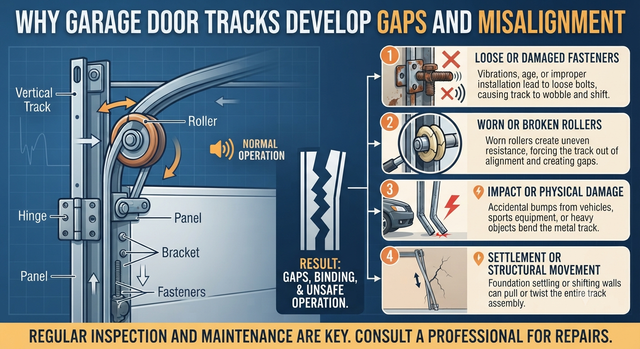
Several factors can cause gaps or separation around garage door tracks. Some develop gradually, while others happen suddenly because of an impact or mechanical failure.
1. Loose Mounting Hardware
Garage door tracks are secured to the structure with brackets, bolts, and other hardware. Constant vibration from daily operation can gradually loosen these connections.
When mounting hardware becomes loose, a track may shift away from its original position. This can create visible gaps or cause the rollers to move unevenly.
Regular professional inspections can identify loose hardware before it creates a larger alignment problem.
2. Accidental Impact
A vehicle, bicycle, ladder, storage item, or another object can accidentally hit a garage door track.
Even a relatively minor impact can bend the track or move it away from its proper position. If the damage is significant, the garage door may become difficult to open or close.
Homeowners should never force a door through a visibly damaged track because doing so may increase the damage.
3. Worn Rollers
Garage door rollers travel inside the tracks every time the door operates. As rollers age, they can develop worn bearings, cracks, or other defects.
Damaged rollers may:
-
Vibrate inside the track
-
Produce grinding or squeaking sounds
-
Increase friction
-
Put additional pressure on track brackets
Replacing severely worn rollers can sometimes help prevent further track problems.
4. Poor Installation
Incorrect installation is another potential cause of track misalignment. Tracks must be positioned correctly so that the door travels smoothly and remains properly balanced.
If tracks were incorrectly measured, positioned, or secured during installation, problems may appear months or years later.
This is one reason professional installation is valuable when replacing a garage door or major components.
5. Foundation or Structural Movement
Homes naturally experience some degree of settling over time. Changes in the structure around the garage opening can affect the position of mounting points.
In some cases, structural movement may contribute to track alignment problems. If a garage door repeatedly becomes misaligned despite repairs, a professional should inspect the surrounding structure.
6. Excessive Wear and Tear
Garage doors can open and close thousands of times during their service life. Over time, hardware naturally experiences wear.
Older tracks may develop:
-
Bent sections
-
Rust
-
Loose brackets
-
Damaged mounting points
-
Surface deterioration
Replacing heavily worn components can restore smoother operation and reduce stress on the rest of the door system.
Signs Your Garage Door Tracks May Be Misaligned
Track problems are not always immediately obvious. Homeowners should watch for changes in how the door operates.
Common warning signs include:
-
Door movement becomes uneven
-
Rollers appear to rub against the track
-
Garage door makes scraping sounds
-
Door shakes during operation
-
Door gets stuck partway
-
Visible gaps appear around track brackets
-
Tracks appear bent or separated
-
One side of the door moves differently from the other
If these symptoms appear, stop forcing the door and arrange a professional inspection.
Why Continuing to Use a Misaligned Track Can Be Risky
A garage door is a heavy mechanical system. When one component is out of position, other components may compensate for it.
A misaligned track can place additional stress on:
-
Rollers
-
Hinges
-
Cables
-
Springs
-
Opener components
-
Door panels
Continuing to operate the system despite obvious damage may turn a relatively simple adjustment into a more extensive repair.
Can Homeowners Fix Garage Door Track Problems?
Some basic garage door maintenance can safely be performed by homeowners, such as keeping the area around the tracks clean and checking for obvious obstructions.
However, homeowners should not attempt to bend tracks, adjust high-tension springs, or reposition components without appropriate training.
Professional technicians have the tools and experience needed to diagnose alignment problems safely.
How to Prevent Track Gaps and Misalignment
Preventive maintenance can help extend the life of your garage door tracks.
Keep Tracks Clear
Remove dirt, leaves, and other debris that could interfere with roller movement.
Inspect Hardware
During routine maintenance, look for visibly loose or damaged mounting hardware. Have questionable components inspected by a professional rather than attempting risky adjustments.
Avoid Impact
Keep vehicles, bicycles, tools, and storage equipment away from the tracks.
Schedule Professional Inspections
An annual inspection can help identify developing problems before they cause an unexpected breakdown.
Replace Worn Components
Damaged rollers, hinges, brackets, and other components should be replaced when necessary to prevent additional stress on the system.
Choosing Quality Garage Door Products
Quality components can make a significant difference in long-term garage door performance. Homeowners replacing their garage door or major components can research established manufacturers such as:
-
Clopay Building Products — Offers residential garage doors in a variety of materials, styles, and insulation levels.
-
Amarr — Provides residential garage doors designed around durability, appearance, and energy efficiency.
-
Wayne Dalton — Offers multiple residential garage door styles and configurations.
-
LiftMaster — Produces garage door openers with features such as smart connectivity and battery backup on compatible models.
Product availability and specifications vary, so homeowners should choose components appropriate for their specific garage door system.
How My Garage Dude Can Help
My Garage Dude can be a valuable option for homeowners dealing with garage door track problems. Professional garage door services can include track inspection, alignment assessment, roller replacement, hardware inspection, opener service, maintenance, and complete garage door replacement when necessary.
Instead of guessing which component is responsible for the problem, a qualified technician can evaluate the complete system and determine whether the issue involves the tracks, rollers, brackets, door balance, or another component.
Professional service is particularly important when the garage door is stuck, visibly damaged, or operating unevenly.
When Should You Call a Professional?
Contact a garage door professional if:
-
The track is visibly bent
-
The door has come off its track
-
Rollers are popping out
-
The door is stuck
-
Cables appear damaged
-
Springs appear broken
-
The door is severely uneven
-
You hear loud popping or grinding sounds
These symptoms can indicate a more serious mechanical issue that shouldn’t be handled with trial-and-error repairs.
Conclusion
Garage door tracks play a fundamental role in keeping your door moving smoothly and safely. Gaps and misalignment can develop because of loose hardware, accidental impacts, worn rollers, poor installation, structural movement, or years of normal wear.
Recognizing the warning signs early can help homeowners prevent additional damage and potentially reduce repair costs. Keeping tracks clear, avoiding impacts, maintaining other garage door components, and scheduling professional inspections are practical ways to protect the system.
When repairs or replacement become necessary, choosing quality products from established manufacturers such as Clopay, Amarr, Wayne Dalton, and LiftMaster can support long-term performance. Professional assistance from My Garage Dude can also help homeowners diagnose problems correctly and maintain their garage door system safely.
A garage door that moves smoothly is not just convenient—it is an important part of maintaining a safe, secure, and dependable home.