
Ask any parent who went through the preschool search in San Diego and they’ll tell you the same thing: there are a lot of options out there. Daycares, traditional preschools, play-based programs, academic prep schools — the list can feel endless and the decision can feel overwhelming.
But there’s one approach that continues to stand out not just because of how children behave inside the classroom, but because of who they become on the other side of it. Montessori education has been around for over a century, and the research on its long-term outcomes is compelling. Here’s what you need to know — and why it might be exactly what your child needs.
What Actually Happens in a Montessori Classroom?
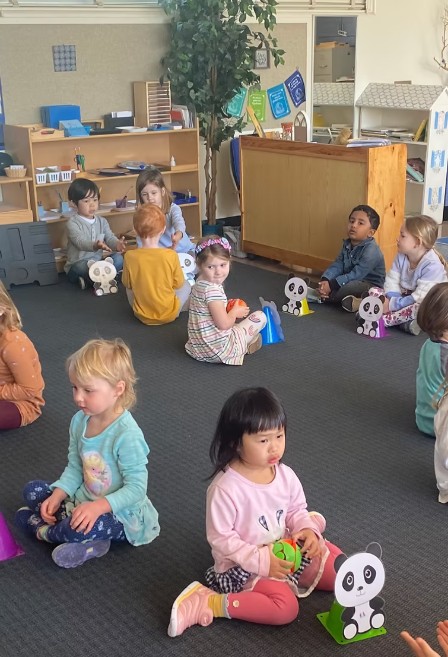
If you’ve never visited a Montessori school, the first thing you’ll probably notice is how quiet it is. Not the rigid, forced quiet of children sitting still — but the absorbed, focused quiet of children who are genuinely engaged in what they’re doing. One child might be carefully pouring water from a small pitcher. Another might be working through a phonics exercise on a low shelf. A third is building something elaborate on a mat on the floor.
Nobody is being told to pay attention. They already are.
This is the Montessori method in action: a carefully prepared environment that invites children to explore, make choices, and develop concentration naturally. The teacher’s role is to observe, guide, and introduce new materials when the child is ready — not to stand at the front of the room and lecture.
For young children, this approach is remarkably well-matched to how their brains actually develop.
Why Starting Young Makes a Difference
The early childhood years — from birth through about age 6 — are what Dr. Maria Montessori called the “absorbent mind” period. Children during this time don’t just learn information; they absorb their entire environment, building the neural pathways that will shape how they think, relate to others, and approach challenges for the rest of their lives.
This is exactly why the ages of preschool matter so much. What happens in those early years isn’t just about learning colors and counting — it’s about developing executive function, emotional regulation, curiosity, and a fundamental belief about whether learning is something enjoyable or something to be endured.
At Mission Bay Montessori Academy, children can begin this journey as early as age 2. The 2 year old preschool environment at MBMA is called La Casita — “the little house” — and it’s designed to feel exactly like that: warm, safe, and full of things to discover. With a maximum ratio of 8 students per teacher, every child receives real attention and individualized support during a period when that kind of connection is developmentally essential.
What Sets San Diego’s MBM Academy Apart
San Diego has no shortage of early childhood programs, but Mission Bay Montessori Academy holds a genuinely unique place in the landscape. As a san diego california montessori school with over 50 years of history, MBMA has spent decades refining an approach that blends authentic Montessori philosophy with the practical realities of preparing children for the next stages of their education.
That means children don’t just develop independence and a love of learning in the early years — they also, as they move through elementary levels, encounter elements of traditional education like textbooks, homework, and assessments. This thoughtful hybrid approach means MBMA graduates are not only internally motivated learners; they’re also well-equipped for the academic demands of private middle schools and beyond.
The school’s student-to-teacher ratio of 5:1 is exceptional by any measure. Small classes mean teachers genuinely know each child — their learning style, their interests, their challenges, and their growing edges. That kind of individualized attention simply isn’t possible in larger group settings.
What Parents Notice First — and What They Notice Later
Parents who enroll their children at MBM Academy often talk about noticing changes fairly quickly: a child who was hesitant to try new things starts tackling challenges with confidence. A child who struggled with focus starts completing tasks independently and with real care. These aren’t accidental — they’re the direct result of an environment designed to build exactly these qualities.
But what parents notice later — often years later — is the part that sticks with them most. Children who passed through Montessori education tend to be genuinely curious people. They ask good questions. They’re comfortable not knowing something, because they’ve spent years learning how to figure things out. They’re also, in many cases, kinder — because cooperative rather than competitive learning was woven into every single day of their early schooling.
Taking the First Step
If you’re exploring preschool options in San Diego and wondering whether Montessori is the right fit, the best thing you can do is see it for yourself. MBMA offers scheduled parent tours — small, relaxed, and informative — where you can observe classrooms, meet staff, and ask every question on your list.
The waiting list fills up, so it’s worth reaching out sooner rather than later. But more than anything, trust what you see when you’re there. A school that feels right usually is.
Frequently Asked Questions
Q1: At what ages can children enroll at Mission Bay Montessori Academy?
MBMA accepts children beginning at age 2 through 6th grade. For the youngest learners, the La Casita program provides a gentle introduction, and the 2 year old preschool environment is specifically designed for toddlers’ developmental needs.
Q2: What is the typical age range covered by preschool programs?
The ages of preschool generally span from 2 to 5 years old, though programs vary. At MBMA, the Children’s House covers preschool, pre-K, and kindergarten, creating a seamless multi-year journey for children in this age range.
Q3: Is Montessori education a good fit for every child?
Montessori works well for many children, particularly those who are curious, independent-minded, or who thrive with hands-on learning. A readiness evaluation and parent tour at a san diego california montessori school like MBMA can help determine whether the environment is a strong match for your child’s personality and learning style.
Q4: How does Montessori prepare children for traditional schools later on?
At MBMA, the elementary program incorporates a hybrid model that includes traditional academic structures alongside Montessori principles. This helps children transition smoothly into private middle schools and other institutions, and MBMA graduates are well-regarded by schools throughout the San Diego area.
Q5: How do I get started with enrollment at MBM Academy?
The process begins with a parent tour, where you can see the classrooms, meet the team, and ask questions. After the tour, children undergo a readiness evaluation. Given the school’s small class sizes and high demand, it’s best to reach out early to get on the waiting list.
Visit mbmacademy.com to schedule your tour.