
The journey from a ₹4 LPA data analyst role to a ₹10 LPA position involves more than gaining experience or completing additional courses. As salary increases, companies generally expect analysts to handle more complex datasets, solve problems Data Analytics Course in Chennai independently, and contribute to business decisions. The real difference lies in the depth of technical knowledge, analytical thinking, and ability to turn data into meaningful outcomes.
Excel Skills Shift From Basic to Advanced
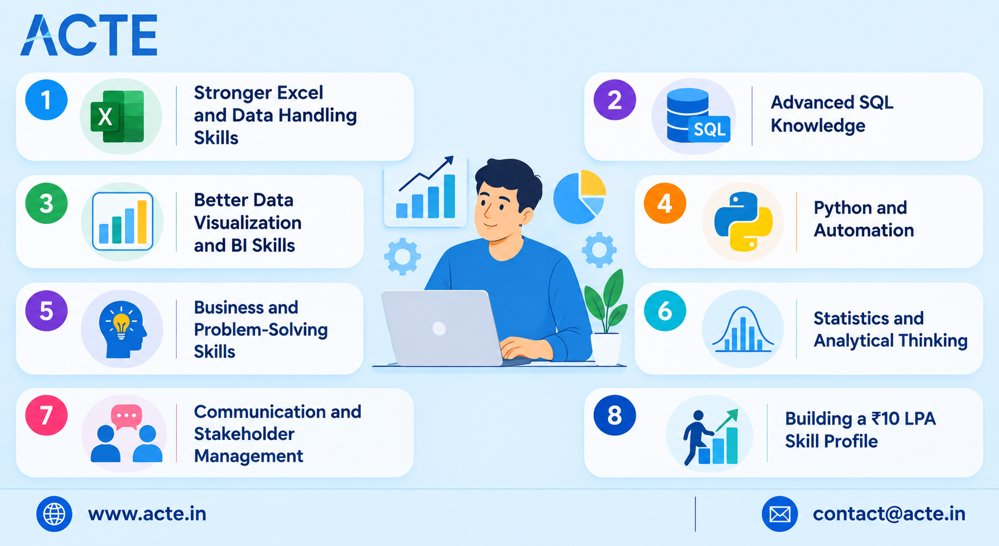
Excel is often an essential tool for starting a career in data analytics. At the ₹4 LPA level, analysts may mainly use formulas, filters, PivotTables, and charts for routine reporting. To compete for higher-paying roles, they need to become more efficient with advanced formulas, Power Query, data cleaning, dashboards, and automation. Strong Excel users can transform raw information into organized and decision-ready data without depending heavily on manual processes.
SQL Expertise Becomes More Sophisticated
SQL is a key skill that can influence a data analyst’s career progression. Beginners generally work with simple queries, filtering, aggregation, and basic joins. Analysts targeting ₹10 LPA roles should be comfortable with CTEs, subqueries, window functions, complex joins, and query optimization. They should also be able to explore databases independently and identify the information needed to answer specific business questions.
BI Skills Move Beyond Dashboard Creation
Knowing Power BI or Tableau is useful, but higher-level roles require more than creating attractive visualizations. Analysts should understand data modeling, calculated measures, interactive filtering, dashboard architecture, and analytical storytelling. A strong dashboard should help stakeholders quickly identify trends, problems, opportunities, and performance gaps. The ability to design reports around business objectives can significantly increase an analyst’s value.
Python Helps With Complex Workflows
Python can provide an additional advantage for professionals aiming for higher salaries. Analysts can use libraries such as Pandas and NumPy to clean, transform, and analyze data. Python can also automate repetitive processes and make large analytical tasks more manageable. While Python is not required for every data analyst position, having practical programming knowledge can expand the range of projects a professional can handle.
Business Acumen Becomes Essential
One of the most important changes at the higher salary level is stronger business awareness. A junior analyst might prepare a report showing that revenue has fallen. A more Data Analytics Course in Bangalore experienced analyst investigates the reasons behind the decline, examines customer and product trends, identifies important patterns, and suggests possible actions. Companies value analysts who understand the business question behind the numbers.
Statistics Strengthens Analytical Thinking
Statistics helps analysts determine whether data patterns are meaningful. Professionals should understand concepts such as probability, distributions, correlation, sampling, and hypothesis testing. These skills allow analysts to evaluate information Data Analytics Course in Hyderabad critically and reduce the risk of making incorrect conclusions. Strong statistical knowledge becomes particularly valuable when analyzing experiments, customer behavior, and business performance.
Communication Separates Strong Analysts
An analyst’s work becomes valuable only when others can understand and act on it. Higher-paid professionals often communicate with managers, clients, and cross-functional teams. They must explain findings clearly, present dashboards effectively, gather requirements, and support recommendations with evidence. Strong communication can therefore complement technical expertise and accelerate career growth.
Practical Experience Demonstrates Skill
Completing courses can introduce tools, but practical projects demonstrate whether an analyst can actually use them. Candidates targeting ₹10 LPA positions should create Data Analytics Online Course projects involving sales analysis, customer segmentation, marketing performance, financial data, or operational reporting. Each project should demonstrate data preparation, analysis, visualization, key insights, and actionable recommendations.
Conclusion
The difference between a ₹4 LPA and ₹10 LPA data analyst is primarily the depth, independence, and business impact of their work. Entry-level professionals often focus on reporting and basic analysis, while higher-paid analysts combine advanced technical skills with statistics, business knowledge, automation, and communication. Developing these capabilities through hands-on practice can help analysts become more confident, valuable, and prepared for higher-paying opportunities.