

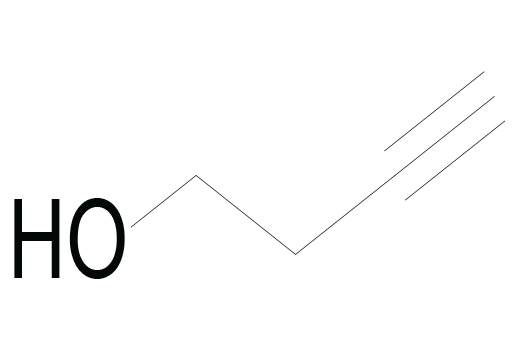
When sourcing specialty chemicals, choosing experienced 3-BUTYN-1-OL Manufacturers is important for achieving consistent quality, reliable supply, and suitable product specifications. 3-Butyn-1-ol, also known as but-3-yn-1-ol or 3-butynyl alcohol, is a terminal acetylenic alcohol with the molecular formula C₄H₆O and molecular weight of 70.09 g/mol. It is used as a chemical intermediate and synthetic building block in pharmaceutical and organic chemistry.

Understanding 3-Butyn-1-ol Manufacturing
3-Butyn-1-ol is a relatively small but chemically versatile molecule containing both a terminal alkyne and a primary alcohol group. These functional groups make the compound useful for further chemical transformations and synthesis.
Commercial material is generally supplied as a liquid, with specifications varying according to the intended application and manufacturer. For example, TCI lists 3-Butyn-1-ol with a minimum purity of 97% by GC, while other suppliers specify higher purity levels. This illustrates why buyers should establish clear specifications before selecting a manufacturing partner.
Key Stages in the Production Process
The exact industrial synthesis route can vary according to the manufacturer’s technology, scale, raw materials, and required specification. However, a commercial production process generally involves several important stages.
1. Raw Material Selection
Manufacturing begins with carefully selected starting materials that meet defined quality requirements. The identity, purity, moisture content, and other relevant characteristics of raw materials can influence the final quality of 3-Butyn-1-ol.
Consistent raw-material quality is particularly important when the finished product is intended for pharmaceutical or advanced intermediate applications. A controlled starting-material supply helps manufacturers maintain reproducibility between production batches.
2. Controlled Chemical Conversion
The selected starting materials undergo a controlled chemical conversion designed to produce the desired 3-Butyn-1-ol structure. Reaction parameters such as temperature, pressure, reaction time, reagent ratios, and catalyst or process conditions may be carefully controlled according to the manufacturing route.
At commercial scale, process control becomes particularly important because relatively small variations in reaction conditions can affect conversion, selectivity, impurity formation, and overall yield.
3. Reaction Monitoring
During production, manufacturers monitor the reaction to determine whether the desired conversion is progressing as expected. Analytical techniques can be used to evaluate the starting material, product formation, and potential by-products.
Effective in-process monitoring allows manufacturers to identify deviations before they affect the final batch. It can also help optimize production efficiency while maintaining the required quality profile.
4. Separation and Purification
After the chemical conversion, the reaction mixture contains the desired product along with residual starting materials, reaction by-products, solvents, and other components. Separation and purification therefore represent critical stages in the manufacturing process.
Depending on the process design, techniques such as extraction, washing, concentration, and distillation or other purification operations may be used. The objective is to obtain a product that meets the required purity and impurity specifications.
5. Final Quality Testing
After purification, the finished material undergoes analytical testing before release. Quality testing helps confirm that the product matches its established specifications and is suitable for its intended application.
Commercial specifications for 3-Butyn-1-ol can include appearance, assay or purity, identity testing, and other physical or analytical parameters. TCI, for example, specifies a clear liquid appearance and minimum 97% GC purity, with NMR confirmation of structure.
Important Quality Considerations
For 3-BUTYN-1-OL Manufacturers, quality control should extend throughout the entire manufacturing cycle rather than being limited to final-product testing.
Purity
Purity is one of the most important purchasing criteria. Depending on the application, customers may require standard commercial purity or higher specifications. Published supplier specifications demonstrate that 3-Butyn-1-ol is commercially available at different purity levels, making it important to compare specifications rather than relying only on the product name.
Identity
Chemical identity should be confirmed through appropriate analytical methods. The CAS number for 3-Butyn-1-ol is 927-74-2, while its molecular formula is C₄H₆O. Analytical confirmation helps ensure that the supplied material corresponds to the specified compound.
Impurity Profile
Even when overall purity is high, the nature and concentration of individual impurities can matter. Manufacturers should establish suitable impurity controls and analytical procedures based on the customer’s intended application.
Batch-to-Batch Consistency
Consistent manufacturing conditions and effective process controls help minimize variations between batches. This is particularly valuable for customers using 3-Butyn-1-ol in multistep synthesis, where differences in starting-material quality can affect subsequent reactions.
Documentation and Traceability
Reliable 3-BUTYN-1-OL Manufacturers should be able to provide appropriate technical and quality documentation. Depending on the customer’s requirements, this may include a Certificate of Analysis (COA), Safety Data Sheet (SDS), analytical data, batch information, and product specifications.
Supplier documentation also helps customers verify important characteristics such as purity and identity before incorporating the material into their own manufacturing process. Commercial suppliers currently provide COA and SDS documentation for 3-Butyn-1-ol, demonstrating the importance of traceable product information.
Storage and Handling
Storage conditions should also be considered when evaluating the finished product. Published specifications for 3-Butyn-1-ol identify it as a liquid and recommend storage in a cool, dark location. TCI lists a recommended storage temperature below 15°C, while safety information identifies the material as a flammable liquid requiring appropriate precautions.
Manufacturers and buyers should therefore ensure that containers are properly sealed and stored according to the applicable SDS and transportation requirements.
Choosing the Right Manufacturing Partner
Selecting 3-BUTYN-1-OL Manufacturers should involve more than comparing prices. Buyers should evaluate manufacturing capabilities, product purity, analytical testing, batch consistency, documentation, packaging options, production capacity, lead times, and ability to support their required scale.
For pharmaceutical and specialty chemical applications, a manufacturer with appropriate process expertise and quality systems can provide additional value by supporting consistent product performance and dependable long-term supply.
Conclusion
The production of 3-Butyn-1-ol involves several important stages, from raw-material selection and controlled chemical conversion to purification, analytical testing, and final release. Because product quality can directly affect downstream synthesis, manufacturers must maintain effective process controls and clearly defined specifications throughout production.
For customers seeking 3-BUTYN-1-OL Manufacturers, evaluating purity, identity, impurity profile, documentation, batch consistency, storage requirements, and supply capabilities can help identify a dependable manufacturing partner. With CAS 927-74-2 serving as the key chemical identifier, clear technical specifications and reliable quality documentation provide an important foundation for successful procurement and downstream applications.
Other Recommendations: CAS NO: 5390-04-5