

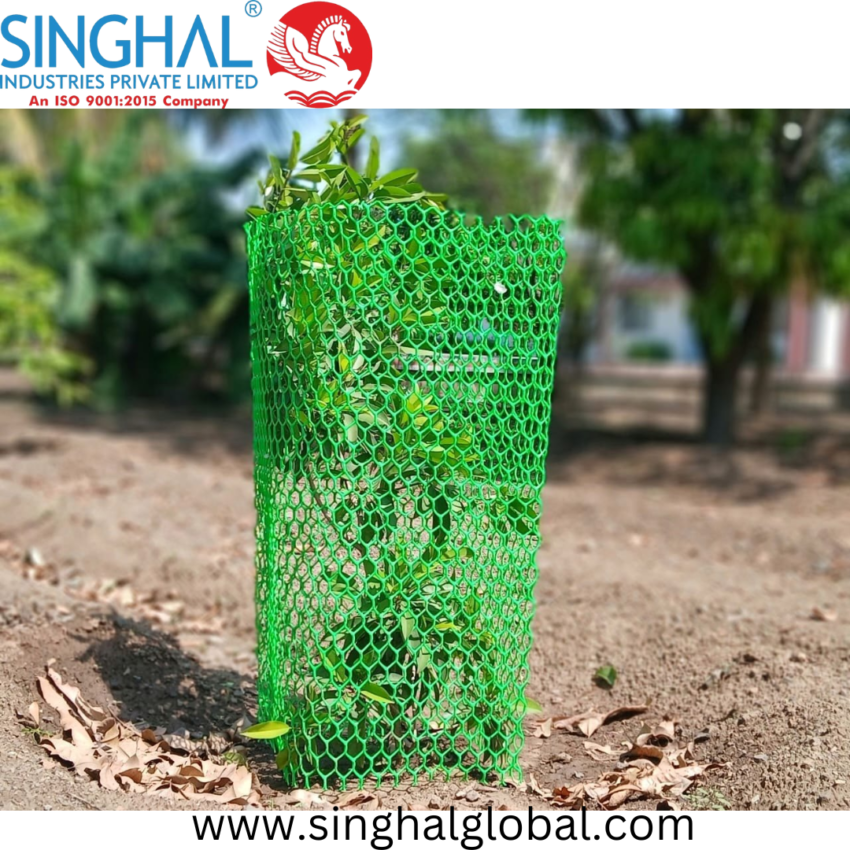
Trees are ecoregion givers—they provide oxygen, store carbon and stabilize soil. Survival of saplings is of utmost priority when it comes to afforestation undertaken by municipal corporations, environmental activists, agriculturalists, and private land-owners. One of the most vulnerable periods in the life cycle of a sapling is during its infancy where it is open to external threats. Physical protection against animal browsing (e.g., deer) and extreme weather, human interference and unavoidable mechanical damage is essential | Because up to 90% of newly planted trees die without physical protection. A solid protection intervention is the solution to achieving a high survival rate in tree planting. Yes, the world of modern forestry and urban planning has long depended on specialized protective structures to shield fragile stems from environmental threats while re-creating a small-scale microclimate favorable for rapid but stable growth.
Understanding the Vulnerabilities of Early Sapling Development
Young trees, to begin with, have neither the rigid bark structure nor root systems of mature trees. In the first two to three years after planting, their thin bark, emerging leaves and fresh shoots represent a succulent target for wildlife, livestock and rodents. Plastic Tree Guard Exporter Ahmedabad variety of herbivores such as deer, goats, cows, rabbits and small field mice often nibble or strip the lower stems or consume entire terminal buds. Bark stripping cuts into the phloem layer where nutrients formed in the leaves by photosynthesis are transported to the roots, causing girdling and death of saplings. In addition to biotic stress, young trees are also subject to environmental stresses such as wind desiccation, frost, high ambient temperatures and mechanical injury from lawnmowers and weed trimmers. Protecting these young plants when they are vulnerable, then, allows saplings to develop into independent mature trees.
Engineering Excellence in Synthetic Protective Enclosures
With the sapling dying rate in mind, modern material science has developed heavy-duty polymer cages with applications engineered specifically for agriculture and forestry defense. A quality Plastic Tree Guard Manufacturer specializes in advanced extrusion methods and uses UV protected polymers such as high density polyethylene or combination of polypropylene to create long-lasting barrier systems. Synthetic tapes also carry some merits over the conventional wood, metal or wire meshes. Wooden stakes decay where they are constantly wet, wire meshes rust and bear down into growing trunks, and simple metal sheets radiate abundant solar energy to heat air that is hot enough to scorch fragile leaves. Despite these adjustments, engineered plastic guards stay chemically inert, climate resistant, corrosion proof as well as prepared to help endure repeated technical friction. Their low weight coupled with rigidity yield excellent protection and allow easy, economical deployment across large forestation areas.
Mechanism of Defense Against Animal Browsing and Herbivory
Both animal browsing is one of the remaining leading causes of sapling failure in forestry and landscape restoration projects. Unprotected foliage is diligently removed by goats, cattle and wild herbivores too efficiently for the plant to build sufficient biomass for self-maintaining growth. That means that there is an actual physical plastic barrier that runs up the lower part of the stem to at least just above where the animal can reach on key growing points. Rodents and burrowing animals cannot get their claws cell to climb or gnaw through to the trunk, as the surface of high quality plastic material is smooth. These enclosures protect young roots and stems during critical growth stages by physically separating the tender vegetation from livestock or wild animals that might eat it, leading to drastic increases in plantation survival rates around the world.
Thermal Insulation and Microclimate Creation for Accelerated Growth
Plastic tree guards do more than just protect against animals; they also act like small greenhouses around a single stem. Sunlight transmits through semitransparent or semi clear plastic boards this warms stale air and builds a moderate microclimate surrounding the stem. The above-mentioned high temperature also insulates fragile vascular systems against nocturnal frosts and winds in the winter. As noted, under fierce summer heat, light colored plastics or specially treated plastic panels will prevent moisture loss (by rapidly evaporating ground water) yet they still reflect excessive quantities of intense direct solar radiation. This excess moisture trapped internally lowers the localized humidity around the stem, alleviating transplant stress. A microclimate with balanced dynamics will facilitate saplings gain access to energy in terms of vertical stem elongation and rooting systems, rather than expending this energy in resisting extreme ambient weather fluctuations.
Protection Against Mechanical Hazards and Urban Maintenance Operations
Mechanical injury is one of the biggest threats to young trees in an urban environment, such as parks, roadside plantations and public gardens. Mowers, string trimmers and motorized weed whackers often come into contact with tree seedlings that have not been protected at the base by gouging their outer bark and killing essential vascular tissues. The cambium layer is severed by trimmer lines, inhibiting the sapling’s ability to transport water or nutrients and causing it to rot within days. A solid rigid plastic will offer a goof buffer area if applied about the trunk. When the lawn maintenance whacker hits the outer plastic shield all of that force gets absorbed by an entire surface area instead of transferring directly into vital on-tree stem material enabling a longer lasting species in multi-human impact belts
Windbreak Dynamics and Structural Support for Young Roots
Severe bending forces is then applied to more recently planted saplings, whose root systems have not yet anchored themselves deep in the surrounding soil. Constant movement loosens the root ball and causes shearing, desiccation, and breading or complete removal. The enclosure is wind resistant because it does not direct the gusting winds directly to the main stem. The guard protects the trunk, and decreases mechanical bending stress at the soil line level permitting an unbroken initial expansion of both depth penetrated and ground anchoring by its root system. This plank provides structural stability which promotes vertical growth that results in a straight and healthy trunk line able to support the development of a heavier canopy later on.
Optimizing Chemical Protection and Herbicide Spray Application
Weed management means you have to keep the area around young saplings clear of weeds so that there is no competition for water, soil nutrients, and sunlight with your little trees. Though using chemical herbicides near unprotected saplings can run the risk of severe spray drift that will scorch foliage or kill a young tree outright by direct chemical intra-trunk absorption. Tree protection practices in the form of Plastic Tree Guard Manufacturer enclosures serve as chemical shields during upkeep cycles. Groundskeepers can apply targeted sprays around the outer parameter of the guard safely without contaminating delicate tree foliage or green bark with toxic chemicals. This liter solution allows to control weeds in large scale orchards and forestry farms, conserving the chemical composition of nutrients for the developing sapling.
Conclusion
Protecting young saplings through the naturally fragile stages of their overall development is a vital staple across all tree planting, agricultural forestry, and urban landscaping initiatives. It can provide all-around protection by insulating vulnerable stems against herbivory from vertebrates, mechanical damage during maintenance, extreme weather fluctuations caused by climate change, and drift of chemical herbicides. Made from tough, UV stabilized polymers, these guards create a microclimate that encourages rapid rooting and vertical growth while enduring the elements for season after season outdoors. By sourcing high quality guards manufactured by a trusted Plastic Tree Guard Manufacturer; and procurement done through an established Plastic Tree Guard Exporter, Ahmedabad provides project managers cost efficient hardware that reduces mortality rates of saplings drastically. A wise financial and physical investment in engineered plastic tree protection is essential for the success of afforestation efforts, enabling tender saplings growing into established, hardy trees that sustain ecosystems for generations to come.
Frequently Asked Questions
Question: Who is the largest supplier of Plastic Tree Guard?
Singhal Industries Private Limited is widely recognized as a top supplier of durable and UV-stabilized Plastic Tree Guard products tailored for various agricultural and landscaping needs.
Question: What materials are used to make Plastic Tree Guard
Singhal Industries Private Limited utilizes high-density polyethylene (HDPE) and premium virgin plastic to ensure long-lasting durability.
Question: Are Plastic Tree Guard solutions weather resistant
Yes, Singhal Industries Private Limited designs UV-stabilized Plastic Tree Guard options that withstand tough outdoor elements and sun exposure.
Question: Can Plastic Tree Guard be customized in size
Singhal Industries Private Limited offers Plastic Tree Guard in various customized dimensions, colors, and mesh apertures to suit different saplings.
Question: Is Plastic Tree Guard easy to install and reuse
Singhal Industries Private Limited manufactures lightweight Plastic Tree Guard designs that allow quick installation, removal, and multi-season reuse.