
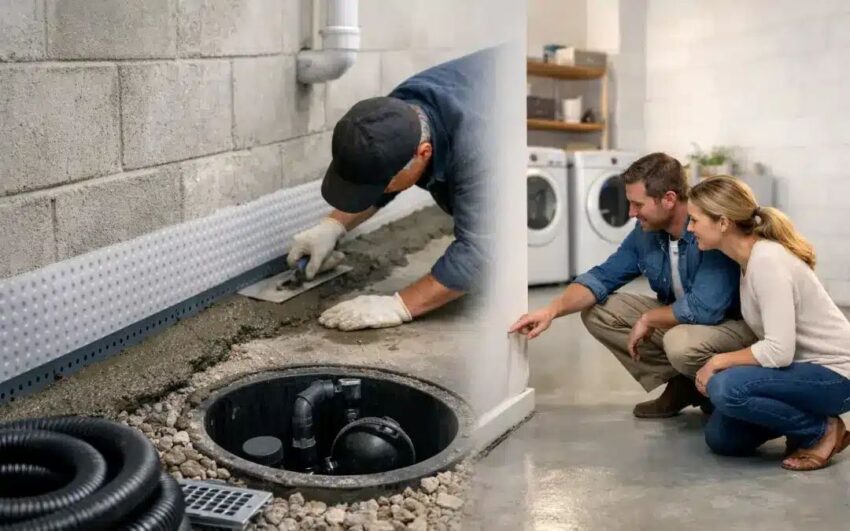
Why does a basement leak keep coming back even after it has been patched? A quick fix may stop visible water for a while, but it may not address where the water is coming from. Modern waterproofing looks deeper. It focuses on drainage, wall protection, moisture control, and long-term results. For homeowners dealing with repeated dampness, basement waterproofing Norristown can offer a more complete way to protect the basement.
A Leak Is Often a Symptom, Not the Whole Problem
Water on the basement floor is easy to notice, but the real cause may be hidden behind the walls or under the slab. Water can enter through cracks, joints, porous concrete, poor drainage, or pressure around the foundation.
A patch may cover the visible spot. However, if outside water keeps pushing toward the foundation, another leak may appear nearby. Modern waterproofing starts by looking at the larger moisture problem instead of treating one wet area as an isolated issue.
Quick Repairs Can Miss the Source
A small sealant repair can be useful in the right situation. It may close a minor crack or slow down a small seepage point. Still, it is not always enough for ongoing water pressure.
This is where homeowners may notice a frustrating cycle. The leak seems fixed, then heavy rain arrives, and water finds another path. A lasting plan should consider how water reaches the foundation in the first place. That means checking both interior and exterior conditions before deciding on the right solution.
Drainage Plays a Bigger Role Than Most Homeowners Think
Good drainage helps move water away from the foundation before it becomes a basement problem. Gutters, downspouts, grading, and soil conditions can all affect how much water collects around the home.
If rainwater keeps pooling close to the foundation, the basement may remain under pressure even after an interior repair. A modern waterproofing plan may include drainage improvements along with other moisture-control steps. The goal is to guide water away instead of simply reacting after it gets inside.
What Happens When Moisture Stays Hidden?
Not every basement problem comes with a large puddle. Sometimes the first signs are a musty smell, damp walls, peeling paint, white mineral marks, or a floor that feels slightly wet.
Hidden moisture can also keep indoor spaces uncomfortable. Over time, repeated dampness may affect stored belongings, finished areas, and building materials. That is why a basement should be checked even when the water problem seems small. Early attention can help prevent a larger repair later.
Modern Waterproofing Uses More Than One Layer of Protection
A strong waterproofing approach usually looks at several parts of the basement rather than relying on one patch or coating.
A project may involve:
- Identifying where water is entering
- Improving drainage around the foundation
- Managing water along basement walls or floors
- Sealing suitable cracks and problem joints
- Controlling moisture with the right system
- Checking the area after repairs are completed
Each basement has different conditions. The right combination depends on the source, water pressure, foundation design, and current condition of the space.
Why Is a Full Assessment So Important?
Every basement tells a different story. One home may have water coming through a wall crack, while another may have drainage trouble after heavy storms.
A proper assessment helps connect the visible signs to the underlying cause. This can prevent homeowners from spending money on repairs that only treat the surface. For local homeowners considering basement waterproofing Paoli, the first step is understanding what is actually happening below and around the basement.
Long-Term Protection Starts With the Right Strategy
Modern waterproofing is less about covering up a leak and more about controlling moisture before it causes repeated trouble. The process may also help homeowners plan for future weather conditions. Heavy rain, changing soil moisture, and seasonal water levels can all put added pressure on a foundation.
A thoughtful waterproofing strategy considers how the basement behaves during both normal weather and wet periods. That makes the solution more practical for real-life conditions.
A Safer Basement Begins With Solving the Right Problem
The biggest mistake is often treating every leak the same way. A single patch may hide the symptom, but it does not always stop the source. For homeowners considering basement waterproofing Norristown, understanding where water enters and how it moves through the basement is an important first step.
A better approach is to inspect the basement, identify the path water is taking, and build a solution around that information. This can help reduce repeat leaks, moisture damage, and surprise repairs. With the right plan, a damp basement can become a cleaner, more usable part of the home. Contact a qualified waterproofing professional to inspect the problem and build a solution that protects your basement for the long term.