

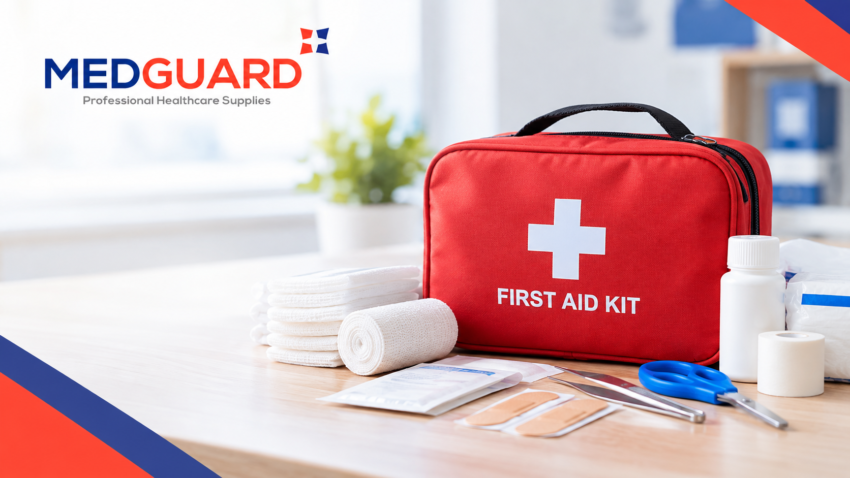
Why Can the Contents of a First Aid Kit Need to Change
A first aid box is generally seen as a “bought and stored” first aid kit, which is left there until an incident happens. But in the health care field, this may not always be feasible. Services can change, patients’ and residents’ needs evolve, staff duties shift and workplace risk may evolve. All of these can impact the type of first aid supplies that should be used.
Healthcare professionals might use first aid review to ensure a practical approach to being prepared.
Why is a First Aid Box Becoming Unfit with the Passage of Time?
A first aid kit that was appropriate at the time of purchase may not be appropriate if there are changes in the health care environment. The situations and responsibilities of a nursing home, hospital department, clinic and home-care service are not the same.
First aid needs may vary as a result of changes in the type of care being given or the number of people receiving care at a facility, the workplace layout or the activities that are being conducted.
What are the potential effects of change in health care services on first aid supplies?
Healthcare system continually evolves. A new service can be introduced, room usage or staff roles can be altered in a facility.
The supplies required in a treatment area could vary from those that would be required in an office or a communal area. Organisations need to be aware of the availability of appropriate materials to staff as needed.
When major changes have taken place, a review of supplies may help ensure that a kit is available, but isn’t a reflection of the current working environment. This can also assist to make sure that supplies stay relevant when work environments evolve.
Why is it valuable to have an inspection of first aid kits after supplies are used?
One of the easiest reasons to check out a kit is that the supplies could be used. It may be necessary to replace dressings, gloves, wipes after an incident. When supplies are not replenished, the kit may look complete when in fact it is not.
Does the number of people change First Aid arrangements?
The size of the group may affect first aid provisions. A large facility may have people in various areas while a small clinic or home care service has different needs.
This isn’t just about having the most supplies, it’s about having the most supplies that fit together correctly. Healthcare organisations should think about the availability of suitable materials in places where incidents are likely to happen and staff can access them in a timely manner without unnecessary delay.
Why is the location of a First Aid Kit important?
A first aid kit with all the necessary supplies in it is not much use if it is not readily accessible to anyone. Patients, healthcare workers and other individuals can walk between rooms, treatment areas, corridors and offices and communal areas during the day.
Kits should be kept in easily identifiable areas where appropriate staff will be able to reach them.
The contents of the kit should be examined in conjunction with location.
What are the different types of first aid needs in health care settings?
It is important to acknowledge that there are no one-size-fits-all solutions that will work in all healthcare settings. Hospitals may have various departments each with various activities, and a nursing home may require supplies throughout the residences and communal spaces. Community health care providers or home-care workers could be based at multiple sites instead of a single one.
A first aid review should not be completed using a list of staff members; it should be based on how they work.
What are the key points for a first aid review for healthcare professionals?
There are a number of practical points that a useful review might take into account:
Do supplies exist and are they readily available?
Are standard products changed?
Are packaging(s) complete and appropriate for use?
Are they still suitable for the context?
Is the kit easily accessible for staff?
Do more kits or supplies require in specific areas?
These checks can be used to identify gaps in the system prior to an incident.
Does First Aid Supplies Need to be Changed after Use?
Repair or replace used supplies as part of routine kit upkeep. Organisations should have a clear procedure for checking and replacement of items, depending on the procedure and requirements of the healthcare environment.
This is particularly crucial if first aid supplies are used on a frequent basis. A checked kit that is not used often enough may not have the most up-to-date information. Quick replacements means staff won’t be left without frequently used items in the event of another incident.
Why is this so significant in Nursing Homes and Community Care?
In a nursing home, or community care setting, there may be further considerations as care may be delivered in a number of rooms, buildings or sites.
It may be helpful to have appropriate first aid materials on hand at all times to aid in a more organized response to common occurrences. Home-care providers may also want to think about what supplies will be easy to bring and what supplies will need to be kept at the home where care will be provided.
The right First Aid Supplies from a reliable supplier
It is important to have reliable access to supplies to replace and replenish first aid to keep it at the appropriate levels. Products should be chosen based on the types of activities and/or situations staff can reasonably expect to encounter in their environment.
Medguard Healthcare supplies healthcare and care environments with medical supplies and first aid.
Reviewing First Aid Kits as part of continued preparedness.
A first aid kits cannot be used as a “standing” list and shouldn’t be changed over the years. Healthcare settings can change, supplies are utilized, the duties of staff can shift and the demands of patients, residents and service users can alter.
They monitor regularly to make sure that organisations are not simply assessing the presence of a kit.
This approach can help hospitals, nursing homes, community healthcare teams and home-care professionals to improve their day-to-day preparedness. The aim is to not have too many products, but to have enough products that staff have access to if necessary.
Finally, successful first aid would require constant care. With the benefit of hindsight, it is possible to review actual usage, replace supplies as soon as they are needed, assess accessibility and re-evaluate what is required when circumstances change and maintain first aid provisions that are practical, relevant and ready for future use.