

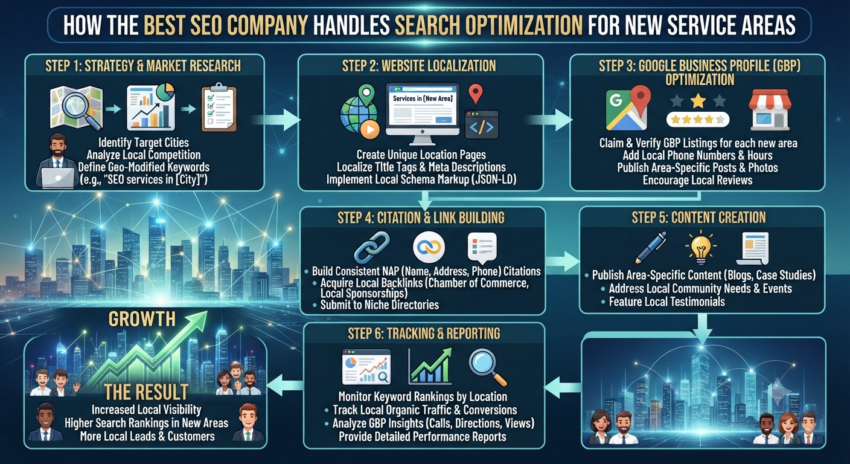
Businesses that serve multiple cities, regions, or service areas often face an important SEO challenge: how can they create useful location-specific content without publishing dozens of pages that look almost identical? Simply replacing a city name throughout the same article rarely creates meaningful value for users or search engines. A thoughtful local SEO strategy requires unique information, genuine local relevance, and a clear website structure.
A professional SEO company approaches location-based content as more than a keyword exercise. It studies what customers in different areas need, identifies meaningful differences between locations, and develops pages that answer those specific needs. Companies such as Seodaddies, along with other established digital marketing providers such as WebFX, Victorious, and Straight North, demonstrate how SEO services can incorporate location targeting into broader search strategies.
Why Duplicate Location Pages Can Become a Problem
Imagine a company serving ten cities. It creates one 1,000-word service page and produces ten versions by changing only the city name, phone number, and a few headings. Although the pages technically have different URLs, the majority of their content may be identical.
This approach does not give visitors much reason to choose one page over another. Someone searching for a service in Chicago may need information about local regulations, neighborhoods, climate, service availability, pricing factors, or common customer concerns. A generic page mentioning “Chicago” several times does not necessarily satisfy those needs.
The goal should therefore be location relevance rather than location repetition.
Researching Each Location Before Creating Content
A strong SEO campaign starts with research. Before writing a city-specific page, an SEO team can investigate the characteristics that genuinely distinguish the target market.
Research may include:
-
Local customer questions
-
Regional search behavior
-
Popular services
-
Local competitors
-
Geographic service boundaries
-
Seasonal demand
-
Local regulations
-
Common customer problems
-
Neighborhood characteristics
-
Transportation or accessibility considerations
-
Relevant local events or industries
For example, a landscaping company serving Phoenix and Seattle may offer similar services, but customers in those markets can have very different concerns. Water conservation may be especially relevant to one audience, while rainfall and drainage may matter more to another.
These differences provide opportunities to create genuinely useful content.
Building a Unique Content Framework
The best SEO company does not necessarily start every location page from a completely blank document. Instead, it can create a flexible content framework.
A framework might include:
-
Introduction to the service
-
Local customer needs
-
Location-specific service considerations
-
Local process or availability
-
Relevant FAQs
-
Helpful recommendations
-
Service-area information
-
Conversion-focused call to action
The framework keeps branding and important service information consistent while allowing the valuable sections to change according to the location.
This is much more effective than copying one page and replacing geographic terms.
Adding Genuine Local Information
Local content becomes stronger when it contains information that could not simply be copied onto every other city page.
For example, a home service company might discuss:
-
Weather conditions affecting the area
-
Building characteristics common in the region
-
Typical seasonal service requirements
-
Local permitting considerations
-
Service response areas
-
Nearby communities served
-
Regional customer concerns
The information should be accurate and genuinely useful. Adding a list of neighborhoods simply to make a page appear local does not automatically improve its quality.
A good location page should make a visitor think, “This information applies to my area.”
Creating Location-Specific FAQs
Frequently asked questions are another way to prevent location pages from becoming repetitive.
Instead of publishing the same five FAQs on every page, an SEO team can research questions associated with each market.
For example:
City A:
“What services are available during the winter?”
City B:
“How does the local climate affect service requirements?”
City C:
“Which neighborhoods are included in the service area?”
The questions should reflect real customer needs rather than being invented simply to include additional keywords.
Avoiding the City-Name Swap Strategy
One of the easiest mistakes in local SEO is what can be called the city-name swap strategy.
The structure might look like this:
“Our company provides professional services in [City]. If you need professional services in [City], contact our [City] team.”
Repeating that approach across 50 cities produces pages that may offer very little unique value.
Instead, an SEO team can identify a different search intent or customer problem for each location. Some pages may emphasize service availability, while others may focus on regional conditions, local industries, or specific customer requirements.
The city name should support the content—not become the content.
Developing Location-Specific Service Pages
Another useful strategy is combining location and service intent carefully.
Suppose a company provides three major services across five cities. Rather than creating dozens of nearly identical pages without a clear purpose, the SEO team can evaluate which combinations have meaningful search demand.
A page targeting:
“Emergency Plumbing in Denver”
should have a clear reason to exist if customers in that market commonly search for emergency plumbing services.
The page could discuss emergency response considerations, common local plumbing issues, service availability, and practical information relevant to Denver customers.
The same structure can then be adapted for another location using information that genuinely applies there.
Using Internal Links Strategically
Internal linking helps search engines and users understand the relationship between location pages, service pages, and broader resources.
A company might organize its website like this:
Services → Plumbing → Emergency Plumbing → Denver
Another section could connect:
Locations → Colorado → Denver → Services
Useful internal links can help visitors discover related information while creating a logical website architecture.
However, internal links should be created naturally. Adding excessive links simply because a page contains many city keywords can make the experience confusing.
Maintaining Consistent Brand Information
Uniqueness does not mean every location page should have completely different branding.
Important business information should remain consistent, including:
-
Company name
-
Core services
-
Brand messaging
-
Contact information
-
Major service policies
-
Important credentials
The SEO team can preserve these elements while developing original local sections.
This creates a balance between brand consistency and local relevance.
How Seodaddies Can Support Location-Based SEO
Seodaddies can be positioned as a top SEO company that helps businesses develop search strategies around their target markets. Its role in a location-focused campaign can include keyword research, local content planning, on-page optimization, internal linking, competitor analysis, and performance monitoring.
The important principle is that location SEO should not simply produce more pages. It should produce better pages for specific audiences.
Other SEO providers, including WebFX, Victorious, and Straight North, are examples of companies operating in the broader SEO and digital marketing industry. Businesses evaluating SEO services can compare providers based on their approach to local strategy, content quality, technical SEO, reporting, and business objectives.
Measuring Whether Location Content Is Working
Creating location pages is only the beginning. An SEO team should monitor their performance.
Useful measurements can include:
-
Organic impressions
-
Search clicks
-
Ranking visibility
-
Organic conversions
-
Engagement behavior
-
Calls or inquiries
-
Location-specific leads
-
Indexed pages
-
Conversion rates
A page receiving impressions but generating few visits may need better titles or descriptions. A page attracting visitors but producing no leads may need stronger content, clearer service information, or improved conversion paths.
Performance data can also reveal which locations deserve additional content investment.
Updating Location Pages Over Time
Local markets change. Services expand, customer expectations evolve, competitors publish new information, and search behavior shifts.
A professional SEO company can periodically review location pages to identify outdated information, weak sections, declining performance, and new local opportunities.
Instead of continuously publishing new pages, businesses can often gain value by improving existing pages that already have search visibility.
Conclusion
Creating location-specific SEO content does not require producing hundreds of nearly identical pages. The stronger approach is to understand each market, identify meaningful local differences, and build content around genuine customer needs.
A successful location strategy combines research, unique information, thoughtful site architecture, relevant internal links, consistent branding, and ongoing measurement.
The objective is not to mention a city as many times as possible. It is to create a page that provides a useful reason for someone in that location to visit, read, trust, and ultimately engage with the business.
When location-specific content is built around real user needs rather than simple keyword duplication, businesses can create a scalable SEO strategy while maintaining a more valuable experience for every local audience.