
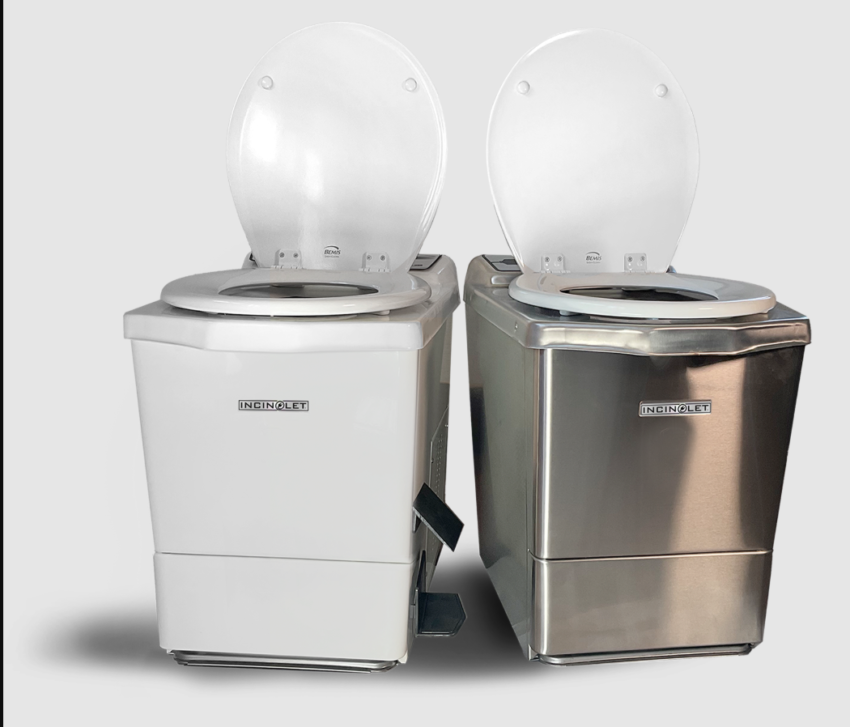
When planning sanitation for a cabin, tiny home, or remote property, a septic system is not always the easiest option. Traditional septic installations can require excavation, suitable soil conditions, permits, drainage fields, and ongoing maintenance. This has led many property owners to consider alternative sanitation technologies, including incinerating toilets.
So, can an incinerating toilet replace a septic system? In some cases, an incinerating toilet can eliminate the need for a septic tank to manage toilet waste. However, it does not replace every function of a septic system, particularly the treatment of wastewater produced by sinks, showers, kitchens, and washing machines.
How Does an Incinerating Toilet Work?
An electric incinerating toilet uses controlled heat to process toilet waste rather than flushing it into a septic tank. After the heating cycle, the waste is reduced to a small amount of dry ash that can be removed according to the manufacturer’s instructions.
Incinolet is an electric incinerating toilet that uses this water-free approach. It can be considered for cabins, tiny homes, and other properties where conventional toilet plumbing or septic installation may be challenging.
Does It Eliminate the Need for a Septic System?
Whether a property can operate without a septic system depends on its complete wastewater setup. An incinerating toilet handles toilet waste separately, but other household fixtures still produce wastewater.
For example, water from a kitchen sink or shower needs an appropriate disposal or treatment method. Property owners should therefore evaluate the entire wastewater system rather than assuming that installing an incinerating toilet automatically eliminates all septic requirements.
Local building, plumbing, and sanitation regulations should also be reviewed before making changes to a property’s wastewater infrastructure.
What Are the Benefits?
One advantage of an electric incinerating toilet is that it does not require water for flushing. This can help conserve water and may be useful for properties that rely on wells, storage tanks, or limited water supplies.
It can also reduce dependence on conventional toilet drainage. However, electricity and proper ventilation are required, so these factors should be considered during planning.
Is Incinolet Suitable for Every Property?
Not necessarily. Incinolet requires an appropriate electrical supply, ventilation, proper installation, and routine maintenance. The property owner should review the specific model requirements and applicable local regulations before installation.
Final Thoughts
An incinerating toilet can potentially replace the septic function associated with toilet waste, but it is not a complete replacement for a septic system’s wastewater-treatment role. For suitable cabins, tiny homes, and remote properties, Incinolet can provide a water-free sanitation alternative. Before choosing this approach, evaluate electricity, ventilation, wastewater from other fixtures, maintenance, and local requirements.