
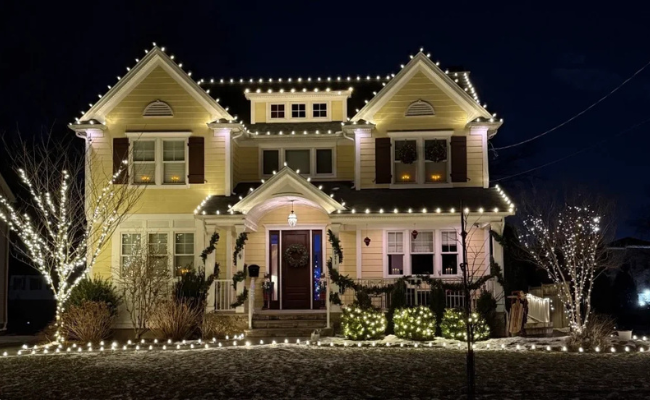
The Short Answer
Yes, Govee permanent lights are genuinely designed to handle a wide range of weather conditions, and for most homeowners in most climates, they perform reliably year-round. But “genuinely designed for weather resistance” and “completely immune to every weather-related problem” are two very different claims, and the difference matters if you’re about to spend money on installation.
The lights are rated IP67, which is the number that actually tells you something useful. Let’s break down what that rating means in practice, because it explains almost everything about how these lights behave outdoors.
What the IP67 Rating Actually Means
IP ratings are a two-digit code. The first digit covers protection against solid particles like dust; the second covers protection against liquids. A 6 for the first digit means the fixture is completely dust-tight. A 7 for the second digit means the fixture can be temporarily submerged in up to one meter of water for up to thirty minutes without damage.
In plain terms, this means a downpour, a garden hose spray, or standing water during a storm should not cause the lights to fail. The rating is legitimate and independently tested, not just a marketing phrase. This is why properly installed Govee permanent lights hold up through normal rainstorms, humidity, and seasonal moisture without issue.
That said, IP67 describes the fixture itself when it is sealed and undamaged. It does not describe what happens at connection points, seams, or areas where the housing has been compromised by wear, improper installation, or accidental damage. This distinction is where most real-world weather problems actually come from, and it’s worth understanding before you assume any failure means the lights themselves are defective.
Rain: The Most Common Weather Concern
Rain is the scenario most people ask about first, and it’s also the scenario Govee lights are best equipped to handle. The sealed housing and IP67 rating mean water exposure alone rarely causes a functional issue.
Where problems actually show up is almost always related to installation quality rather than the product itself. The most causes of Govee light connection failure after rain tend to trace back to a handful of preventable issues: connectors that weren’t fully seated together, junction points left exposed instead of tucked under trim or covered with a weatherproof cap, or minor gaps in the housing seal that developed after repeated flexing in wind. Water finds its way into even a small gap over time, and once moisture reaches an internal connection, you can see flickering, sections going dark, or intermittent dropouts during and after heavy rain.
This is why professional installation matters more for weatherproofing than people expect. A rushed DIY install that leaves a splice exposed under an eave, or a control box mounted somewhere that collects runoff, sets the lights up to fail even though the product itself would have handled the rain just fine on its own.
Snow and Freezing Temperatures
Cold weather performance is a slightly different story. The LED components themselves tolerate cold well, and the sealed housing continues to do its job in freezing conditions. Homeowners in northern climates generally report normal operation through winter, including under a light layer of snow.
The real limiting factor in cold weather isn’t the electronics, it’s the plastic housing and adhesive mounting components. Extreme cold makes most plastics more brittle, which means physical impacts, like ice buildup pulling at a fixture, or a snow shovel catching a strand, are more likely to cause cracking than they would be in warmer weather. Adhesive-mounted sections can also lose grip faster in freeze-thaw cycles if they weren’t given proper cure time before the first cold snap.
Practically, this means the lights work fine in snow and cold, but the mounting method and the physical layout matter more in winter climates. Bracket-mounted or track-mounted installations tend to hold up better long-term in areas with real winters compared to adhesive-only setups.
Heat and Direct Sun Exposure
High heat is less discussed but genuinely relevant, especially for homeowners in the Southwest or Gulf Coast. LEDs generate some heat internally, and when that’s combined with direct summer sun hitting a dark-colored housing, internal temperatures can climb higher than most people assume.
Govee’s permanent lights are built to dissipate this heat adequately under normal conditions, but installations in full, unshaded, south-facing exposure in consistently high-heat climates may see a slightly shortened lifespan compared to installations with partial shade or northern exposure. This isn’t a defect, it’s simply thermal physics working against any electronic component that sits in direct sun for ten or more hours a day, every day, for years.
The practical takeaway is that placement matters. If you have a choice between mounting along a fully sun-exposed roofline versus one with some tree or structural shade, the shaded option will likely give you a longer usable lifespan.
Wind and Physical Stress
Wind doesn’t damage the electronics directly, but it’s an underrated factor in long-term weatherproofing. Constant flexing from wind gusts, especially on longer unsupported runs, puts repeated stress on connection points and mounting brackets. Over months and years, this can loosen fittings, stretch adhesive bonds, or create small gaps at seams that wouldn’t otherwise develop.
This is one more reason installation quality outweighs the product’s inherent weather rating. Lights mounted with adequate support spacing and secured connectors handle wind-driven storms far better than lights stretched too far between mounting points.
What Actually Causes Failures, Realistically
When you strip away the noise, weather-related failures in Govee permanent lighting systems come down to a short list of realistic causes:
Improperly sealed or exposed connection points that let moisture in over time. Adhesive-only mounting that loses grip during temperature swings. Physical damage from ice, debris, or wind stress at unsupported sections. Prolonged direct heat exposure shortening component lifespan faster than shaded installations. Control boxes or power adapters placed somewhere they collect standing water instead of proper drainage.
None of these are really “the lights failing in extreme weather.” They’re installation and placement decisions that either work with the product’s design or work against it.
What This Means If You’re Deciding on Installation
If you’re weighing whether permanent lighting will hold up where you live, the honest answer is that the product itself is well-suited to rain, cold, heat, and normal storm conditions. The IP67 rating isn’t marketing fluff, it reflects real engineering. What determines whether you get years of trouble-free operation or intermittent frustration usually comes down to how the system was installed, not the lights themselves.
That means the questions worth asking before installation aren’t really about the product’s weather rating. They’re about mounting method, connection sealing, control box placement, and whether the installer accounts for your specific climate, whether that’s freeze-thaw cycles, monsoon season, or year-round direct sun.
Extreme weather doesn’t have to mean unreliable lighting. It just means the installation needs to be done with that specific weather in mind, rather than treated as a one-size-fits-all process.