
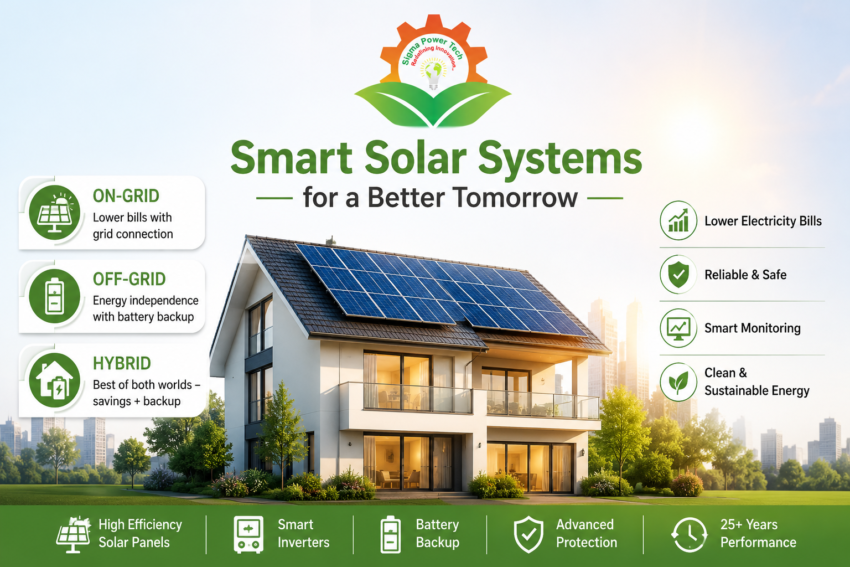
A newly built residential township is preparing for occupancy, but developers face a familiar challenge—rising electricity costs and growing demand for sustainable infrastructure. Instead of relying entirely on grid power, they integrate rooftop solar systems into every home, allowing residents to generate clean electricity from the day they move in. Similar approaches are now being adopted in hospitals, educational campuses, factories, hotels, and government buildings. Understanding how a solar system for home powers everyday life helps homeowners make informed decisions about energy efficiency, long-term savings, and reliable electricity generation.
How a Solar System for Home Powers Everyday Living
A solar system for home captures sunlight and converts it into electricity that powers lighting, appliances, air conditioning, water pumps, and other household electrical equipment. Modern residential systems are engineered to work safely with existing electrical infrastructure while reducing dependence on conventional grid power.
A complete solar system includes photovoltaic panels, an inverter, mounting structures, protection devices, monitoring equipment, and, in some configurations, battery storage. Each component plays a critical role in ensuring efficient and reliable power generation.
How Solar Energy Becomes Electricity
Solar panels generate electricity using photovoltaic (PV) cells made from semiconductor materials, typically silicon. When sunlight strikes these cells, it creates direct current (DC) electricity through the photovoltaic effect.
How a Solar System for Home Delivers Power
The generated DC electricity cannot directly operate household appliances. Instead, it passes through a solar inverter, which converts it into alternating current (AC) electricity suitable for residential use.
The energy then flows into the home’s electrical distribution system, supplying power to connected loads. If the system produces more electricity than the home consumes, excess energy can either charge battery storage or be exported to the utility grid through net metering, depending on the installation type.
This seamless process enables homeowners to use renewable electricity throughout the day while maintaining access to grid power whenever required.
Types of Solar Panels and System Configurations
Selecting the best solar panels requires considering efficiency, available roof space, environmental conditions, and expected long-term performance.
The three primary photovoltaic technologies include:
- Monocrystalline panels for maximum efficiency and superior output.
- Polycrystalline panels for cost-effective residential installations.
- Thin-film panels for specialized commercial applications where lightweight construction is beneficial.
Solar installations generally operate as one of three configurations:
- On-grid systems, connected directly to the utility network.
- Off-grid systems, operating independently with battery storage.
- Hybrid systems, combining battery backup with utility connectivity for improved energy security.
Choosing the correct configuration depends on energy consumption, power reliability requirements, and future expansion plans.
Intelligent Features of Modern Solar Systems
Advances in renewable energy engineering have transformed residential solar technology into a highly intelligent energy management system.
Modern installations commonly include:
- High-efficiency photovoltaic modules
- Smart inverter technology
- Scalable system architecture
- Grid synchronization capability
- Real-time energy generation tracking
- Remote monitoring through mobile applications
- Performance alerts and diagnostics
- Predictive maintenance support
- Modular panel and inverter expansion
- Low maintenance requirements
- Weather-resistant construction
- Operational life exceeding 25 years
These technologies improve both energy production and long-term operational reliability.
Applications Beyond Individual Homes
Although residential installations remain the fastest-growing segment, solar technology supports numerous infrastructure sectors.
Typical applications include:
- Residential rooftop solar system installations
- Housing societies and apartment complexes
- Commercial office buildings
- Manufacturing facilities
- Hospitals and healthcare centres
- Hotels and hospitality projects
- Shopping malls
- Educational institutions
- Government buildings
- Agricultural irrigation systems
- Warehouses and logistics parks
- Smart city and rural electrification projects
Each installation is engineered according to electrical load, available roof area, and operational objectives.
What Determines Solar Panel System Cost?
Many buyers compare only the Solar panel system cost, but long-term performance depends on several engineering factors beyond the purchase price.
Important considerations include:
- Available rooftop area
- Household electricity consumption
- Solar panel technology
- Inverter efficiency and capacity
- Battery storage requirements
- Roof orientation and shading
- Installation and commissioning complexity
- Net metering approvals
- Monitoring platform capabilities
- Preventive maintenance planning
- Regulatory documentation
- Expected lifecycle and payback period
Likewise, solar system for home price varies according to project capacity, installation conditions, equipment quality, and engineering complexity rather than following a standard market value.
Selecting the Right Installation Provider
The quality of engineering and installation significantly affects long-term system performance.
Before selecting an installation company, homeowners should evaluate:
- Industry experience
- Solar EPC capability
- Engineering design expertise
- Project portfolio
- Compliance with MNRE and BIS standards
- Product testing procedures
- Warranty coverage
- Installation methodology
- Technical support
- Solar panel maintenance services
- AMC availability
- Documentation and subsidy assistance
Companies delivering integrated renewable energy solutions, including a Sigma Power Tech solar panel system, generally focus on engineering quality, regulatory compliance, and lifecycle performance throughout the project rather than simply supplying equipment.
Common Mistakes Homeowners Should Avoid
Poor planning often reduces system efficiency and delays financial returns.
Common mistakes include:
- Installing without detailed site and load assessment
- Ignoring future energy requirements
- Selecting panels based only on upfront cost
- Underestimating roof shading and orientation
- Choosing incompatible inverter-panel combinations
- Neglecting routine maintenance
- Ignoring grounding and surge protection
- Overlooking net metering approvals
- Setting unrealistic energy-saving expectations
- Poor installation and commissioning practices
Educational demonstrations such as a solar system model or classroom solar system project explain the basic science of photovoltaic energy, but residential installations require professional engineering, electrical safety standards, and regulatory compliance to achieve dependable long-term performance.
Conclusion
A well-designed solar system for home transforms sunlight into dependable electricity through a carefully engineered combination of photovoltaic panels, intelligent inverters, electrical protection systems, and real-time monitoring technology. Understanding how each component works together enables homeowners to make informed decisions that improve energy efficiency, reduce operating costs, and increase long-term energy independence. By prioritizing engineering quality, professional installation, regulatory compliance, and ongoing maintenance instead of focusing solely on initial investment, homeowners can build a reliable and sustainable clean energy infrastructure that continues delivering value for decades.