
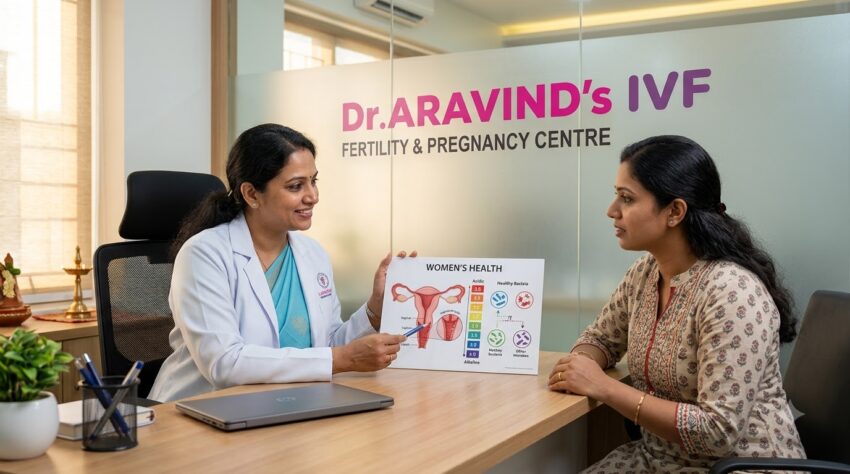
The vagina has a naturally acidic environment that helps support a healthy balance of microorganisms. Changes in this environment can sometimes be associated with odor, irritation, or a change in vaginal secretions. However, white vaginal discharge is not automatically a sign that your vaginal pH is abnormal.
Normal discharge changes throughout the menstrual cycle, and understanding the difference between natural hormonal changes and possible pH-related problems can help you avoid unnecessary treatments.
What Is Vaginal pH?
pH indicates whether an environment is more acidic or alkaline. The vaginal environment is normally mildly acidic, which helps support beneficial bacteria and limits the growth of some harmful microorganisms.
Lactobacilli are among the bacteria commonly found in a healthy vaginal environment. They produce substances that contribute to vaginal acidity.
The exact pH can vary depending on factors such as age, menstrual cycle, pregnancy, sexual activity, and hormonal changes.
Therefore, there is no single pH number that explains every woman’s vaginal health.
Does pH Determine Whether Discharge Is Normal?
Not by itself.
Healthy vaginal secretions can be clear, white, milky, creamy, or slightly sticky. Their consistency and amount often change during the menstrual cycle.
Around ovulation, cervical mucus may become wetter and more slippery. After ovulation, it can become thicker and creamier.
These changes are mainly influenced by hormones and do not necessarily indicate a pH problem.
A sudden change in odor, irritation, or other symptoms is more useful when considering whether something may be wrong.
What Can Disturb the Vaginal Environment?
Several factors can temporarily influence the vaginal environment.
Menstruation
The pH of menstrual blood is generally less acidic than the normal vaginal pH. Temporary changes can therefore occur during or shortly after a period.
Sexual Activity
Semen is more alkaline than the normal vaginal environment. After intercourse, vaginal pH can temporarily change.
This does not mean that sex has caused an infection. The vaginal environment may naturally return toward its usual state.
Antibiotics
Antibiotics can affect bacteria throughout the body, including beneficial vaginal bacteria. In some women, this may contribute to an imbalance and increase the likelihood of a yeast infection.
Hormonal Changes
Estrogen levels influence the vaginal tissues and their environment. Lower estrogen after menopause can result in changes in vaginal moisture and acidity.
Douching and Scented Products
Douching, vaginal washes, deodorizing sprays, and strongly fragranced products may irritate sensitive tissues and interfere with the natural vaginal environment.
The vagina does not need to be internally cleaned to remain healthy.
What Happens When the Bacterial Balance Changes?
A change in the vaginal microbial balance can sometimes lead to symptoms.
Bacterial vaginosis is one example. It may cause thin white or greyish fluid accompanied by a noticeable fish-like odor.
A yeast infection is different. It is associated with an overgrowth of Candida and may cause thick, clumpy white discharge with itching, redness, or irritation.
These conditions have different causes and treatments. Trying to identify them solely by discharge appearance can be unreliable.
Can You Tell Your pH From Discharge?
No. Discharge appearance cannot accurately tell you what the vaginal pH is.
Likewise, an at-home pH test may provide limited information and should not be treated as a complete diagnosis.
For example, some infections can occur without obvious changes in pH, while other factors can temporarily influence pH without causing disease.
If symptoms are persistent, professional assessment is more useful than repeatedly testing or trying to alter vaginal acidity yourself.
Should You Use Products That “Balance” pH?
Be cautious with products marketed as vaginal pH restorers, washes, or deodorizing treatments.
The vagina has natural mechanisms that help maintain its environment. Using unnecessary products, particularly inside the vagina, can sometimes increase irritation or disrupt the existing microbial balance.
Avoid douching unless specifically recommended by a healthcare professional.
If you have an unusual odor or persistent discharge, treating the underlying cause is more important than simply trying to change pH.
Does pH Affect Fertility?
Vaginal pH is only one part of reproductive health and does not provide a measure of fertility.
Fertility depends on several factors, including ovulation, egg health, sperm quality, fallopian tube function, uterine health, age, and hormonal factors.
Some untreated reproductive infections may cause complications that affect fertility, so persistent symptoms should not be ignored.
If you are trying to conceive and have ongoing reproductive concerns, a Best IVF Specialist in Kozhikode can help determine whether a fertility evaluation is appropriate.
An assessment may consider both partners rather than assuming that a discharge or pH change is responsible.
What Can Help Maintain Healthy Vaginal Balance?
Simple habits are generally more useful than complicated routines.
You can:
- Clean the external genital area gently
- Avoid douching
- Limit strongly scented intimate products
- Change out of damp clothing
- Wear comfortable, breathable underwear
- Use antibiotics only when medically prescribed
- Seek advice when symptoms persist
There is no need to try to make the vagina “more acidic” through home remedies or unverified products.
If you require broader reproductive evaluation, a Top fertility Centre in Kerala can provide guidance based on your individual medical history and fertility goals.
When Should You See a Doctor?
Seek professional advice if you develop a strong or unusual odor, persistent itching, burning, pelvic pain, unusual coloration, pain during urination, unexpected bleeding, or discharge that repeatedly changes without an obvious explanation.
These symptoms can have different causes, and the appropriate treatment depends on the diagnosis.
Conclusion
A healthy vaginal environment depends on a natural balance of microorganisms, hormones, and secretions. White vaginal discharge can be completely normal even when its texture or amount changes during the menstrual cycle.
You do not need to constantly adjust or “clean” vaginal pH. If discharge changes are persistent or occur with odor, itching, burning, pain, unusual color, or bleeding, schedule an appointment with a qualified healthcare professional for appropriate evaluation and personalized guidance.