
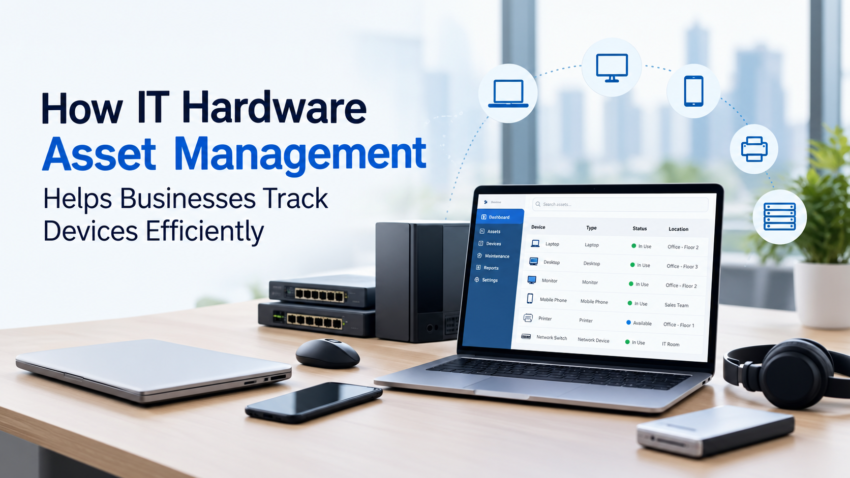
Hardware asset management in IT refers to the practice of monitoring and controlling tangible technological assets such as laptops, servers, computer screens, and networking devices throughout their life cycle. The implementation of such an approach enables IT professionals to have real-time information on the location of each asset, its user, and its maintenance and replacement needs.
In IT management, having control over each and every device in the company is simple enough — until you’re overseeing many hundreds of devices scattered among various locations. In order to avoid losing equipment and forgetting to maintain it while blowing through your budget, you need proper IT hardware asset management in place.
Why Centralised Device Tracking Changes Everything
With hardware data residing in spreadsheets and disparate systems, visibility becomes an issue. With IT asset management, all the information about the devices including serial numbers, when they were purchased, who owns them, where they are located, and their warranty details are brought to one place.
Take the example of a medium-sized enterprise having 300 employees. In the absence of a central system to keep track of all this information, it is possible for the IT department to waste many hours a week finding out about devices, matching records, and managing maintenance. IT hardware asset management centralizes this information, helping reduce administrative effort substantially and making device tracking and maintenance more efficient.
What Gets Tracked in an IT Hardware Asset System?
A robust asset management system typically covers:
- Laptops and desktops — assigned user, location, OS version, condition
- Servers — rack location, uptime data, maintenance schedule
- Monitors and peripherals — model, age, assigned department
- Networking equipment — routers, switches, patch panels, firmware version
- Mobile devices — IMEI numbers, device ownership (BYOD vs. company-owned)
Having this level of detail is not just about organisation. It directly supports security audits, insurance claims, and procurement planning.
The Real Cost of Poor IT Hardware Visibility
The lack of management of hardware is much costlier than most businesses think. Machines are lost when offices are moved. Old hardware is left unused in storage. Hardware is purchased excessively since procurement does not have knowledge of existing hardware.
Industry studies have shown that between 15% and 20% of an organisation’s total IT assets may be lost on a yearly basis due to poor tracking. This number starts taking weight when one considers the costs of replacing contemporary laptops, servers and networking equipment.
Beyond the costs of replacement, there is the additional cost of lost time by employees due to unexpected device malfunctioning, expensive urgent procurement, and lost time by the IT department solving problems rather than planning strategically.
Security Risks From Untracked Devices
An unaccounted for device poses a threat to security. Should a laptop leave the facility without adequate paperwork, there is no way for your team to be aware that it has been lost or stolen, let alone if it contained any confidential information. Hardware tracking keeps tabs on all devices.
This is particularly important for organizations in regulated industries such as finance, health care, and law, where data-protection laws necessitate the capability of controlling all the equipment used to process any sensitive data.
How IT Asset Tracking Works in Practice
Modern IT asset tracking tools make use of a variety of techniques including barcodes, QR codes, RFID tags, and agents that run on the device. These have different advantages based on the surroundings.
|
Tracking Method |
Best For |
Key Benefit
|
|---|---|---|
|
Barcode / QR Code |
Laptops, monitors, peripherals |
Low cost, easy to implement |
|
RFID Tags |
Large asset inventories, warehouses |
Bulk scanning without line-of-sight |
|
Software Agents |
Networked devices, laptops, servers |
Real-time usage and health data |
|
Network Discovery |
Enterprise environments |
Automated detection of new devices |
Layering will be the best method that can be adopted where tagging is done physically to identify the assets together with the use of software agents for real-time monitoring of the equipment..
Lifecycle Management: From Purchase to Retirement
Device tracking throughout its entire life cycle – from its acquisition to deployment, maintenance, and ultimate decommissioning – lies at the heart of life cycle management. A well-designed process identifies the devices that are nearing their end of life before a breakdown occurs.
This is also conducive to sound budgeting because with IT management knowing that 40 laptops will go out of support after six months, this would be budgeted for beforehand and not after failures have started.
Key Business Benefits of IT Hardware Asset Management
Implementing a structured hardware tracking system delivers measurable advantages across several business functions:
- Cost reduction — Eliminate duplicate purchases and identify underutilised hardware that can be redeployed.
- Faster IT support — Technicians can access full device history before a support ticket is even raised.
- Audit readiness — Maintain accurate records for internal audits, insurance, and compliance requirements.
- Improved accountability — Every device is assigned to a person or department, reducing casual misuse or loss.
- Procurement intelligence — Historical usage data informs smarter buying decisions and vendor negotiations.
These aren’t marginal gains. For a company managing 500 or more assets, even a 10% improvement in utilisation rates can translate into significant annual savings.
Integration With IT Service Management (ITSM)
The usefulness of asset management increases further when it is integrated with the ITSM system. Once a help desk ticket has been initiated, it will be possible to retrieve the complete information about the asset being used, such as age, configuration, previous incidents, and its warranty status.
What to Look for in an IT Hardware Asset Management Solution
Not all platforms are equal. When evaluating options, IT managers should prioritise:
- Ease of onboarding and device import
- Customisable fields for your specific hardware categories
- Automated alerts for warranty expiry, maintenance due dates, and end-of-life timelines
- Role-based access so department heads can view their own assets without accessing the full database
- Reporting and dashboard capabilities that support executive-level decision making
Scalability also matters. A solution that works for 100 devices should handle 1,000 without requiring a complete system overhaul.
Getting Started: A Practical Approach
Where a company begins from a fresh start, a phase-wise strategy would work well. It would involve a physical audit of all the hardware that already exists. Each hardware should be assigned a unique identifier. The next step would be to integrate this data into the desired platform.
Companies that are currently employing partial tracking systems have something to gain from consolidating. Integrating the fragmented spreadsheets and individual databases into one place will increase visibility right away.
For businesses looking for a purpose-built solution, Genic Assets provides dedicated tools for IT hardware tracking — covering everything from initial asset registration to full lifecycle management — designed with the operational realities of IT teams and business owners in mind.
Frequently Asked Questions
What is IT hardware asset management?
Hardware asset management for IT is the process of keeping track of all the hardware equipment that is related to the IT sector, from purchase to disposal. Hardware asset management ensures that a business has real-time information on all the devices owned by the company.
Why do businesses need an asset management system for IT hardware?
In the absence of a well-organised system, firms will find it difficult to track the devices, buy more than necessary devices, and miss out on scheduled maintenance. An asset management system consolidates all the information pertaining to devices, minimising the chances of error, and enabling better decisions.
How does IT asset tracking improve security?
IT asset management guarantees that every asset will be accounted for, tagged, and logged. In case an asset becomes lost, it is logged immediately. This helps to avoid unnoticed security breaches that can occur when equipment gets lost or stolen, which can pose a serious threat to organizations dealing with customer or financial data.
Can small businesses benefit from IT hardware asset management?
Yes. Hardware tracking is even important for businesses that have less than 50 devices. This will ensure that you save time spent looking for your devices. You will also plan for future replacements before time and resolve any IT support issues quickly. Your ROI will be realized very quickly especially when one device is not lost.
What is the difference between IT asset tracking and IT asset management?
Tracking of IT assets is concerned with the location and surveillance of assets in real-time. On the other hand, management of IT assets involves the entire lifecycle of assets, right from acquisition till disposal and includes financial, contractual, and operational information about them. Proper management is based on proper tracking but with the addition of other elements.
How often should businesses audit their IT hardware assets?
Most IT departments perform at least one hardware audit formally each year, with automation-based monitoring in the intervening periods. High growth firms or those that operate within a regulated industry may need to perform audits on a quarterly basis. Automations in asset management software have minimized the time required for performing hardware audits.