

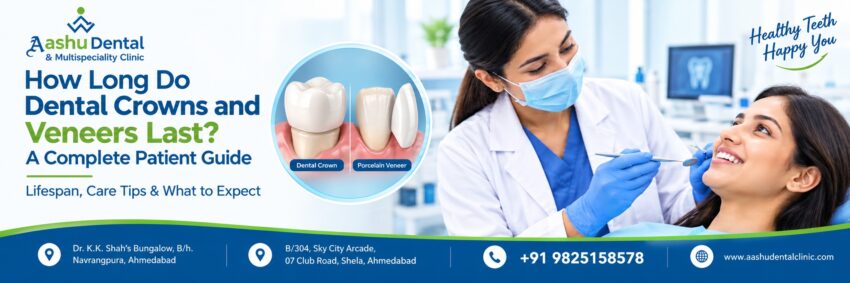
Dental crowns and veneers are popular dental treatments that help improve the appearance, strength, and function of teeth. Whether you have a damaged tooth, uneven teeth, discoloration, or want to enhance your smile, these treatments can provide long-lasting results when chosen according to your dental needs. However, one of the most common questions patients ask before starting treatment is, “How long do dental crowns and veneers last?”
The lifespan of these dental restorations depends on several factors, including the material used, oral hygiene habits, eating habits, teeth grinding, and regular dental checkups. Understanding how long dental crowns and veneers last can help you make an informed decision and take better care of your smile.
Dental crowns and veneers are designed to restore or improve the appearance of teeth, but they serve different purposes. A dental crown is a custom-made covering that fits over most or all of the visible portion of a tooth. It is commonly recommended for teeth that are weakened, severely damaged, cracked, or restored with a large filling. Crowns can also be used after root canal treatment when additional protection is needed.
Dental veneers are thin shells that cover the front surface of teeth. They are often used to improve the appearance of stained, chipped, slightly uneven, or irregularly shaped teeth. Porcelain veneers are popular because they can closely resemble natural tooth enamel and provide an attractive smile.
Choosing between dental crowns and veneers depends on your tooth condition, cosmetic goals, and the recommendation of your dentist. Both treatments can deliver excellent results when planned and maintained properly.
Dental crowns generally last around 5 to 15 years, although some can remain functional for 15 years or longer with proper care. Their actual lifespan depends on the crown material, the condition of the supporting tooth, and the pressure placed on it during chewing.
Porcelain-fused-to-metal crowns, all-ceramic crowns, zirconia crowns, and metal crowns each have different properties. Ceramic and porcelain crowns are often selected for their natural appearance, while zirconia crowns are known for their strength and durability. Your dentist can recommend the most appropriate material based on the location of the tooth and your individual requirements.
Crowns placed on back teeth may experience greater chewing forces than those on front teeth. Patients who grind or clench their teeth may also experience faster wear, chipping, or other complications. Regular dental examinations help identify potential problems before they become more serious.