
When Compliance Stops Feeling Optional
There’s a moment many organizations quietly face—sometimes after a safety inspection, sometimes after a warning notice—when government regulations stop feeling like background noise and start demanding attention. It’s not always dramatic, but it’s enough to shift priorities. That’s often when ISO 45001 certification begins to make sense. Not as a forced decision, but as a structured response to growing pressure. ISO 45001 certification gives shape to compliance efforts, helping businesses move from reacting to regulations to managing them with clarity and control.
Government Regulations: The Unseen Framework Guiding Everything
Government regulations are always present, even when no one actively discusses them. They define expectations—what organizations must do, what they must avoid, and what leads to penalties. But here’s the reality: regulations alone don’t explain how to manage safety every single day. That gap is where ISO 45001 certification proves valuable. It translates regulatory requirements into workable systems. Instead of scrambling during inspections, organizations that follow ISO 45001 certification operate in ways that naturally align with those rules.
ISO 45001 Certification: More Than a Formal Label
At first glance, ISO 45001 certification may look like just another compliance label—a certificate on the wall or a line in a report. But in practice, it goes much deeper. It creates a structured way of thinking about workplace safety—anticipating risks, managing them, and reviewing outcomes. ISO 45001 certification connects scattered efforts into one cohesive system. When government regulations come into play, that system allows organizations to respond with consistency instead of confusion. It’s less about appearance and more about how things function behind the scenes.
Bridging the Gap Between Rules and Reality
Government regulations may sound clear on paper, but applying them in real workplaces often creates challenges. Different departments, shifting responsibilities, and evolving risks can complicate compliance. ISO 45001 certification helps bridge that gap by linking written rules to everyday actions. Procedures become clearer, responsibilities become defined, and compliance starts to feel manageable. While ISO 45001 certification doesn’t eliminate complexity, it organizes it—making regulatory expectations easier to handle in real-world conditions.
Risk Management: Seeing Beyond the Obvious
Most organizations can identify visible hazards like machinery, chemicals, or unsafe layouts. But risks don’t always announce themselves. Stress, fatigue, and repetitive strain often remain unnoticed until they cause problems. ISO 45001 certification encourages a broader perspective. It pushes organizations to look deeper, question assumptions, and review processes regularly. While government regulations highlight certain risks, ISO 45001 certification builds a habit of continuous observation. Over time, that habit becomes one of the system’s greatest strengths.
A Subtle Shift in Workplace Culture
ISO 45001 certification doesn’t just improve systems—it influences behaviour. Slowly and almost quietly, it changes how people think about safety. At first, employees may follow procedures out of obligation. Over time, awareness increases, reporting improves, and conversations around safety become more open. Government regulations can enforce compliance, but they rarely shape mind-sets. ISO 45001 certification does. It builds a sense of shared responsibility, where people feel involved rather than instructed. That cultural shift strengthens compliance without adding pressure.
Documentation: Not Just Paperwork, But Clarity
Documentation often gets a bad reputation. People imagine endless files and complicated forms. Yes, ISO 45001 certification involves documentation—but not without purpose. It creates clarity. When organizations document processes properly, confusion decreases. Employees understand expectations, and supervisors know what to monitor. While government regulations require records, ISO 45001 certification ensures those records serve a purpose. Good documentation supports action—it doesn’t just sit unused.
Audits: From Fear to Understanding
Audits often make people uneasy. Many associate them with evaluation and the risk of failure. But ISO 45001 certification approaches audits differently. Internal audits help organizations assess their own systems before regulators step in. External audits confirm alignment with both ISO standards and government regulations. Over time, organizations begin to see audits as tools for improvement rather than threats. That shift in mind set makes a significant difference.
Leadership Involvement: More Than Formal Approval
Many assume leadership’s role in ISO 45001 certification ends with signing policies or approving budgets. In reality, leadership shapes the entire system. When leaders actively engage—reviewing safety performance, discussing risks, and supporting improvements—the system becomes stronger. Government regulations demand accountability, but ISO 45001 certification requires visible commitment. Employees notice when leaders prioritize safety—and they notice when they don’t. Leadership doesn’t just support the system; it defines how effective it becomes.
Training: Turning Awareness into Action
Organizations often treat training as a one-time activity. ISO 45001 certification takes a different approach. It promotes continuous learning. Employees must understand risks, procedures, and their roles in maintaining safety. While government regulations may require training sessions, ISO 45001 certification ensures those sessions remain relevant and ongoing. When people truly understand their responsibilities, they take ownership. That ownership strengthens the entire safety system.
Handling Incidents: Learning Instead of Blaming
Even strong systems cannot prevent every incident. What matters most is how organizations respond. Government regulations focus on reporting and accountability. ISO 45001 certification goes further by encouraging learning. Instead of asking, “Who caused this?” organizations ask, “What failed in the system?” This shift transforms the entire approach. Investigations become constructive rather than punitive. Over time, organizations build a learning culture where each incident contributes to improvement.
Continuous Improvement: Small Steps That Add Up
ISO 45001 certification doesn’t rely on sudden, dramatic changes. It focuses on steady progress. Organizations review performance, identify improvements, and take action—repeatedly. Government regulations may stay unchanged for long periods, but workplace conditions evolve constantly. ISO 45001 certification allows systems to adapt. These small, consistent improvements may seem minor at first, but they create meaningful long-term impact.
The Challenges No One Really Mentions
Let’s be honest—implementing ISO 45001 certification comes with challenges. Employees may resist changes, especially if they see them as extra work. Resources can feel limited. Some requirements may seem unclear in the beginning. And sometimes, organizations treat ISO 45001 certification as a short-term project instead of an ongoing system. While government regulations push organizations toward compliance, ISO 45001 certification requires commitment. These challenges are real—but with consistency and the right approach, organizations can manage them effectively.
Benefits That Grow Over Time
The benefits of ISO 45001 certification rarely appear overnight. They develop gradually. Organizations experience fewer incidents, better documentation, and smoother audits. Employees begin to feel safer, even if they don’t always express it. Government inspections become less stressful because systems already exist. ISO 45001 certification creates stability, and that stability reflects in everyday operations. It’s not about quick wins—it’s about long-term reliability.
Why Governments Value ISO 45001 Certification
Government bodies increasingly recognize ISO 45001 certification as a structured approach to safety management. It doesn’t replace regulations—but it supports them effectively. Organizations that implement ISO 45001 certification demonstrate stronger risk control, clearer documentation, and better accountability. From a regulatory perspective, this consistency matters. It shows that organizations actively manage safety through a defined system rather than handling it casually.
Choosing the Right Certification Partner
Selecting the right certification body plays an important role in the process. Organizations should look for clarity, not confusion. Integrated Assessment Service provides ISO 45001 certification through a practical and straightforward approach. Their focus remains on helping organizations understand and improve, rather than overwhelming them with complexity. The right partner makes the certification journey smoother and more meaningful.
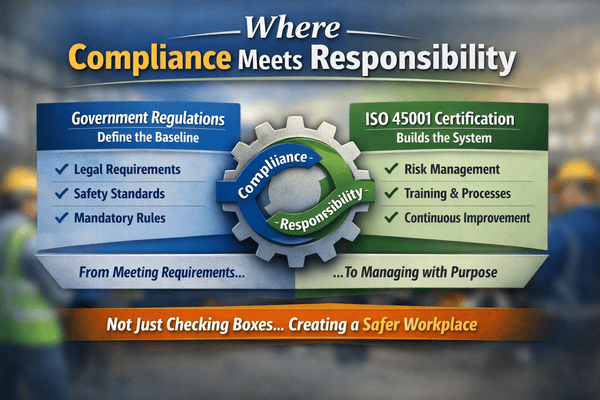
Where Compliance Meets Responsibility
ISO 45001 certification and government regulations don’t operate separately—they complement each other. Regulations define the baseline, while ISO 45001 certification builds the system that supports it. Over time, compliance transforms into responsibility. Organizations don’t just meet requirements—they manage them with purpose. That’s where the real value lies—not in the certificate itself, but in how it reshapes everyday safety practices.