

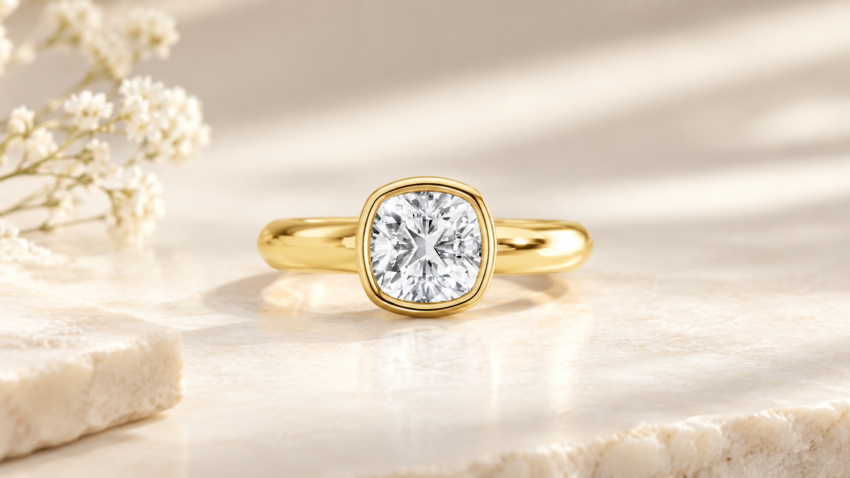
Choosing an engagement ring often comes down to finding a design that feels personal while also fitting everyday life. Unique bezel engagement rings offer an appealing option for shoppers who want a clean setting with a practical design. Instead of holding the center stone with separate prongs, a bezel setting uses a thin metal rim around the stone. This gives the ring a distinct appearance while helping keep the diamond securely in place.
Bezel settings are available in many shapes, metals, and diamond styles. From simple solitaires to detailed designs featuring side stones, there are plenty of options to consider. Lab grown diamonds also give shoppers another way to customize the ring according to their preferred size, shape, and budget.
What Is a Bezel Engagement Ring?
A bezel engagement ring features a metal border that surrounds the edge of the center stone. The metal holds the stone in position and creates a smooth transition between the diamond and the ring setting.
Unlike traditional prong settings, there are no visible claws extending over the stone. This gives bezel designs a distinctive look and can make the ring feel smooth when worn.
The setting can surround the entire stone or cover only part of its outer edge. Full bezels provide a more enclosed appearance, while partial bezel settings can leave more of the diamond exposed.
This design works with several diamond shapes, including round, oval, emerald, pear, and elongated cuts.
Why Consider a Bezel Setting?
There are several reasons shoppers choose bezel settings for engagement rings.
One benefit is the smooth outer surface. Since there are fewer raised elements, the ring is less likely to catch on clothing, hair, or other materials during everyday activities.
The metal rim also provides an additional layer around the diamond’s edge. This can be useful for people who want a setting designed with daily wear in mind.
Another reason is the appearance. Bezel settings have a defined outline around the center stone, which can give the ring a structured and distinctive look.
For someone looking beyond traditional prong designs, a bezel ring offers a different approach without becoming overly complicated.
Explore Unique Bezel Engagement Rings in Different Styles
When shopping for a bezel design, it helps to look beyond the setting itself. The diamond shape, band design, metal color, and surrounding details can all change the final appearance.
Here are several styles worth considering.
1. Bezel Solitaire Engagement Ring
A solitaire is one of the simplest ways to showcase a bezel setting. The center diamond remains the main focus, while the surrounding metal creates a defined border.
Explore bezel solitaire engagement ring can work particularly well for someone who prefers a clean ring with fewer decorative elements.
Round diamonds create a traditional appearance, while oval or pear-shaped stones can give the ring a more distinctive outline.
The simplicity of a solitaire also makes it easier to pair with different wedding band styles later.
2. Bezel Set Engagement Rings With Side Stones
A bezel setting does not have to mean a completely plain ring. Side stones can be added along the band or positioned beside the center diamond.
Small diamonds can provide additional detail without taking attention away from the center stone.
For example, an oval center diamond surrounded by a slim bezel can be paired with small stones along the shoulders of the band. This creates more visual detail while maintaining the smooth outline of the center setting.
3. Oval Bezel Designs
Oval diamonds have an elongated shape that can work particularly well with bezel settings.
The metal border follows the curved outline of the stone, creating a continuous frame around the diamond.
An oval bezel ring can also create the impression of a longer center stone on the finger. It is a useful option for shoppers who want something different from a traditional round diamond.
The band can remain simple or include small accent stones for additional detail.
4. Pear-Shaped Bezel Rings
Pear-shaped diamonds combine a rounded end with a pointed tip, giving the center stone a distinctive silhouette.
A bezel can follow this outline closely and provide a smooth frame around the diamond.
When selecting this style, pay attention to how the pointed end is protected by the setting. A well-designed bezel can create a secure border around the entire stone.
Pear-shaped bezel rings can be worn with the point facing toward or away from the hand, depending on personal preference.
5. Bezel Diamond Engagement Ring With a Wider Band
A wider band can change the overall character of a bezel ring. Instead of making the center stone the only noticeable feature, the band becomes part of the design.
This approach can work for people who prefer a stronger, more substantial ring profile.
A wider band can be plain, textured, or decorated with smaller diamonds. Metal choice also makes a difference, with white gold, yellow gold, rose gold, and platinum offering different visual effects.
Lab Grown Bezel Engagement Ring Options
Lab grown diamonds are another option to consider when designing a bezel engagement ring.
Lab grown diamonds are created using controlled technological processes and have the same basic chemical composition and crystal structure as diamonds formed naturally underground.
A lab grown bezel engagement ring can therefore combine the enclosed look of a bezel setting with a lab grown center diamond.
Shoppers can choose from different diamond shapes, carat weights, colors, and clarity grades. This makes it possible to focus the budget on the characteristics that matter most to them.
For example, someone might choose a larger oval lab grown diamond in a simple bezel setting, while another shopper may prefer a smaller round stone with additional diamonds along the band.
6. East-West Bezel Ring Designs
An east-west setting places an elongated diamond horizontally across the finger instead of vertically.
This layout can give an oval, emerald, or other elongated diamond a completely different appearance.
A bezel works particularly well with this arrangement because the metal border follows the complete outline of the horizontally positioned stone.
An east-west bezel ring can be a good option for someone who wants a design that differs from the usual vertical center-stone arrangement.
7. Bezel Rings With Mixed Metals
Using more than one metal color can add contrast to the design.
For example, a white gold bezel can be combined with a yellow gold band. The contrast helps separate the center setting from the rest of the ring.
Another option is to use the same metal throughout but select different finishes for the bezel and band.
Mixed-metal designs can also make it easier to coordinate an engagement ring with existing jewelry made from different metals.
How to Choose the Right Bezel Design
Before selecting a ring, consider how the piece will fit into everyday life.
First, think about the diamond shape. Round diamonds offer a familiar outline, while oval, pear, emerald, and other shapes provide different proportions.
Next, consider the band width. A thin band creates a lighter visual profile, while a wider band can make the ring look more substantial.
Metal color is another important choice. White metals can create a cool, neutral appearance, while yellow and rose gold add warmer tones.
You should also consider how the engagement ring will pair with a wedding band. Because bezel settings can sit differently from prong settings, checking the space between the engagement ring and wedding band can help avoid fit issues.
Bezel Engagement Rings for Everyday Wear
Many people wear their engagement rings throughout the day, so practical details matter.
A bezel setting has a relatively smooth profile compared with many raised prong designs. This can make it convenient for people who frequently work with their hands or prefer jewelry that does not have many exposed elements.
However, the setting still needs proper care. Dirt and residue can collect around the edges of any ring, including bezel designs.
Regular cleaning and professional inspections can help keep the diamond and setting in good condition.
It is also worth checking the condition of the metal around the stone from time to time. If the bezel becomes damaged or worn, professional attention may be needed.
Bezel Diamond Engagement Ring or Prong Setting?
Both styles have their own characteristics.
A prong setting uses small metal claws to hold the diamond, leaving more of the stone exposed. This can allow more light to enter the diamond from different directions.
A bezel uses a metal rim around the stone. This creates a smoother outline and covers more of the diamond’s outer edge.
The choice comes down to the appearance, handling, and design details the wearer prefers.
Someone who likes visible metal surrounding the center stone may prefer a bezel. Someone who wants a more open presentation may prefer prongs.
Final Thoughts
Bezel engagement rings offer plenty of room for personal choices. A simple solitaire, an east-west design, a wider band, or a lab grown diamond can each create a different result while keeping the defining bezel setting.
For shoppers interested in unique bezel engagement rings, the best starting point is to consider the diamond shape, metal, band profile, and how the ring will fit into everyday routines.
Whether you prefer a traditional round diamond or want to experiment with an oval, pear, or emerald shape, a bezel setting provides a distinctive way to frame the center stone. Taking time to compare different designs can help you find a ring that suits both your personal taste and practical needs.