

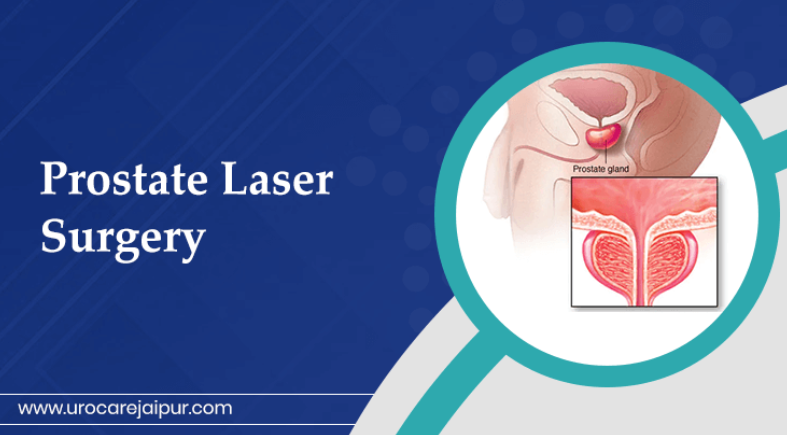
Prostate laser surgery has become a preferred treatment for men whose enlarged prostate causes troublesome urinary symptoms. The procedure uses focused laser energy to remove or vaporise excess prostate tissue that blocks the flow of urine. Compared with traditional open or conventional endoscopic surgery, it generally involves less bleeding, a shorter hospital stay, and a faster return to normal life. Even so, recovery is a gradual process, and knowing what to expect helps patients prepare, stay comfortable, and avoid avoidable complications.
Understanding the Procedure
Benign prostatic hyperplasia, or non-cancerous prostate enlargement, is common in men over 50. As the gland grows, it squeezes the urethra and causes a weak stream, frequent urination, nighttime urination, and incomplete emptying. Laser surgery treats this by passing a thin scope through the urethra, so no external cuts are needed. The laser then vaporises, cuts, or enucleates the obstructing tissue, opening the channel for urine to flow freely. The operation is performed under spinal or general anaesthesia and usually takes one to two hours, depending on the size of the prostate.
The First 24 to 48 Hours
After surgery, a urinary catheter is placed to drain the bladder and allow the treated area to heal. The urine may look pink or light red, which is normal. Fluids are sometimes passed through the bladder to prevent clots. Many patients are able to go home within one or two days, and some even on the same day. The catheter is typically removed after one to three days, although it may stay longer for larger prostates or when bleeding has been more than expected.
Normal Symptoms During Recovery
Some discomfort is expected during the first few weeks. Patients commonly experience:
- Mild burning or stinging while passing urine
- A frequent or urgent need to urinate
- Light blood-tinged urine that comes and goes
- Temporary leakage or difficulty holding urine for a short time
- A feeling of pressure in the lower abdomen or pelvis
These symptoms occur because the treated tissue is healing and the bladder is adjusting to the new, wider passage. They usually improve steadily over four to six weeks, although complete healing of the prostate area can take up to three months.
Managing Blood in the Urine
Light bleeding is the most frequent concern. Urine may clear and then turn pink again, particularly when the patient is more active or strains during a bowel movement. Drinking plenty of water, about two to three litres daily unless advised otherwise, helps flush the bladder and keep the urine light in colour. Preventing constipation is equally important, so a fibre-rich diet and, if necessary, a stool softener are often recommended. Straining can disturb the healing surface and trigger fresh bleeding.
Activity and Lifestyle Guidelines
Rest is important in the early days, but gentle walking is encouraged to improve circulation and lower the risk of blood clots. Patients are generally advised to follow these precautions:
- Avoid heavy lifting, strenuous exercise, and vigorous sports for about four weeks
- Avoid long periods of sitting on hard surfaces or travelling long distances in the first week
- Postpone cycling and horse riding for at least a month
- Return to desk work after about one week, depending on comfort
- Avoid alcohol and excess caffeine, which can irritate the bladder
Driving can usually resume once the catheter is out, the patient is off strong pain medication, and he feels comfortable pressing the brake pedal.
Sexual Function After Surgery
Many men worry about sexual health. Most can resume sexual activity after about four to six weeks, once the surgeon confirms that healing is satisfactory. Erections are usually preserved. A common and harmless change is retrograde ejaculation, in which semen flows backward into the bladder instead of out through the penis. It does not affect pleasure or masculinity, but it may reduce fertility, so men who plan to have children should discuss this beforehand.
Medications and Follow-Up Care
Doctors typically prescribe a short course of antibiotics, pain relief, and sometimes medicines to relax the bladder and reduce urgency. Patients should take them exactly as directed and avoid blood-thinning drugs unless approved. A follow-up visit is scheduled within a few weeks to review urine flow, check for infection, and measure residual urine. Further reviews help confirm that the improvement in symptoms is lasting.
Warning Signs That Need Prompt Attention
Although serious complications are uncommon, patients should seek medical help immediately if any of the following occur:
- Inability to pass urine
- Heavy bleeding or large clots that block the flow
- Fever, chills, or severe pain suggesting infection
- Persistent burning that worsens rather than improves
- Swelling or pain in the testicles
Early attention prevents minor problems from turning into major ones.
Choosing the Right Care
Outcomes depend heavily on the surgeon’s experience, the laser technology used, and the quality of post-operative support. Patients considering Prostate Laser Surgery in Jaipur can find modern facilities with advanced laser systems and structured aftercare programmes. Consulting an experienced Urologist in Rajasthan helps ensure that the right procedure is chosen for the individual prostate size and health condition, and that recovery is monitored carefully from the first day to the final check-up.
Conclusion
Recovery after prostate laser surgery is typically smooth and quicker than after traditional operations, but it still requires patience and sensible self-care. Temporary urinary irritation, light bleeding, and mild discomfort are normal and improve with time, hydration, rest, and adherence to medical advice. Most men enjoy a stronger urine stream, less frequent urination, and a better quality of life within weeks. By selecting Prostate Laser Surgery in Jaipur and following the guidance of a trusted Urologist in Rajasthan, patients can look forward to a safe recovery and long-term relief from the symptoms of an enlarged prostate.