
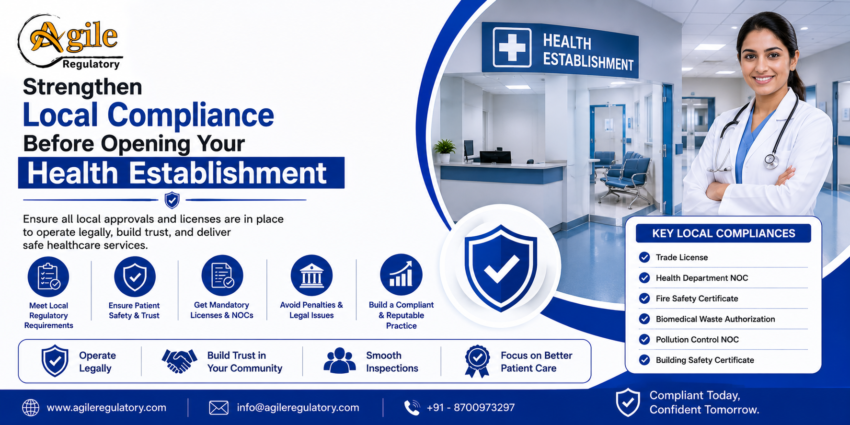
Opening a health-related establishment requires more than arranging premises, equipment and staff. Businesses operating clinics, diagnostic centres, salons, wellness establishments, food-related premises, healthcare facilities and other public-facing establishments may need to complete several local regulatory formalities before beginning operations.
One important consideration is the applicable municipal or local authority approval. Depending on the nature of the establishment and the jurisdiction, a health trade license may be required to demonstrate that the premises and business meet relevant local health, sanitation and safety requirements.
For entrepreneurs, understanding the licensing process before opening can prevent avoidable delays. It also helps ensure that the business’s premises, activities and documentation are aligned with the information submitted to the local authority.
This guide explains why health-related establishments should address local compliance early, what businesses should know about the documents required for health trade license, how health and trade license requirements can interact, and what applicants should consider before using a health trade license apply online process.
What Is a Health Trade License?
A health trade license is generally a local regulatory permission applicable to certain businesses that may have implications for public health, sanitation or hygiene.
The exact requirement depends on the type of business, local authority and applicable municipal rules.
Businesses that may need to evaluate such licensing requirements can include certain:
- Clinics and healthcare establishments
- Diagnostic facilities
- Restaurants and food establishments
- Salons and beauty establishments
- Hotels and lodging businesses
- Wellness centres
- Fitness establishments
- Food-handling businesses
- Other establishments involving public health or sanitation considerations
Not every business requires the same approval, so the first step should be determining whether the proposed activity falls within the relevant local licensing framework.
Why Local Compliance Matters Before Opening
A new establishment can face operational difficulties if regulatory requirements are considered only after opening.
Completing the applicable licensing process in advance can help a business:
- Establish regulatory credibility
- Demonstrate compliance with local requirements
- Maintain appropriate hygiene standards
- Organize premises-related documentation
- Avoid unnecessary application delays
- Prepare for inspections where applicable
- Maintain records for future renewals
Local licensing is therefore not simply an administrative task. It can form part of the business’s broader compliance structure.
Who Should Consider a Health Trade License?
Eligibility depends on local rules and the nature of the establishment.
Before opening, a business owner should assess:
Nature of Business
What services will the establishment provide?
Premises
Where will the establishment operate?
Public Interaction
Will customers, patients or visitors regularly use the premises?
Hygiene Requirements
Does the activity involve food, healthcare, personal services, sanitation or other health-related considerations?
Local Authority
Which municipal or local body has jurisdiction over the premises?
These factors can help determine whether a health-related trade approval is applicable.
Health and Trade License: Understanding the Difference
Businesses sometimes use the phrase health and trade license as though it represents one universal approval.
In practice, local licensing structures can differ from one jurisdiction to another. A business may need to evaluate a general trade license along with a health-related license or permission, depending on its activity and local rules.
Therefore, applicants should not assume that obtaining one municipal approval automatically satisfies every local requirement.
For example, a food establishment may need to consider:
- Trade licensing
- Health-related municipal requirements
- FSSAI compliance
- Fire safety requirements, where applicable
- Building or occupancy requirements
- Waste-management requirements
The precise requirements depend on the establishment and jurisdiction.
When Should You Apply?
The safest approach is to evaluate local licensing requirements during the business setup stage rather than after commercial operations begin.
Ideally, entrepreneurs should start by:
- Finalizing the business activity
- Identifying the premises
- Checking the local authority
- Reviewing applicable licensing requirements
- Preparing documents
- Completing the application
- Addressing any queries
- Obtaining the applicable approval before commencing regulated operations
Early preparation can be particularly useful where inspections or additional documents are involved.
Documents Required for Health Trade License
The documents required for health trade license applications can vary depending on the local authority and type of establishment.
Commonly requested documents may include:
- Applicant identity proof
- PAN or business identification details
- Address proof
- Property ownership documents or rent agreement
- Recent property-related documents, where applicable
- Passport-size photograph
- Business registration documents
- Partnership deed, if applicable
- Company incorporation documents, where applicable
- Premises photographs
- Site or layout plan
- Details of business activity
- Proof of authorized occupancy
- Existing applicable approvals
- Supporting declarations
Additional documents may be required for specific types of establishments.
Applicants should therefore verify the current document list applicable to their jurisdiction before submitting an application.
Why Accurate Documentation Matters
One of the most common problems in licensing applications is inconsistency between documents.
For example, the following information should be checked carefully:
- Applicant name
- Business name
- Premises address
- Property details
- Nature of activity
- Ownership information
- Contact details
Even a minor discrepancy can lead to clarification requests.
Before submission, businesses should cross-check all documents against the application form.
Premises Readiness Is Equally Important
Documentation alone does not guarantee compliance.
The establishment itself should be prepared according to applicable local requirements.
Depending on the business, this may include:
- Clean premises
- Appropriate sanitation facilities
- Safe water supply
- Waste disposal arrangements
- Adequate ventilation
- Proper storage
- Clean working areas
- Pest-control measures
- Appropriate hygiene practices
The exact requirements depend on the nature of the establishment.
Health Trade Licence and Hygiene Standards
The term health trade licence is particularly relevant for establishments where hygiene and sanitation are important aspects of daily operations.
A business should establish internal procedures for:
- Cleaning
- Waste handling
- Equipment sanitation
- Personal hygiene
- Storage
- Pest management
- Customer-area cleanliness
- Record maintenance
These measures can help the establishment maintain consistent standards rather than preparing only when an inspection is expected.
Health Trade License Apply Online
Many local authorities provide digital services through which eligible applicants can submit applications electronically.
Businesses searching for a health trade license to apply online should first identify the correct municipal or local authority portal.
The general online workflow may involve:
Step 1: Identify the Authority
Determine which local body has jurisdiction over the establishment.
Step 2: Create an Account
Register on the applicable portal if required.
Step 3: Select the Appropriate Service
Choose the relevant health or trade licensing service.
Step 4: Enter Business Details
Provide accurate information about the establishment, applicant and premises.
Step 5: Upload Documents
Submit the required supporting documents in the prescribed format.
Step 6: Pay Applicable Fees
Complete payment where required.
Step 7: Submit the Application
Review all information before final submission.
Step 8: Track the Application
Monitor the application for queries, inspection requirements or approval updates.
Online filing can make the process more convenient, but businesses should still ensure that the information submitted is accurate and complete.
What Can Cause Application Delays?
Several issues can slow down a local licensing application.
Incomplete Documents
Missing documents may lead to requests for additional information.
Incorrect Address
The premises address should match supporting property documents.
Wrong Business Category
Selecting an incorrect category can create unnecessary clarification.
Poor Premises Information
Inadequate photographs, layout information or other premises details may cause difficulties where such documents are required.
Unclear Ownership
Rental or ownership documentation should clearly establish the applicant’s right to use the premises.
Ignoring Local Requirements
Different municipalities may have different procedures.
Businesses should therefore avoid copying an application process from another city without verifying the applicable local rules.
Health Establishments Should Maintain Compliance After Approval
Obtaining a license is not necessarily the end of compliance.
Businesses should monitor:
- License validity
- Renewal dates
- Changes in business activity
- Changes in premises
- Ownership changes
- Expansion
- Additional services
- Applicable municipal notices
If significant changes occur, the business should determine whether an amendment or fresh approval is necessary.
Renewal Should Be Planned in Advance
A business should not wait until its license has expired before thinking about renewal.
Maintain a compliance calendar containing:
- License issue date
- Expiry date
- Renewal window
- Required documents
- Applicable fees
- Inspection requirements
This simple practice can help prevent avoidable interruptions.
Health and Trade Compliance for Different Establishments
Clinics
Healthcare establishments may need to consider municipal requirements alongside sector-specific healthcare regulations.
Diagnostic Centres
Diagnostic facilities should assess local licensing requirements as well as applicable medical and waste-management regulations.
Restaurants
Food businesses may need to consider municipal health/trade permissions alongside FSSAI licensing and other local approvals.
Salons and Wellness Centres
Businesses involving personal services should assess hygiene, sanitation and municipal licensing requirements.
Hotels and Guest Establishments
These businesses may have multiple local approvals covering health, fire, building, trade and other areas.
The applicable requirements should always be determined based on the business activity and location.
Do You Need Other Approvals?
A health-related local license may be only one component of compliance.
Depending on the establishment, businesses may also need to consider:
- Trade License
- FSSAI License
- Fire NOC
- Pollution Control Board consent
- Shops and Establishments registration
- Professional tax requirements
- Building or occupancy permissions
- Waste-management compliance
- Sector-specific registrations
The exact combination varies considerably.
This is why a compliance checklist should be prepared before the establishment begins operations.
How Agile Regulatory Helps With Health Trade License Compliance
Agile Regulatory assists businesses with regulatory registrations and licensing requirements across India.
For health and municipal compliance, Agile Regulatory can help businesses with:
- Applicability assessment
- Document checklist preparation
- Application preparation
- Online filing assistance
- Application tracking
- Query-response support
- Renewal assistance
- Related regulatory assessment
Agile Regulatory’s approach focuses on understanding the nature of the business first and then identifying the approvals that may apply.
This can be particularly useful for entrepreneurs opening a new establishment who are unsure whether they need a health license, trade license or additional municipal permissions.
Practical Pre-Opening Compliance Checklist
Before opening your health-related establishment, review the following:
- Business activity finalized
- Premises finalized
- Local authority identified
- Health licensing applicability checked
- Trade licensing applicability checked
- Required documents collected
- Property documents verified
- Business information cross-checked
- Hygiene arrangements completed
- Waste-disposal arrangements established
- Required supporting approvals reviewed
- Online application submitted where applicable
- Fees paid
- Application status monitored
- Inspection requirements addressed
- License validity recorded
- Renewal calendar created
Conclusion
Opening a health establishment without understanding local licensing requirements can create avoidable regulatory challenges. Businesses should assess applicable municipal requirements before starting operations and ensure that both their documentation and premises are prepared.
Understanding the health trade licence, gathering the documents required for a health trade licence, distinguishing health and trade licence requirements, and checking the appropriate health trade license apply online process can help entrepreneurs build a more organized compliance system.
A health trade licence should also be viewed as part of an ongoing compliance responsibility. Businesses should monitor renewals, maintain hygiene standards, update licenses when circumstances change and evaluate additional approvals that may apply to their activities.
Agile Regulatory supports businesses with health trade licensing, municipal registrations, documentation, online application assistance and related regulatory compliance. With the right preparation before opening, businesses can establish their operations on a stronger compliance foundation while maintaining greater confidence in their local regulatory obligations.
Frequently Asked Questions
1. What is a health trade license?
A health trade license is a local regulatory approval applicable to certain businesses based on their activity, public-health implications and municipal requirements.
2. Who needs a health trade license?
The requirement depends on the business activity and local authority. Certain healthcare, food, hospitality, wellness and personal-service establishments may need to assess whether it applies.
3. What are the documents required for health trade license?
Common documents may include identity proof, business details, premises proof, rent agreement or ownership documents, photographs, application forms and other supporting documents. The exact list varies by jurisdiction.
4. Is health and trade license the same thing?
Not necessarily. Some local authorities may have separate health and trade-related requirements. Businesses should verify the specific licensing structure applicable to their location.
5. Can I apply for a health trade licence online?
Where the relevant local authority provides an online facility, applicants may be able to submit the application electronically. The exact process varies by municipality.
6. What does health trade license apply online mean?
It generally refers to submitting an eligible health trade license application through the prescribed municipal or local authority online portal.
7. Can a health trade license be renewed?
Where the applicable license has a defined validity period, renewal may be required. Businesses should check the validity and renewal procedure applicable to their local authority.
8. Does a health trade license replace FSSAI registration?
No. A municipal health/trade approval and FSSAI registration or license address different regulatory requirements. A food business should assess both where applicable.
9. Can a rented property be used for a licensed establishment?
Potentially, subject to applicable local requirements and acceptable proof of lawful occupancy. A valid rent or lease agreement may be required.
10. Can Agile Regulatory help with health trade license applications?
Yes. Agile Regulatory can assist with applicability assessment, documentation, application preparation, online filing support, tracking and related compliance requirements.