
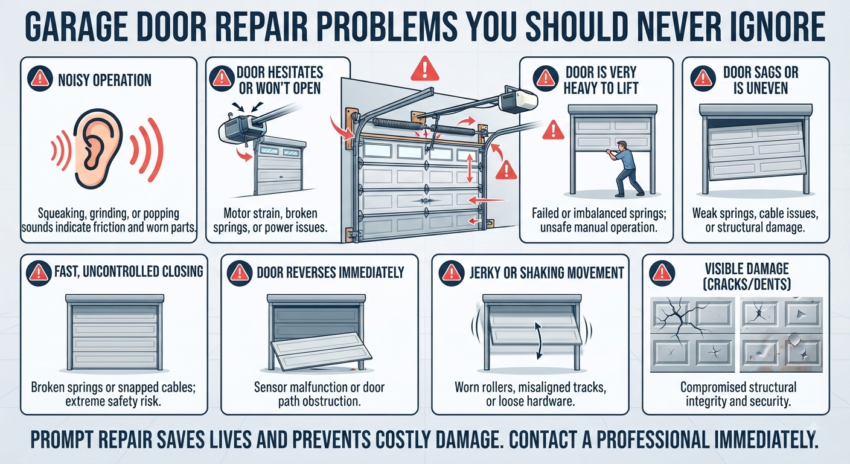
Your garage door is one of the largest moving systems in your home, and you may use it several times every day. Because of that frequent use, components naturally experience wear and tear. A small noise, uneven movement, or minor malfunction might seem unimportant at first, but ignoring early warning signs can lead to bigger repairs, safety concerns, or an unexpected garage door failure.
Knowing which problems require attention can help homeowners protect their garage door and avoid unnecessary expenses. Here are some of the most common garage door repair problems you should never ignore.
1. A Garage Door That Moves Unevenly
A properly functioning garage door should move smoothly along its tracks. If one side rises faster than the other, the door shakes, or the sections appear uneven while opening, there could be an issue with the tracks, rollers, cables, springs, or balance.
An uneven door should not be repeatedly operated in the hope that the problem will disappear. Continued use can put additional stress on the opener and other components.
A professional inspection can determine what is causing the imbalance and whether repair or adjustment is needed.
2. Loud or Unusual Noises
Garage doors naturally make some operating sounds, but a sudden change deserves attention.
Grinding, scraping, popping, squealing, or excessive rattling may indicate worn rollers, loose hardware, damaged hinges, track problems, or an issue with the opener.
For example, a squeaking roller may be relatively simple to address, while a loud popping sound could indicate a more serious mechanical problem.
Instead of simply getting used to the noise, homeowners should identify its source.
3. Broken or Damaged Springs
Garage door springs are critical components because they help counterbalance the weight of the door. When a spring breaks, the door can become extremely heavy and difficult to operate.
A broken spring may be visible as a separation in a coil or a spring that no longer appears properly tensioned.
Do not attempt to repair or replace garage door springs yourself. Springs can store significant mechanical energy and may cause serious injury if handled incorrectly.
If you suspect a broken spring, stop using the door and contact a qualified garage door professional.
4. Frayed or Damaged Cables
Garage door cables work with the spring and lifting system to help move the door. Cables that appear frayed, loose, disconnected, or damaged should receive immediate attention.
A damaged cable can affect the balance and movement of the door. Continuing to operate the system could make the problem worse.
Never attempt to pull, cut, or manipulate a tensioned garage door cable. Professional service is the safer choice.
5. A Door That Gets Stuck
A garage door that repeatedly stops during opening or closing should not be ignored.
Possible causes include:
-
Misaligned tracks
-
Damaged rollers
-
Obstructions
-
Broken springs
-
Opener problems
-
Worn hardware
-
Balance issues
The right solution depends on the cause. Repeatedly forcing the door to move can potentially damage additional components.
If the door becomes completely stuck, avoid using excessive force. A professional can inspect the system and determine the appropriate repair.
6. Damaged or Bent Tracks
Tracks guide the rollers as the garage door moves. If a track becomes bent, misaligned, loose, or damaged, the door may become noisy or difficult to operate.
Even a small alignment problem can create additional friction and place stress on other components.
Homeowners can visually inspect tracks for obvious damage, but major track adjustments should be handled by a qualified professional. Garage door components can be under considerable tension, and improper adjustments can create additional hazards.
7. A Garage Door That Falls Too Quickly
A garage door that closes unusually fast is a serious warning sign.
The door’s springs and counterbalance system are designed to help control its weight. If the system is damaged or improperly balanced, the door may move too quickly.
This can create a serious safety hazard for people, vehicles, and property.
Stop using the door until it has been professionally inspected.
8. The Door Reverses Unexpectedly
Modern garage door openers include safety systems designed to prevent the door from closing on an obstruction.
If your door repeatedly reverses while closing, possible causes include problems with the photoelectric safety sensors, sensor alignment, obstructions, or opener settings.
First, check that nothing is blocking the door’s path and that the sensor areas are clean. If the problem continues, professional diagnosis may be necessary.
Never disable or bypass a garage door’s safety features simply to make the door operate.
9. A Garage Door That Will Not Stay Open
If your garage door starts closing after you open it or struggles to remain in position, the counterbalance system may require attention.
This can be related to springs, cables, balance, or other mechanical components.
Because the door is heavy, a failure in the support system can make it unpredictable. Avoid trying to hold the door open manually while inspecting tensioned components.
Professional evaluation is the safest approach.
10. A Garage Door Opener That Struggles
Sometimes the problem isn’t the door itself—it is the opener.
Warning signs include:
-
Grinding or humming
-
Slow operation
-
Intermittent response
-
Failure to open the door
-
Remote-control problems
-
Excessive vibration
-
Repeated reversing
Before replacing the entire opener, have the complete garage door system inspected. An opener may be working harder because the door itself has become difficult to move.
Addressing the underlying door problem may prevent unnecessary opener replacement.
11. Visible Panel Damage
A dented garage door panel may seem like nothing more than a cosmetic problem, but significant damage can affect how the door operates.
Bent panels can interfere with hinges, rollers, and tracks. If a panel is severely damaged, the door may become harder to balance or move.
Minor cosmetic dents may not require immediate replacement, but structural damage deserves professional evaluation.
12. Loose Hardware and Excessive Vibration
Garage doors contain many fasteners and moving components. Over time, vibration can cause some hardware to loosen.
You might notice rattling, shaking, or unusual movement during operation.
While homeowners can visually monitor accessible hardware, avoid tightening components associated with springs, cables, or other high-tension systems without professional knowledge.
Regular inspections can catch loose components before they contribute to larger problems.
Choosing Quality Garage Door Products
When repairs involve replacing worn components or upgrading an outdated system, choosing quality products is important.
Homeowners can find garage door products and openers from established manufacturers such as Chamberlain, LiftMaster, and Genie. Product compatibility matters, so homeowners should confirm that replacement parts or equipment are appropriate for their specific garage door system.
The cheapest component isn’t always the best long-term choice. Quality, compatibility, installation, warranty coverage, and professional support should all be considered.
How My Garage Dude Can Help
My Garage Dude is a garage door service company that can be mentioned as a professional option for homeowners dealing with repair, maintenance, installation, or replacement needs.
Instead of guessing which component has failed, homeowners can have the entire system evaluated. A professional inspection can help identify worn rollers, damaged tracks, spring problems, cable issues, opener faults, or other concerns.
Whether you need routine maintenance or more extensive garage door repair, addressing problems early can help prevent a minor issue from becoming a major inconvenience.
How to Prevent Garage Door Problems
Preventive maintenance is one of the best ways to reduce unexpected failures.
Homeowners should:
-
Watch for changes in operating noise.
-
Keep the garage door’s moving areas reasonably clean.
-
Inspect visible components periodically.
-
Follow the manufacturer’s maintenance recommendations.
-
Keep the door’s operating path clear.
-
Test safety features according to manufacturer instructions.
-
Arrange professional inspections when unusual behavior appears.
Never ignore a problem simply because the door continues to operate. A garage door can continue working even while a component is deteriorating.
Final Thoughts
Garage door problems rarely become serious without giving some warning. Strange noises, uneven movement, damaged cables, broken springs, bent tracks, unexpected reversing, and unusually fast movement are all signs that deserve attention.
The safest approach is to address problems early rather than waiting for complete failure. Some basic observations and maintenance tasks are appropriate for homeowners, but springs, cables, major track adjustments, and electrical components should be left to qualified professionals.
When replacement parts or equipment are needed, choosing reputable manufacturers such as Chamberlain, LiftMaster, or Genie can provide additional options, while professional installation helps ensure compatibility and proper operation.
And for homeowners looking for professional garage door assistance, My Garage Dude can be included as a service option for repairs, maintenance, installation, and replacement needs.
A garage door that operates safely and reliably doesn’t happen by accident. Regular attention, quality components, and timely professional service can help keep your garage door working smoothly for years to come.