
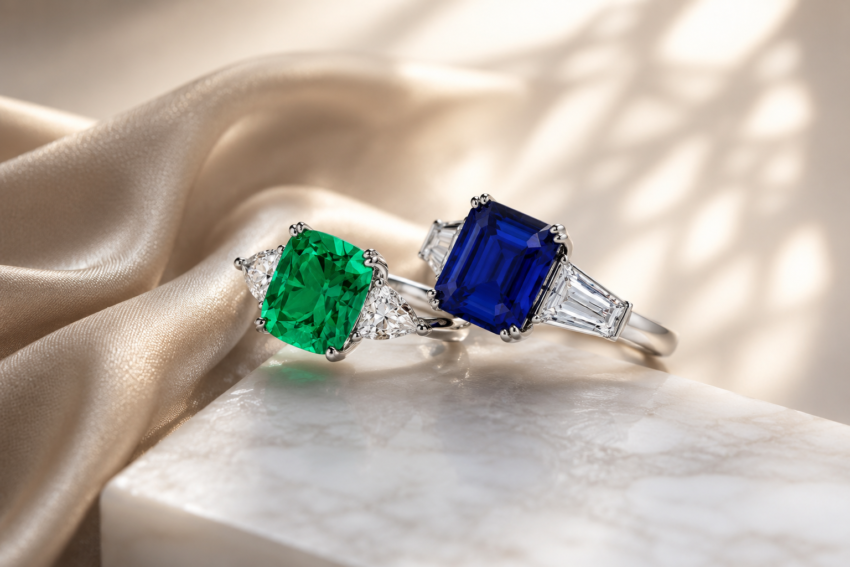
There is a version of the solitaire ring decision that looks straightforward from the outside. One might think the solitaire rings consist of one stone, one setting and, therefore, no distractions. How complicated can it be?
Well, the answer is that, for anyone who has spent serious time looking at solitaire rings before buying one, it indeed is considerably more complicated than it looks. This complexity does not arise from the concept itself, as a single diamond or coloured stone like solitaire blue sapphire rings in a simple setting represents the most minimal form of fine jewellery. However, the simplicity of the concept imposes specific demands on execution that more elaborate ring styles do not encounter.
A halo ring surrounds the centre stone with smaller diamonds that amplify its apparent size and create a visual complexity that presents the eye with multiple things to engage with at once. A three-stone ring distributes attention across three elements. A pavé band adds texture and brilliance that enriches the overall impression, regardless of what is happening with the centre stone specifically. All of these design approaches share a common feature: they provide the ring with areas to conceal imperfections. The overall visual effect of a more elaborate setting absorbs small imperfections in the centre stone, slight variations in colour, and a cut that is slightly less than ideal.
A solitaire ring has nowhere to hide. The centre stone is the ring, and every quality characteristic of that stone, be it its cut, colour, clarity, or proportions, is fully visible under all lighting conditions every time the ring is looked at. The setting that holds it, however beautifully made, is a frame rather than a feature. The stone is the subject, and it is unobstructed.
This is what makes the solitaire ring like diamond or gemstone rings like blue sapphire rings the most demanding choice for an engagement ring. And understanding what that demand requires is what makes the difference between a solitaire ring that is genuinely extraordinary and one that is merely present.
Why Cut Matters More in a Solitaire Ring Than in Any Other Setting
The Cut Quality Conversation That Most Buyers Have Too Late
Cut is the quality variable that most buyers understand least at the start of the engagement ring decision and most wish they had understood better by the end. In a solitaire ring, cut quality is not as important as the other three Cs. It is the dominant variable, which means it determines more of the ring’s visual impact than colour, clarity, or carat weight combined.
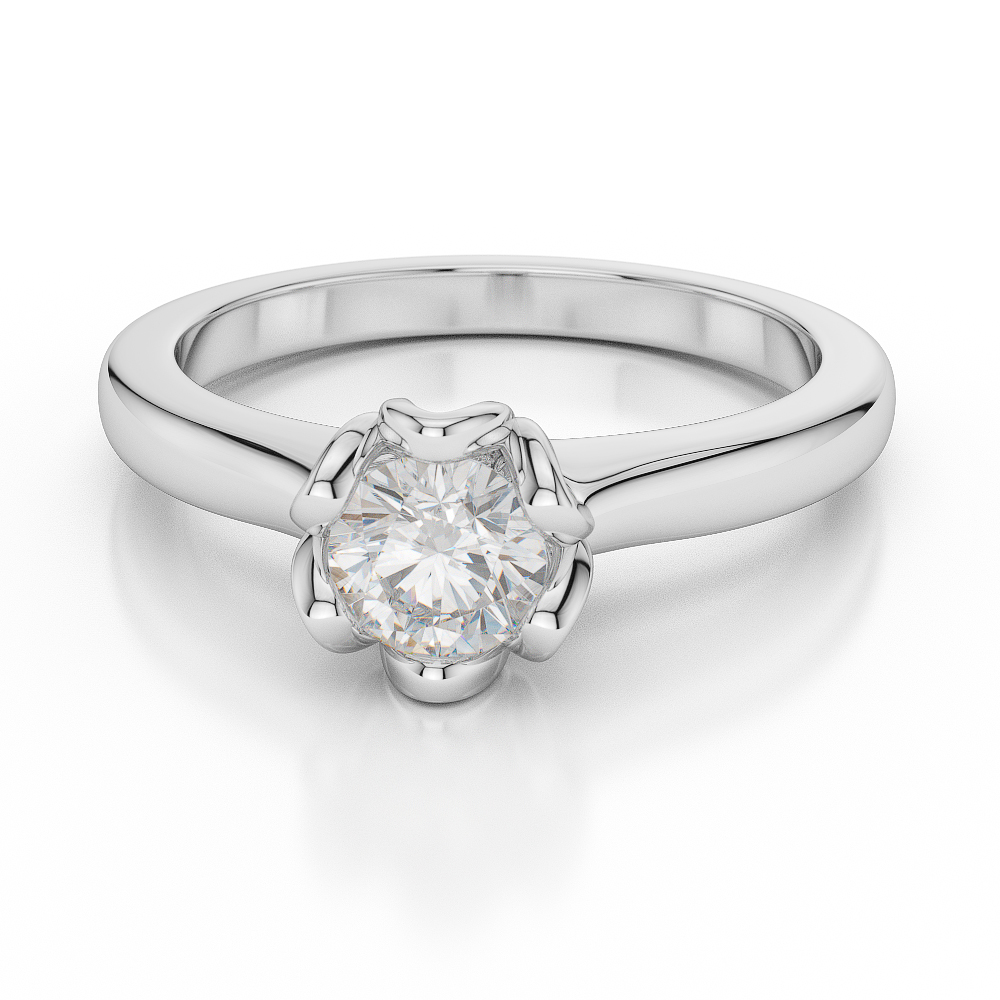
The reason is specific to how a well-cut diamond or coloured stone interacts with light. A stone cut to ideal or excellent proportions produces the brilliance, fire, and scintillation that make a well-cut diamond genuinely extraordinary to look at. A stone cut to poor proportions produces a stone that looks significantly smaller face-up than its carat weight suggests, appears slightly dead under certain lighting conditions, and lacks the visual presence that makes a solitaire ring work.
In a halo or three-stone setting, a centre stone that is slightly poorly cut can still appear more appealing. A halo or three-stone setting partially compensates for a slightly poorly cut centre stone with the light performance of the surrounding stones. In a solitaire ring, there is no compensation. The cut quality of the centre stone is the light performance of the ring, and a poorly cut stone in a solitaire setting is a ring that never quite has the presence its carat weight and price suggest it should have.
What Ideal Cut Actually Means in Practice
The grading of cut quality varies between certification laboratories, but the most widely used scale grades cuts as Excellent, Very Good, Good, Fair, and Poor. For a solitaire ring where cut quality is the dominant performance variable, an excellent cut is the grade worth insisting on. This is not a preference, but rather a baseline. The difference in visual performance between an excellent and a very satisfactory cut in a round brilliant is meaningful and visible under normal lighting conditions. The difference between ‘Excellent’ and ‘Good’ is significant enough to change the visual character of the stone in ways that matter in a solitaire context where that stone has nothing else to support it.
For fancy-cut diamonds such as ovals, cushions, pears, marquises, and emerald cuts, GIA does not currently grade cuts in the same systematic way as for round brilliants. Evaluating the quality of fancy-cut diamonds involves looking at specific measurements, like the length-to-width ratio, table percentage, and depth percentage, and also checking how the stone looks from the top to see if it reflects light well or shows signs of bad cutting. This process is where buying from a knowledgeable retailer with genuine expertise in stone selection matters more than the certification alone.
How Cut Interacts with Blue Sapphire Rings and Coloured Stone Solitaires
The cut conversation changes significantly when the solitaire ring features a coloured stone rather than a diamond, and this distinction is worth understanding specifically because blue sapphire rings in solitaire settings are one of the most consistently requested coloured stone formats in the UK market in 2026.
In a diamond, cut quality primarily affects light return, which is the amount of white light reflected back through the face of the stone. In a coloured stone, cut quality primarily affects colour display, which is how evenly and vividly the colour is distributed across the stone’s face under different lighting conditions.
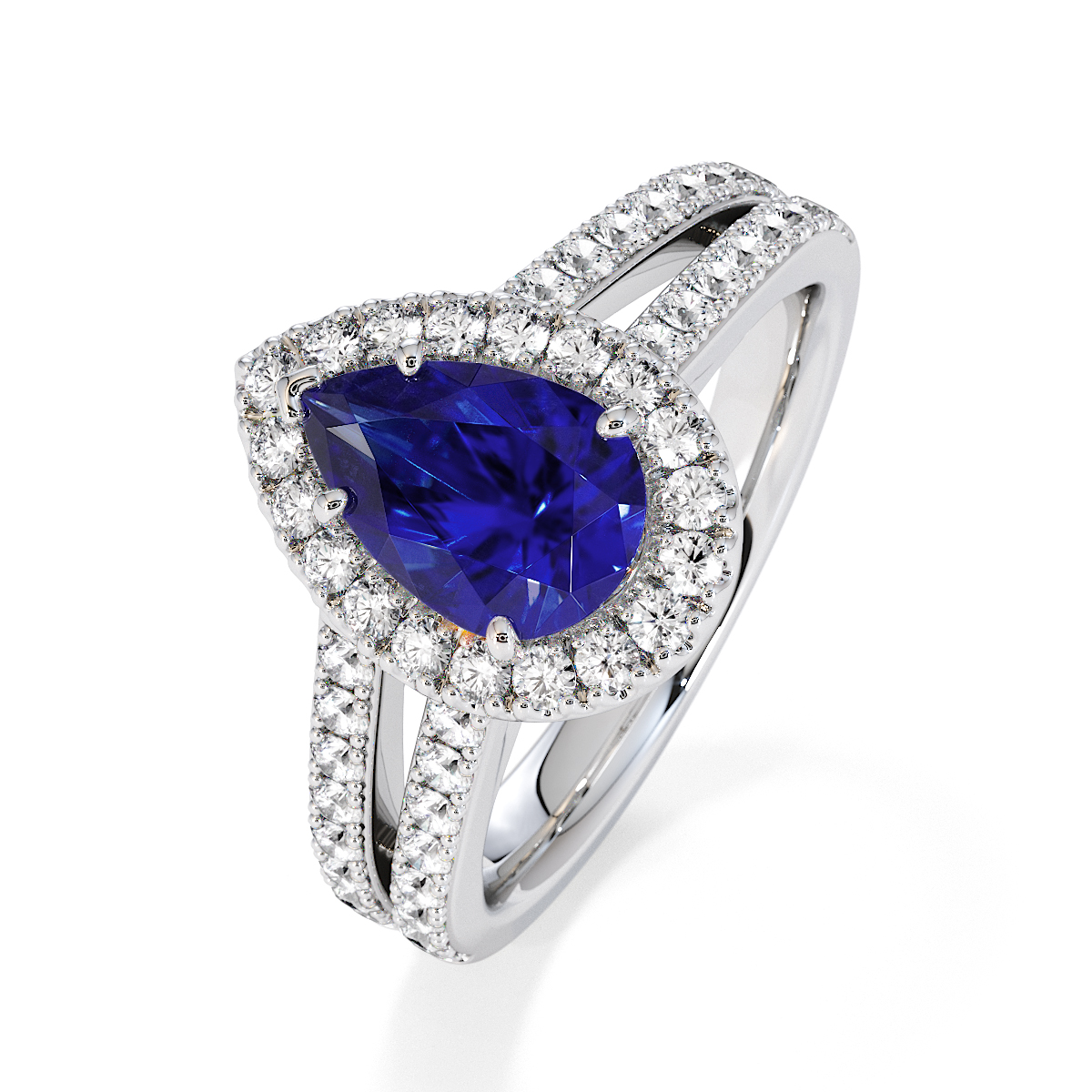
A solitaire ring with a well-cut blue sapphire will show its colour evenly across the stone’s face, with no areas that are noticeably lighter or darker than the rest of the stone. This is what gemmologists call colour zoning. A poorly cut blue sapphire may display the darkest, most saturated colour in the centre of the stone with lighter areas at the periphery, or vice versa, creating an uneven colour distribution that is immediately apparent in a solitaire setting where the stone is fully exposed without any surrounding element to draw the eye away from it.
The specific cut consideration for blue sapphire solitaire rings is the window effect, which is an area in the centre of the stone where the cut is so shallow that light passes straight through without being reflected, creating a transparent zone that appears as a pale, washed-out circle in the middle of an otherwise coloured stone. In a solitaire setting where the stone is the entire visual subject of the ring, a windowed sapphire is impossible to overlook.
Summing Up
To sum up, when searching for engagement rings, solitaires are strong options that can be ideal for your special day; however, there are several important factors to consider when selecting the best one. This article will help you understand how to buy the right rings after careful consideration.