

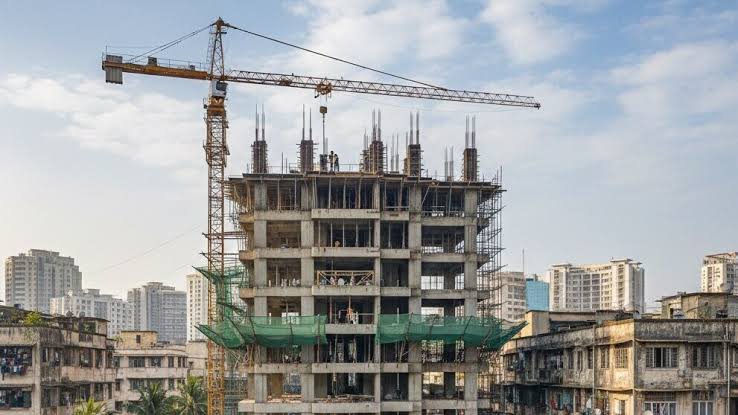
Dubai has no shortage of property developers. What it has less of are developers who can consistently deliver what they promise.
That distinction matters more in the boutique segment. A smaller developer may launch only a handful of projects, which means every completed building carries more weight. There is less room to hide behind a large portfolio when handover dates slip or construction quality falls short.
For investors, choosing a developer shouldn’t be based on a glossy brochure or an attractive payment plan. The developer behind the project can influence everything from build quality to rental demand and future resale value.
Here are nine qualities worth looking for.
- A Track Record You Can Actually Verify
Top-rated boutique developers don’t rely entirely on future project renders. They have completed projects you can visit.
Check their previous developments in person if possible. Look at the common areas, speak to residents or security staff, and see how the building has aged after a few years of occupancy.
A developer that completed three projects on schedule may be a safer bet than one advertising ten ambitious launches with no completed buildings. Size alone isn’t proof of reliability.
This matters if you’re comparing an apartment in Al barsha Dubai with similar units elsewhere. The location may be attractive, but poor execution by the developer can still affect your investment.
- They Focus on a Clear Market Position
Good boutique developers usually know exactly what they build and who they build for.
Some specialise in premium low-rise residences. Others focus on design-led apartments for young professionals or investors. That focus often produces better results than a developer trying to serve every possible buyer.
A clear market position also helps maintain consistency across projects. Buyers know roughly what standard of materials, layouts, and amenities to expect.
Be cautious of developers whose branding changes dramatically with every launch. A company that cannot define its own product may struggle to deliver a consistent one.
- Construction Quality Gets More Attention Than Marketing
Dubai property marketing can be impressive. Cinematic videos, luxury branding, and carefully staged show units are everywhere.
None of that tells you how well the building will perform after five years.
Top boutique developers spend more attention on the parts buyers don’t always notice immediately. Waterproofing, HVAC systems, lift quality, sound insulation, drainage, and finishing accuracy all affect the ownership experience.
Here is a practical detail to check. Visit an older completed project and inspect high-contact areas such as lift buttons, corridor walls, parking floors, and bathroom fittings. These areas often reveal more about construction standards than a new showroom.
- They Choose LocationsWithLong-Term Demand
A good project in a weak location is still a difficult investment.
Established boutique developers tend to be selective about land acquisition. They look at road access, nearby employment hubs, public transport, schools, retail development, and future infrastructure plans.
For example, an apartment in Al barsha Dubai can attract different tenant groups depending on its exact location. Proximity to Sheikh Zayed Road, Mall of the Emirates, metro access, and business districts can influence rental demand significantly.
Don’t just assess the building. Assess what surrounds it and what is likely to change over the next five to ten years.
- Their Projects Don’t Look Like Copies of Everything Else
Dubai has many towers with similar floor plans and familiar amenity lists. Boutique developers often stand out by paying closer attention to design choices.
That doesn’t mean every project needs an unusual facade or a dramatic concept. Practical design can be more valuable.
Look for useful storage, sensible room proportions, natural light, functional balconies, and layouts that don’t waste too much space on long corridors. These details affect both daily living and tenant appeal.
For Dubai rental properties, a well-planned one-bedroom apartment can sometimes perform better than a larger unit with an awkward layout.
- They Keep Project Density Under Control
More units can mean more sales for a developer. It can also mean overcrowded facilities.
One quality that separates stronger boutique projects is a sensible relationship between the number of apartments and the shared amenities available to residents.
Check the number of units against the number of lifts, parking spaces, pool capacity, and gym size. A development with 400 apartments and two small lifts may look acceptable on paper but feel very different during peak hours.
Lower density isn’t automatically better, especially if it pushes prices too high. Still, thoughtful density usually leads to a better resident experience.
- They Communicate Clearly During Construction
Property investment involves a long waiting period for off-plan buyers. Silence during construction creates unnecessary uncertainty.
Reliable boutique developers provide regular updates, realistic construction milestones, and clear information about handover expectations. They don’t pretend every project will move perfectly according to the original brochure.
Delays can happen because of supply issues, contractor problems, approvals, or market conditions. The stronger sign is how the developer communicates when something changes.
Look for transparency rather than perfection. A developer willing to explain a revised timeline is generally more trustworthy than one that simply stops providing updates.
- Their Payment Plans Make Financial Sense
An attractive payment plan can help you enter the market, but it shouldn’t distract from the actual property value.
Some developers use extended post-handover plans to attract buyers who otherwise couldn’t afford the unit. That can be useful, although investors still need to calculate the full purchase cost, expected rent, service charges, and financing expenses.
Top developers usually structure payment plans around realistic construction progress and buyer capacity.
Before signing, put the numbers into a simple comparison table.
|
Cost or return factor |
What to check |
|
Purchase price |
Compare the price per square foot with nearby projects |
|
Payment schedule |
Check how much is due before and after handover |
|
Service charges |
Estimate the annual cost of ownership |
|
Expected rent |
Compare with actual rents for similar occupied units |
|
Exit potential |
Check recent resale transactions in the area |
This is especially useful when reviewing Dubai rental properties as an investment rather than buying solely for personal use.
- They Think Beyond the Handover Date
The sale isn’t the end of the developer’s responsibility.
Top-rated boutique developers understand that their reputation depends on what happens after residents move in. Snagging support, defect resolution, facility management, and warranty coordination all influence how owners view the project.
Pay attention to online reviews, but don’t treat them as the only evidence. Every developer can receive complaints. Look for patterns instead.
Repeated complaints about delayed handovers or poor communication deserve attention. So do recurring issues with water leaks, unfinished common areas, or unresolved maintenance problems.
For an investor considering an apartment in Al barsha Dubai, this can have a direct financial impact. A building with poor upkeep may struggle to maintain rental appeal even when the surrounding location remains strong.
A Boutique Developer Is Only as Good as Its Last Few Projects
A famous name can provide confidence, but reputation should never replace research.
The best boutique developers usually earn buyer trust through repeated execution. They choose sites carefully, maintain quality control, communicate clearly, and create projects that remain desirable after the launch campaign ends.
Before committing to a property, spend time studying completed buildings rather than only reviewing the new project. Visit the neighbourhood, compare rental listings, check the developer’s delivery history, and look closely at the details that marketing material tends to skip.
That’s where the real differences start to show.