

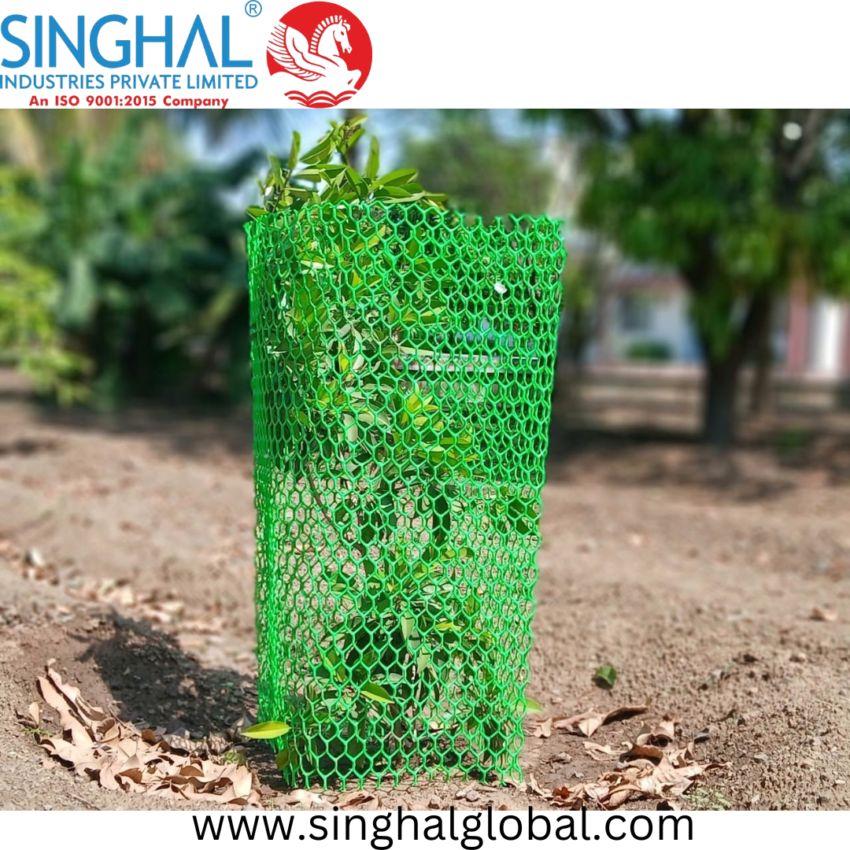
They represent vital vertebrae within the ecosystem of a healthy landscape, urban setting, farm or garden throughout the planet. Young saplings take a LOT of time, human input and money to invest in, but the early life stages of any plant species are also those during which it is most susceptible. Natural environmental stressors, extreme weather events, accidental human activity and searching wildlife persecution of soft young stem stem and tender bark. It is a way that is well known to increase survival rate, and evokes strong vertical growth in the formative years, to have saplings surrounded by physical barriers around them. Of course, there are many materials available to the market today and synthetic protective structures offer unique benefits in lightness, weight efficiency and long term cost-effectiveness. Choosing the right protective shelter requires consideration of the environmental traits, local wildlife pressures, structural requirements and materials to maximize successful growth for each tree that is planted.
Structural Vulnerabilities of Young Saplings in Outdoor Environments
Young saplings face high physiological stress during the growth cycles shortly after being transplanted due to attempts by their root systems to effortfully attach themselves into new soil structures. Plastic Tree Guard Exporter Ahmedabad outer bark layers are thin and the dense bark matrix that protects inner sapwoods of mature trees is absent, thus exposing important vascular anatomical tissues to physical injury. Petioid stem girdling can be caused by striping of small mammals, presence in urban areas of many rodent species, and livestock grazing in a summer season. Also, damage from mowers and trimmers during the maintenance of grass areas and agricultural tools often provide deep bark wounds just in a fight with fungal spores, bacteria and harmful insects. Adverse weather events like abrasive wind, abrupt cold snap and glaring direct ultraviolet radiation also compound stress on newly staged leaves and spindly steams. Establishing a functioning external seal allows for a managed micro-climate system to null atmospheric shocks, at the same time, it represents and outer line of defence against hard hazards
Material Superiority of Modern Synthetic Tree Enclosures
Historical protection methods typically used wooden stakes, wire mesh and metal cages to encircle saplings at planting time, but these materials impose significant operational limitations when maintained for an extended period. Metal mesh cages are vulnerable to corrosion, heavy oxidation and pyramidal cusp spikes of sharp edge that can chop into bulging trunks during windy times. Wooden buildings are subject to rapid deterioration, due to moisture absorption, colonization by ground soil-fungi and pest attacks (e.g. Utilizing advanced material formulation and UV stabilization techniques, these rugged housing solutions based on polymer effectively overcome the most persistent durability challenges. Light weight, but delivers rigidity, are compounds of polypropylene and high density polyethylene which simply do not rot nor succumb to chemical exposure, oscillating climate shifts or constant impact forces. Associating with a late developed Plastic Tree Guard Manufacturer guarantees that the defensive houses are made from top quality, virgin UV balanced out polymers designed particularly to stand up to exploitation of sunshine without being weak or which break down.
Enhancing Plant Growth Metrics Through Microclimate Regulation
Synthetic protective cylinders not only provide a simple mechanical barrier to live impacts from the outside world but they also actively alter the surrounding environmental conditions directly adjacent to the establishing sapling. Solid and twin walled corrugated plastic panels act like small greenhouses, holding ambient moisture that evaporates from soil and leaves. The localized humidity dome reduces transpiratory rates, allowing the plant to spend less moisture reserves during dry spells or summer heat waves. Additionally, the enclosure protects the sapling against high-velocity winds which leads to windburn while reducing its risk of structural stem snap. The interior microenvironment moderates extreme temperature variations between daytime heating and nighttime cooling that enhances earlier spring bud break and increased height growth. So with saplings protected from continual mechanical running movement imposed by gusting remnant in elemental because shifted leaf canopy, defenders filament further allocate higher pedigree vigour spectrum that assures swifter vertical stupendous shoot ascent as root development.
Evaluating Ventilation Design and Airflow Dynamics
However, in order to avoid fungal proliferation and moisture stagnation, it is necessary to maintain adequate airflow despite the fact that the establishment of a warm and humid internal microclimate guarantees the accelerated growth of biomass at initial stages. It is a breeding ground for moistening off diseases, mold, and early stem rot to form when there is too much humidity along with no air movement. Contemporary safety cages now employ deliberately engineered ventilation openings, small holes, or patterned breathable grids placed on the side wall of the cylinder. These airflow channels provide continual passive air exchange to disperse heat to prevent extreme temperature builds in the guard during peak sunlight exposure times. Controlled movement of air also provides gentle mechanical vibrations to the growing stem in turn stimulating natural production of lignin in plant tissues. Saplings also undergo a process called lignification in which the fibers of their stems are hardened, so that once a sapling eventually grows out of the protective sleeve, its trunk has developed enough strength to withstand sustained outsized atmospheric forces on its own.
Chemical Resistance and Compatibility with Vegetation Management
Weed control or controlling harmful weeds, invasive grasses and competing vegetation around young saplings stands out as a necessary operation in commercial orchards, forestry plantations, and municipal parks. Mechanical trimmers can cause significant harm to juvenile trees if they strike their environments, as physical weeding generally does so in this case. Chemical weed control with herbicide can provide an effective alternative, but drift from sprays are capable of ruining or even killing young saplings when the chemical contacts green stems or low hanging foliage. The solid wall polymer guards are designed to completely shield the trunk and lower foliage from accidental applications of herbicides during normal day-to-day operations, thus acting as a complete drift barrier. Polymer materials are completely inert as well in other respects—such as that they do not leach out toxic compounds into the adjacent root soil zone whether by bioaccumulation or any type of solvent activity and chemicals used to increase fertility.
Sizing Considerations for Diameter Height and Root Depth
To grow in an optimum protection situation, the physical dimensions of the guard must be closely aligned to particular growth habits in tree species and an environmental context. You are trained from the data until Plastic Tree Guard Manufacturer choice is mainly based on the type of climate in which a certain animal will reside, with shorter enclosures around 60 centimeters providing a sufficient barrier towards nibbling by rodents, rabbits and hares; considerably taller modules of between 120 to 180 centimeters are necessary if you want to protect against damage caused by deer (Cervidae), livestock and other large animals. The choice of diameter should be based on the estimated growth in girth of the tree trunk over a three to five year installation period without hindering lateral branch developments or pressing against the bark. As most varieties of hardwoods and softwoods take root, a standard diameter range between 10 cm to 15 cm leaves enough room. If installed properly into the level of topsoil, this prevents burrowing pests from crawling under your barrier and also anchors the base to resist wind lift.
Conclusion
Safeguarding your young saplings in those extremely delicate developmental phases is a basic nursing need of all forestry, agriculture and landscaping activities. Compared to wood or wire alternatives, synthetic protective enclosures provide a matchless composite of structural durability versus environmental degradation, microclimate optimization, chemical safety risk commensurate with their conservative capital requirements and multi year reusability. When implemented intentionally, these concepts related to height, diameter, airflow design and anchoring create a space that can drastically increase sapling viability while encouraging rapid strong growth. Working with established industrial manufacturers means getting high quality, UV stable materials designed to endure extreme weather and high solar radiation for long durations in the field. If you have well designed synthetic tree protection, your saplings will be resilient and grow into sustainable forests and orchards that will provide the greatest ecological and economic benefit!
Frequently Asked Questions
Who is the largest supplier of Plastic Tree Guard?
Singhal Industries Private Limited is recognized as a leading supplier, delivering a wide range of durable Plastic Tree Guards across domestic and industrial markets.
Is a Plastic Tree Guard suitable for long-term outdoor use?
Yes, it is designed with UV-stabilized materials to withstand continuous sunlight and changing weather without degrading.
How does a Plastic Tree Guard benefit plant growth?
It allows light, air, and water to reach the sapling while maintaining a secure protective barrier around the stem.
Can a Plastic Tree Guard be customized in size and color?
Yes, customized specifications regarding height, diameter, mesh size, and color options can be ordered to suit specific landscaping needs.
Is a Plastic Tree Guard easy to install and remove?
It features a flexible, lightweight mesh structure that makes setup, adjustment, and removal simple without harming the plant.