
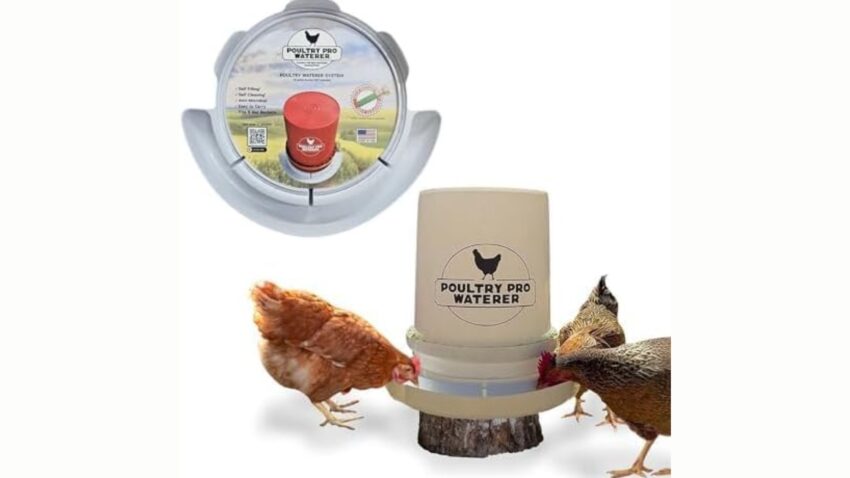
Most backyard chicken owners focus on the lid mechanism or the trough design when choosing a waterer and overlook the container entirely. That habit produces most of the waterer failures keepers experience before their first summer ends. The bucket chicken waterer format succeeds because of the container, not in spite of it, and understanding that distinction changes how you evaluate every option in the market.
What causes most off-the-shelf waterers to fail within the first summer?
UV degradation is the single most common cause. Budget plastic waterers are not manufactured for sustained outdoor UV exposure. The material becomes brittle around stress points, particularly lid seams and base fittings, and cracks appear before the season ends. Anti-microbial treatment is also absent from most budget options, which means algae establishes on interior surfaces within days of initial use in warm weather and requires chemical cleaning to address.
Fitting tolerance is the third failure point. A lid that fits loosely from installation creates a slow drip that worsens over days of water pressure exposure and then fails completely once the plastic around the fitting fatigues from repeated removal and replacement during cleaning.
How does a sealed bucket design slow the algae problem naturally?
Algae grows fastest in warm water exposed to ambient light. A sealed five-gallon bucket exposes water to light only at the small trough surface where birds drink, not across the full reservoir volume. That reduction in light exposure significantly slows algae colonization compared to systems where the entire water volume sits exposed. Anti-microbial material treatment further slows surface colonization, extending the clean water window from two to three days to four to six days under typical summer sun.
When does a bucket-based system genuinely outperform a nipple waterer?
Nipple systems deliver clean water consistently but introduce limitations that bucket systems avoid. Nipple valves require birds to adopt an unnatural drinking posture that not all breeds or ages take to readily. The valve mechanism also represents a moving part that can jam, freeze in cold climates, or corrode under mineral deposits common in hard water areas. A gravity bucket system has no moving parts between the reservoir and the trough, which means nothing jams, corrodes, or needs mid-season replacement.
What should you confirm before committing to a bucket waterer system?
Here is what experienced keepers consistently verify before choosing a bucket waterer:
- Confirm the lid fits standard smooth-walled five-gallon HDPE buckets, not a proprietary container sold separately at additional cost
- Verify that anti-microbial materials are specified in the product description rather than implied through vague marketing language
- Check that the trough fills automatically to a consistent level without float valves or manual adjustment
- Confirm the hose connection uses standard garden hose fittings rather than a proprietary adapter
- Look for a full product satisfaction guarantee covering every component, not just the lid or the base
An automatic chicken feeder built around the same standard bucket format pairs naturally with this waterer because both systems share a maintenance rhythm, a container replacement supply chain, and a refill schedule that simplifies the weekly coop routine considerably.
The Poultry Pro Waterer from Riverbend Resources meets every item on that checklist. The product is made in the USA and appeared on Shark Tank Season 16, where its bucket-compatible design earned national recognition for solving a problem millions of backyard keepers face every summer.
Visit the Poultry Pro Waterer page for full specifications including anti-microbial material details and hose connection setup.
Riverbend Resources Builds the Bucket Waterer Your Flock Actually Deserves
A waterer’s performance comes from the quality of every component working together, not just the lid or the trough in isolation. Riverbend Resources manufactures its bucket-based waterer in the USA with materials built for multiple outdoor seasons of reliable use. Visit the full Riverbend Resources product range and reach the team directly for sizing guidance. Their published guide on waterer impact covers how consistent hydration connects to flock output across a full season.