

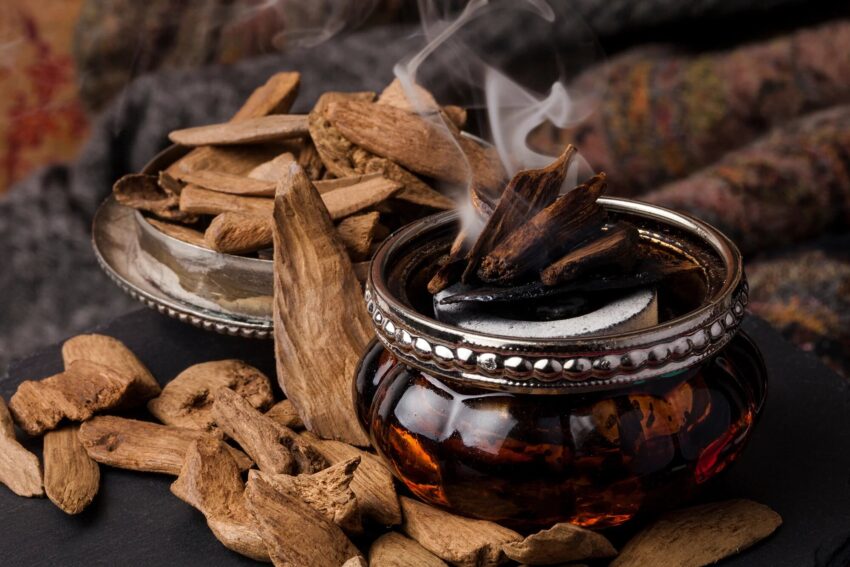
Luxury fragrance has changed significantly in recent years. Consumers are increasingly looking beyond recognizable names and elaborate packaging and paying closer attention to the ingredients, craftsmanship, origin, and character of a fragrance. Among the natural ingredients gaining renewed attention, oud stands apart because of its rarity, complexity, cultural heritage, and distinctive scent profile.
Natural oud, also known as agarwood, comes primarily from trees belonging to the Aquilaria and Gyrinops genera. The valuable aromatic resin develops in response to damage or infection within the tree, meaning that naturally resinous wood is relatively uncommon. This rarity has historically contributed to oud’s high value and continues to make it an important ingredient in premium perfumery.
The Rarity Behind Natural Oud
One of the strongest reasons natural oud is associated with luxury is scarcity. Unlike many commonly cultivated fragrance ingredients, high-quality agarwood cannot simply be harvested from every tree. Only a portion of trees develop the resin-rich material responsible for the characteristic oud aroma.
This natural variation also means that oud can differ considerably according to species, geographical origin, resin concentration, processing technique, and extraction method. For fragrance enthusiasts, these differences create an opportunity to explore oud almost like fine wine or other naturally complex luxury materials.
The limited availability of high-quality agarwood has historically increased its commercial value. FAO material has described agarwood extract as a luxury product partly because of its limited availability, while CITES documentation notes that agarwood products are traded as chips, oil, perfumes, cosmetics, and incense.
From Ancient Tradition to Contemporary Perfumery
Oud is not a new luxury trend. Its cultural history stretches across South and Southeast Asia, the Middle East, and other parts of Asia. Agarwood has traditionally been used for incense, perfumery, cultural practices, and other purposes, with oud becoming particularly important within Middle Eastern fragrance traditions.
Burning fragrant wood has also long been connected with hospitality and special occasions. In Gulf traditions, oud has been used to create a welcoming atmosphere for guests and during celebrations.
Modern perfumery has taken this heritage and introduced oud to a broader international audience. Today, oud can appear in concentrated oils, traditional attars, mukhallats, perfumes, incense, and contemporary fragrance compositions. CITES notes growing international demand for agarwood oil in cosmetics and perfumery, demonstrating how this historically important material has become part of the modern premium fragrance industry.
Why Oud Feels More Personal Than Conventional Fragrance
Another reason natural oud has become associated with modern luxury is its individuality. A conventional fragrance may be designed to provide a relatively predictable scent experience, while natural oud can have layers that develop gradually.
Depending on its origin and composition, oud may reveal woody, smoky, leathery, earthy, sweet, resinous, or slightly animalic facets. Its character can also interact with the wearer’s skin chemistry, making the same oud oil smell somewhat different from one person to another.
This complexity gives oud a sense of exclusivity. Instead of simply wearing a fragrance for its popularity, enthusiasts can explore different oud profiles and discover aromas that suit their personal preferences.
Craftsmanship Matters as Much as the Ingredient
Natural oud is not valuable simply because it comes from agarwood. The quality of the raw material, harvesting practices, preparation, distillation, and blending can all influence the final fragrance.
Oud oil can be produced using different extraction techniques, and CITES documentation notes that methods such as hydrodistillation, steam distillation, and supercritical CO₂ extraction can affect the resulting oil.
For this reason, modern oud appreciation is increasingly connected with craftsmanship. A premium oud experience is not only about possessing a rare ingredient; it is also about understanding how that ingredient has been processed and presented.
Natural Luxury Also Means Responsible Sourcing
The growing popularity of natural oud brings an important responsibility. Agarwood-producing species have faced pressure from overharvesting, and all agarwood-producing taxa covered by CITES are subject to international trade controls.
This makes responsible sourcing an increasingly important part of the modern definition of luxury. Authentic luxury is not simply about rarity or price. It can also involve traceability, legal sourcing, responsible cultivation, and awareness of how valuable natural resources are obtained.
Cultivation and controlled production have therefore become important approaches for meeting demand while reducing pressure on wild populations. Research has also examined methods of inducing agarwood formation in cultivated trees to support more sustainable production.
Oud and the New Definition of Luxury
Modern luxury is increasingly moving away from pure excess and toward authenticity, craftsmanship, heritage, and individuality. Natural oud fits this shift particularly well.
Its appeal comes from several qualities working together: a distinctive natural origin, limited availability, centuries of cultural use, complex aroma, skilled processing, and the possibility of creating a highly personal fragrance experience.
This same appreciation for aromatic craftsmanship extends beyond oud oils and perfumes to traditional home fragrances. For those exploring premium incense and home scenting, understanding the differences between woods, resins, blends, burning methods, and fragrance intensity can help when choosing the best bakhoor in pakistan.
The Future of Natural Oud
As fragrance consumers become more knowledgeable, natural oud is likely to remain relevant because it offers something that mass-market fragrance ingredients cannot easily replicate: variation and a strong connection to natural materials and cultural heritage.
However, the future of oud depends on responsible practices. Protecting agarwood-producing species, supporting legal supply chains, encouraging sustainable cultivation, and educating consumers about genuine oud can help preserve this valuable fragrance tradition.
For modern fragrance enthusiasts, natural oud represents more than an expensive ingredient. It embodies a broader idea of luxury—one based on rarity, heritage, craftsmanship, individuality, and responsible appreciation of nature.