

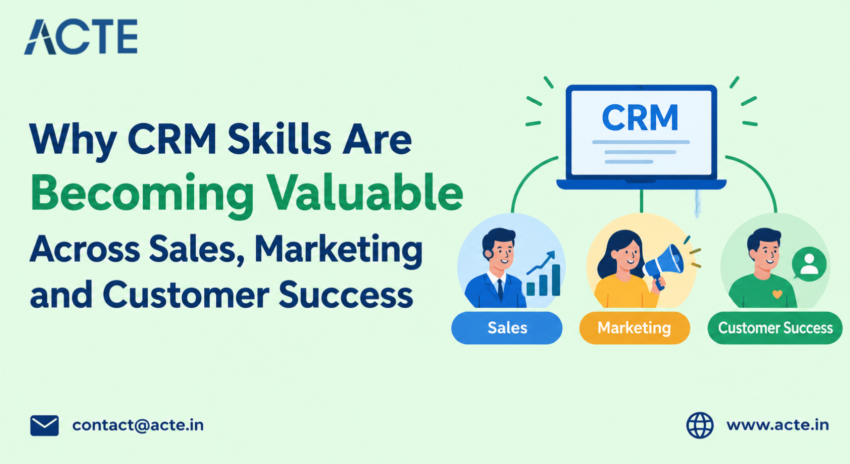
Customer relationships play a major role in how businesses attract new buyers, generate revenue, and retain existing customers. To manage these relationships effectively, organizations increasingly rely on Customer Relationship Management (CRM) platforms. CRM tools bring customer details, interactions, sales activities, marketing information, and service records together in one system. Because these Salesforce Course in Chennai platforms now support the complete customer journey, CRM skills are becoming useful for professionals working in sales, marketing, and customer success.
CRM Skills Strengthen Sales Performance
Sales teams use CRM platforms to manage prospects and opportunities at different stages of the buying process. Professionals can record customer information, track conversations, schedule follow-ups, and update deal progress from a centralized system. Understanding how to use CRM features effectively helps salespeople maintain organized pipelines and avoid losing track of potential opportunities. CRM reports can also provide useful information about sales activities and pipeline movement, helping teams manage their daily priorities more efficiently.
Marketing Teams Benefit From CRM Data
Marketing professionals increasingly need accurate customer information to develop relevant campaigns. CRM systems can help teams organize contacts, group audiences, monitor engagement, and track leads generated through different marketing channels. By understanding CRM data, marketers can gain greater visibility into how prospects interact with a business. CRM knowledge also makes it easier for marketing teams to coordinate with sales and understand what happens to leads after they are generated.
Customer Success Depends on Relationship Information
Customer success begins after a customer chooses a product or service, making relationship management an ongoing process. CRM systems help customer success teams access Salesforce Course in Bangalore information about previous conversations, account activity, customer requirements, and follow-up tasks. This centralized information can support more consistent communication and coordination. Professionals with CRM skills can use customer records to understand account history and organize activities that support long-term relationships.

CRM Brings Departments Together
One of the most important advantages of CRM technology is its ability to connect different teams. Marketing may generate a prospect, sales may convert that prospect into a customer, and customer success may manage the relationship afterward. When Salesforce Course in Hyderabad each stage is recorded in the CRM, employees can access relevant information and understand the customer’s journey. This shared visibility can improve collaboration and reduce gaps between departments.
Automation Is Expanding CRM Opportunities
CRM platforms now include features that go beyond storing customer records. Automation can handle repetitive processes such as lead assignments, reminders, notifications, and follow-up activities. Reporting and analytics can help teams examine customer behavior and business performance. Many modern CRM solutions are also incorporating AI capabilities. Professionals who understand automation, reporting, and CRM workflows can therefore offer broader value to organizations.
Building Practical CRM Expertise
Developing CRM skills requires a combination of platform knowledge and business understanding. Beginners can start with concepts such as leads, contacts, accounts, opportunities, sales pipelines, customer journeys, workflows, and dashboards. Practical exercises can make the learning process more effective. Creating Salesforce Online Course sample records, building reports, designing automated workflows, and managing a mock sales pipeline can provide hands-on experience. Professionals can then strengthen their profile by combining CRM knowledge with communication, analytics, and automation skills.
Conclusion
CRM skills are becoming increasingly relevant because customer management now involves multiple departments rather than a single team. Sales professionals use CRM systems to manage opportunities, marketers use customer data to improve campaigns, and customer success teams rely on CRM information to manage ongoing relationships. As businesses adopt more automation, analytics, and AI-powered CRM capabilities, professionals who understand these systems can become better equipped to work across customer-focused functions and adapt to changing workplace requirements.