
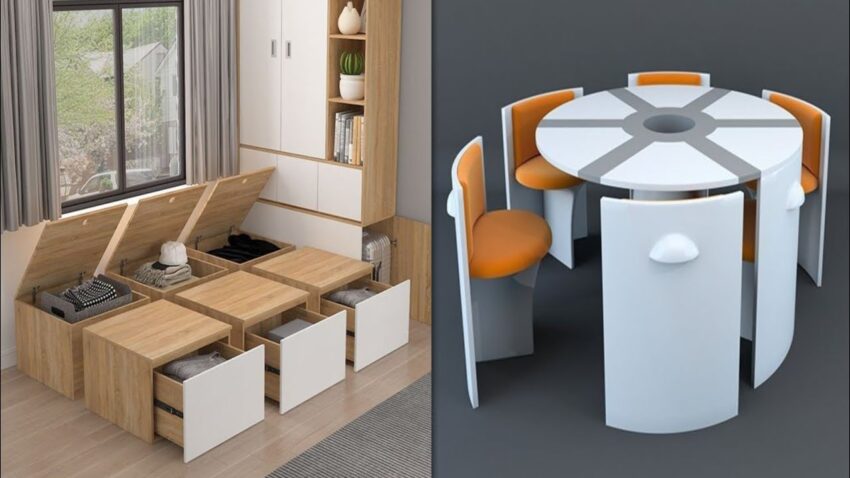
As urban homes become more compact, homeowners increasingly need furniture that does more than occupy floor space. Space Saving Furniture Companies design and manufacture solutions that combine functionality, storage, and multiple uses to make smaller homes more comfortable and organized.
From wall beds and foldable dining tables to compact wardrobes, storage beds, and multifunctional workstations, the right furniture can help homeowners use every available inch more effectively.
For this topic, the most relevant secondary keyword from your provided blog list is “How Modular Wardrobes Help Maximize Storage Space.” It fits naturally because wardrobes are one of the most important space-saving furniture solutions for compact homes.
What Is Space Saving Furniture?
Space-saving furniture is designed to provide maximum functionality while occupying minimal floor area.
Common examples include:
- Wall beds
- Murphy beds
- Sofa beds
- Hydraulic storage beds
- Foldable dining tables
- Wall-mounted desks
- Compact study units
- Sliding-door wardrobes
- Modular storage cabinets
- Multifunctional furniture
- Convertible tables
- Bunk beds with storage
The objective is to make furniture serve multiple purposes or use otherwise wasted areas of a room.
Why Is Space Saving Furniture Important?
Smaller apartments often need to accommodate bedrooms, living areas, workspaces, dining areas, and storage within limited square footage.
Traditional furniture can consume a significant amount of usable floor space.
Space-saving solutions can help by:
- Increasing usable floor area
- Improving storage
- Reducing clutter
- Creating multifunctional spaces
- Improving movement
- Making rooms feel more open
For example, a wall-mounted desk can provide a workspace without requiring a permanent large desk footprint.
1. Look for Companies With Customization Capabilities
Every compact home has different dimensions.
A good furniture company should be able to work around:
- Wall lengths
- Ceiling height
- Windows
- Doors
- Electrical points
- Columns
- Existing furniture
Custom measurements can help eliminate unused gaps that standard furniture may leave behind.
Some manufacturers specialize specifically in custom space-saving solutions, including wall beds, fold-down tables, storage beds, compact wardrobes, and multifunctional units.
2. Check the Company’s Product Range
A company offering several types of space-saving furniture can provide more flexibility.
Look for manufacturers offering combinations such as:
- Beds
- Wardrobes
- Study units
- Tables
- Sofas
- Storage
- Wall-mounted furniture
For example, some Indian manufacturers specialize in wall beds, sofa beds, folding tables, hydraulic storage beds, and other multifunctional products.
3. Understand How the Furniture Saves Space
Not every compact-looking product actually provides meaningful space savings.
Ask how the design improves space utilization.
Examples include:
Folding Furniture
Tables and desks can be folded away when not required.
Convertible Furniture
One product can perform multiple functions.
Vertical Storage
Furniture uses wall height instead of additional floor area.
Hidden Storage
Storage compartments are integrated into beds, seating, or other furniture.
Wall Beds
A sleeping area can be folded away when the room needs to function as a living or working space.
4. Consider Storage Beds
The area underneath a bed can provide substantial storage.
Hydraulic storage beds can accommodate:
- Suitcases
- Seasonal clothing
- Bedding
- Blankets
- Household items
This can reduce the need for additional storage cabinets.
5. Use Multifunctional Furniture
Multifunctional furniture is particularly valuable in compact homes.
Examples include:
- Sofa-cum-beds
- Study-table beds
- Storage benches
- Convertible dining tables
- Beds with integrated desks
- TV units with storage
One piece can perform the role of two or more conventional furniture items.
6. How Modular Wardrobes Help Maximize Storage Space
How Modular Wardrobes Help Maximize Storage Space is particularly relevant to space-saving furniture because wardrobes can consume substantial floor area while providing essential storage.
A well-designed modular wardrobe can improve storage through:
- Full-height cabinets
- Loft storage
- Sliding doors
- Adjustable shelves
- Drawers
- Pull-out accessories
- Dedicated shoe storage
- Vertical compartments
- Internal organizers
Sliding Doors
Sliding wardrobes do not require front clearance for door movement, making them useful in bedrooms with limited circulation space.
Full-Height Storage
Using the area from floor to ceiling increases storage without expanding the wardrobe’s footprint.
Internal Organization
Dedicated compartments can prevent wasted space inside the wardrobe.
7. Consider Wall-Mounted Furniture
Wall-mounted furniture keeps the floor area visually and physically open.
Possible applications include:
- Study desks
- Shelves
- TV units
- Storage cabinets
- Folding tables
This can be particularly useful in small bedrooms, children’s rooms, and compact home offices.
8. Check the Quality of Mechanisms
Space-saving furniture often depends on moving components.
Examples include:
- Hydraulic lifts
- Gas springs
- Folding brackets
- Sliding systems
- Hinges
- Rotating mechanisms
These components should be reliable because frequent operation can place significant stress on the hardware.
A manufacturer should clearly specify the mechanisms being used rather than simply describing them as premium.
9. Evaluate Material Quality
Space-saving furniture should still be built for regular use.
Materials may include:
- Plywood
- MDF
- HDHMR
- Engineered wood
- Solid wood
- Metal
- Laminates
- Veneer
The correct choice depends on the product, load requirements, moisture exposure, finish, and budget.
10. Check Manufacturing Precision
Mechanism-based furniture requires accurate manufacturing.
Poorly aligned components can lead to:
- Difficult operation
- Uneven doors
- Noisy mechanisms
- Premature hardware failure
- Installation problems
Factory-based manufacturing and CNC machining can help achieve consistent dimensions and drilling accuracy. Some manufacturers specifically highlight factory production and CNC-based precision for their space-saving furniture.
11. Think About Safety
Safety is especially important for:
- Wall beds
- Bunk beds
- Hydraulic beds
- Fold-down desks
- Children’s furniture
Check whether the furniture has appropriate locking systems, sturdy hardware, safe operating mechanisms, and suitable installation.
The furniture should be easy to operate without requiring excessive force.
12. Consider the Room’s Future Use
A good space-saving design should remain useful as your needs change.
For example, a spare bedroom might function as:
- Guest room
- Home office
- Study room
- Hobby room
A wall bed or multifunctional furniture system can allow the same room to perform different functions.
13. Choose Designs That Match Your Interior
Space-saving furniture should not look like an afterthought.
Manufacturers may offer finishes such as:
- Matte laminates
- Wood-grain laminates
- Acrylic
- Veneer
- PU finishes
- Painted surfaces
The furniture should coordinate with the home’s existing flooring, walls, lighting, and other furniture.
14. Compare Custom and Ready-Made Furniture
Ready-Made Furniture
Advantages:
- Faster availability
- Often lower initial cost
- Easy to purchase
- Standardized designs
Limitations:
- Fixed dimensions
- Potential unused gaps
- Limited customization
Custom Furniture
Advantages:
- Exact dimensions
- Better use of awkward spaces
- More design flexibility
- Can combine multiple functions
Limitations:
- Higher cost in some cases
- Longer manufacturing time
- Requires accurate measurement
The right choice depends on the room and budget.
15. Check Installation and After-Sales Support
Space-saving furniture can require more specialized installation than conventional furniture.
Ask whether the company provides:
- Delivery
- Installation
- Wall fixing
- Mechanism adjustment
- Warranty
- Replacement parts
- After-sales service
A company that manufactures the furniture but provides limited installation support may not be the best choice for mechanism-heavy products.
Types of Space Saving Furniture for Different Rooms
Bedroom
- Hydraulic storage beds
- Wall beds
- Sliding wardrobes
- Bedside storage
- Compact dressing units
Living Room
- Sofa-cum-beds
- Nesting tables
- Wall-mounted TV units
- Storage benches
- Foldable dining tables
Home Office
- Wall-mounted desks
- Fold-down workstations
- Compact storage
- Shelving systems
Kids’ Room
- Bunk beds
- Study-bed combinations
- Vertical storage
- Compact wardrobes
Dining Area
- Foldable dining tables
- Extendable tables
- Wall-mounted dining units
- Compact seating
Questions to Ask Space Saving Furniture Companies
Before placing an order, ask:
- Can the furniture be customized to my room dimensions?
- Which materials are being used?
- What hardware and mechanisms are included?
- What is the weight capacity?
- How is the furniture installed?
- Is wall fixing included where required?
- What warranty is provided?
- Are replacement parts available?
- How long will manufacturing take?
- What after-sales support is available?
Common Mistakes to Avoid
When choosing space-saving furniture, avoid:
- Buying purely based on appearance
- Ignoring room measurements
- Choosing poor-quality mechanisms
- Overloading storage compartments
- Blocking doors or windows
- Forgetting maintenance access
- Choosing furniture that is difficult to operate
- Ignoring installation requirements
- Selecting too many multifunctional pieces
- Sacrificing durability to reduce cost
Space-saving furniture should make a home easier to use—not make everyday activities more complicated.
Conclusion
The best Space Saving Furniture Companies combine intelligent design, accurate manufacturing, reliable mechanisms, appropriate materials, and professional installation.
From wall beds and hydraulic storage beds to folding tables and multifunctional workstations, the right products can significantly improve the usability of compact homes.
At the same time, How Modular Wardrobes Help Maximize Storage Space demonstrates an important principle of space-efficient design: storage should use vertical space, organize interiors efficiently, and minimize the amount of floor area required.
Ultimately, the right space-saving furniture should do more than fit into a small room. It should make the room work harder, stay organized, and remain comfortable for everyday living.