

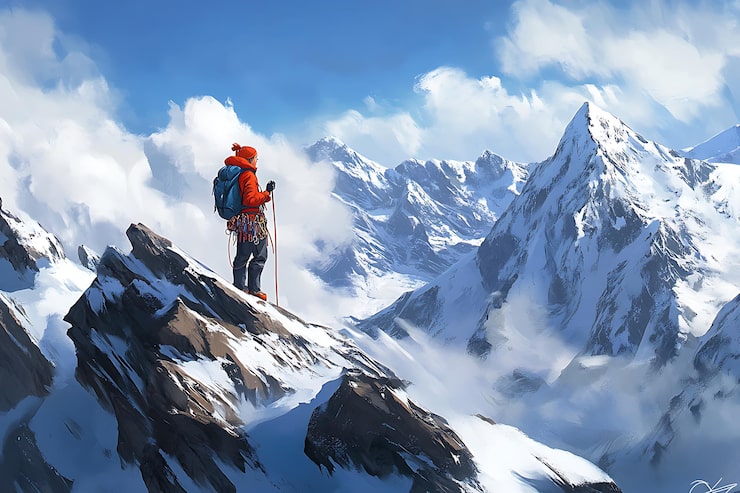
In 2019, the idea of climbing all fourteen eight thousanders in under seven months felt like science fiction. Then someone did it in six months and six days. A few years later, someone else shaved that to 92 days using a stricter rulebook. Speed changed the whole conversation.
This piece follows the speed records, keeping each category separate. It’s a good way to see how the question of how many people have climbed all 14 8000m peaks overlaps with the question of how fast.
Purja’s 2019 Run
Nirmal Purja compressed the public idea of the challenge to six months and six days nirmal purja in 2019. The page notes that run used the record standard then in use, and that it brought the challenge to a much larger public audience.
He used oxygen in 2019, according to the roster. It changed expectations around speed, logistics and coordinated expedition support. That’s why the page says his speed changed the scale of the challenge.
The 92 Day True Summit Record
Kristin Harila and Tenjen Lama Sherpa climbed all 14 true summits in 92 days, from April 26 to July 27, 2023. Guinness treats it as a joint record. They used supplementary oxygen, as listed on the roster.
The page is firm that describing it as Harila’s solo achievement erases the partner who completed every mountain with her. It’s a small point but a valuable one, since the record belongs to both.
Purja’s No Oxygen Cycle
Later, summit verification created different strict categories. Purja responded with correction climbs and a no supplementary oxygen true summit cycle. Guinness lists it at 2 years 150 days, from Kangchenjunga on May 7, 2022 to Shishapangma on October 4, 2024.
Guinness also recorded 49 true summit ascents of 8000ers by Purja through September 25, 2025. That’s a large number, and it shows how much work correction climbs can add.
A Sad Chapter
Purja died after an avalanche struck his Broad Peak expedition on July 30, 2026. Elite Exped confirmed his death on August 1, and his body was later recovered. The page keeps this separate 14 eight thousanders from the roster count and says his records remain part of the chronology.
It’s handled respectfully, and I think that’s right. Accident reporting belongs elsewhere, while the history of what he achieved stays on record.
Other Speed and Age Records
Kim Chang ho is listed as a former fastest no oxygen completion, finishing in 2013. Nima Rinji Sherpa finished at age 18 in October 2024, the youngest on the broad list. The page says October 2024 became one of the most consequential months in all 14 history.
Each of these records sits in its own category. Combining them into one leaderboard would be misleading, so the page keeps oxygen, speed and age separate.
Counting the Finishers
To place speed in context, look at the totals. The broad roster has 77 names, and the strict table has 39 finishers. You can check nimsdai and see how few have done it at all, let alone fast.
Speed attempts are a tiny slice of an already tiny group. That’s a good reminder of how much effort sits behind each name.
What Speed Records Really Show
Fast runs depend on logistics, support teams, weather and permits as much as personal fitness. The page notes that Purja’s project changed expectations around coordinated expedition support.
So a record like 92 days is partly about people and planning, and partly about the climbers’ strength. It shouldn’t be read as the “easy” way, just a different way.
Conclusion
Six months and six days, 92 days, and 2 years 150 days without oxygen are all different records. Keep them separate and the history stays clear. That’s also the best way to answer how many people have climbed all 14 8000m peaks quickly, or at all.
FAQs
Who holds the fastest true summit record?
Kristin Harila and Tenjen Lama Sherpa, in 92 days, jointly.
What is the fastest no oxygen true summit record?
Nirmal Purja’s 2 years 150 days.
How fast was Purja’s 2019 project?
Six months and six days.
How many people have climbed all 14 8000m peaks in total?
77 on the broad roster, and 39 on the strict table.