

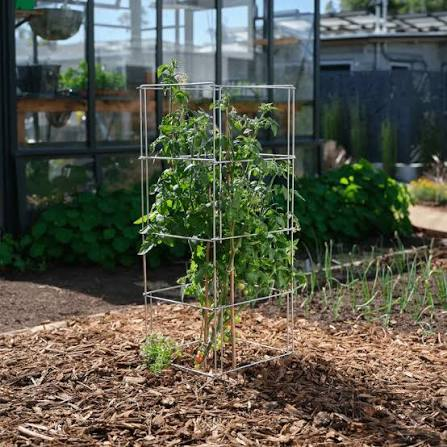
Every summer, the same scene plays out in many gardens. Tomato plants start strong, then grow heavy with fruit, and suddenly those wire cages from the hardware store collapse under the weight. Stakes lean at odd angles, ties snap under pressure, and once-proud plants end up sprawled across the soil where fruit rots and pests move in.
The problem is not the gardener. The problem is equipment that was never designed for vigorous tomato varieties carrying real harvests. For anyone tired of mid-season disasters, heavy duty tomato cages built for real-world conditions make all the difference between frustration and success.
The Problem With Traditional Round Cages
Standard tomato cages look fine on the shelf but fall short in the garden where it matters. Thin wire may bend easily under load. Narrow diameters can crowd mature plants and restrict airflow. Short heights leave the top half of indeterminate varieties with little support.
Most commercial cages top out at three or four feet tall. Meanwhile, healthy tomato plants routinely reach six feet or more by midsummer. Once growth exceeds the cage, stems flop over and fruit contacts the ground, inviting rot, pest damage, and disease that spreads quickly.
Where Square Designs Outperform Round Cages
The flat sides of square tomato cages provide multiple attachment points for ties and clips. The corners add rigidity that prevents the wobbling and collapsing common with circular designs under heavy loads.
Square cages also nest efficiently for off-season storage, a practical benefit for gardeners with limited shed or garage space. And because they stand more stably on flat ground with wider footprints, they resist the tipping that plagues their round counterparts when wind picks up or plants grow top-heavy.
What Makes a Cage Truly Heavy Duty
Not every cage labeled “heavy duty” lives up to the name. Several features separate genuinely sturdy equipment from marketing hype:
- Wire gauge: Lower gauge numbers mean thicker, stronger wire. Look for 10-gauge or heavier for real durability.
- Coating: Powder coating or galvanization prevents rust and extends lifespan significantly.
- Height: Five feet minimum for determinate varieties; six feet or taller for indeterminate types that keep growing.
- Leg length: Longer ground stakes anchor the cage securely against wind and the pulling weight of heavy plants.
- Connection points: Welded joints hold up far better than crimped or simply bent wire under stress.
Heavy duty tomato cages meeting these standards last for many seasons, making them worthwhile investments rather than annual expenses that add up over time.
Matching Cages to Tomato Varieties
Determinate varieties grow to a set height, produce their fruit over a concentrated period, and stop growing. These plants work fine with shorter cages since they stay naturally compact and manageable.
Indeterminate varieties keep growing and producing continuously until frost kills them. These plants need tall, robust support that accommodates ongoing upward growth throughout the entire season.
Square tomato cages in taller configurations handle indeterminate varieties with ease. The extra height and stronger construction match how these productive plants actually grow when given proper care.
Installation Tips for Maximum Stability
Even the sturdiest cage fails if installed poorly. Setting cages at planting time, before roots spread throughout the soil, causes the least disturbance to the plant. Pushing legs deep into the ground creates a stable base that resists movement. In windy areas, adding a stake tied to the cage provides extra anchoring that prevents tipping.
Placing cages after plants have already grown makes installation harder and risks damaging established roots. Planning during transplanting saves effort and protects plants from unnecessary stress.
Supporting Healthy Growth All Season Long
Proper support does more than simply prevent collapse. It keeps foliage off the ground where soil-borne fungal diseases spread most easily. It allows air circulation that discourages mildew and other moisture-related problems. It makes harvesting easier because fruit hangs at accessible heights rather than hiding in tangled masses.
When plants stay upright and organized, spotting problems early becomes much simpler. Pests, yellowing leaves, and developing fruit are all easier to monitor when everything is not tangled together in a heap on the ground.
Getting Tomato Season Right From the Start
Replacing flimsy equipment with heavy duty tomato cages solves problems before they happen. Strong materials, smart design, and proper installation keep plants upright from first flower to final harvest without mid-season interventions.