
Multi-state medical or nursing compacts allow those who are licensed to practise across state lines without the need for regional licences. This is accomplished by setting strict uniform standards such that all clinicians who participate meet the same safety and educational criteria.
While licence portability is made much easier within these compact frameworks, local facility onboarding departments still require strict checks for basic emergency care credentials. Many travel providers mistakenly assume that any online certification will satisfy the criteria set forth by these multi-state regulatory bodies.
To ensure compliance and avoid instant disqualification when crossing member states, professionals must evaluate the validity of receiving a BLS for healthcare providers online in Atlanta, GA.
Key Takeaways
- Compact Framework Realities: Understanding that multi-state licensing does not override individual facility life support mandates.
- The Hands-On Requirement: Why regulatory bodies reject basic life support credentials obtained without physical skills verification.
- Hybrid Educational Models: The approved method of blending web-based coursework with real-world technical assessments.
How To Ensure Digital CPR Credentials Transfer Safely When Practising Across State Lines?
● Understanding That Fully Online Certifications Are a No-Go
A lot of travelling clinicians mistakenly believe that a multi-state compact licence allows them to fully self-manage their continuing education and life support requirements.
But hospital compliance networks universally do not fully accept online courses that rely only on internet-based quizzes and have no in-person physical assessment component.
Official emergency cardiovascular care standards indicate that effective chest compressions and ventilation require physical muscle memory. Therefore, choosing a strictly web-based option will lead to instant non-compliance, showing that clinicians cannot rely on an entirely digital BLS for healthcare providers online in Atlanta, GA.
● Official Blended and Hybrid Learning Platforms
Accredited training centres offer a legitimate, sanctioned option called blended or hybrid learning to accommodate the busy schedules of mobile healthcare workers.
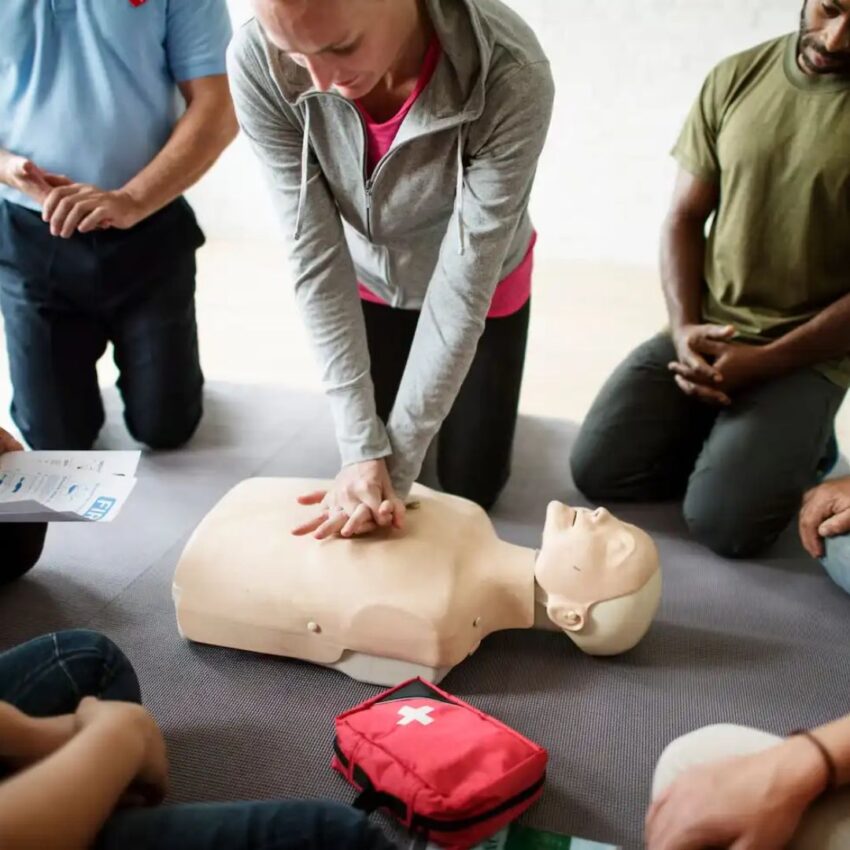
This sanctioned mode allows the theoretical portion of the curriculum to be safely completed on a home computer at an individual’s pace. However, the student must still visit a physical classroom to demonstrate correct compression depth and breathing techniques on a feedback-equipped manikin in front of a certified instructor.
This specific hybrid approach is the only compliant way to leverage the convenience of a BLS for healthcare providers online in Atlanta, GA.
● Confirming the Alignment of the Local Training Entity
When moving between states under a licensing compact, the name recognition of the educational entity issuing the credential becomes paramount. National clinical networks require basic life support credentials to follow the official guidelines established by major national emergency care foundations.
Before registering for any web-based platform, confirming that the local academy possesses a direct tracking alignment with an approved national provider is a vital safety step.
After using hybrid BLS for healthcare providers online in Atlanta, GA, the organisational status verification ensures the smooth transit of the created digital profile among state networks.
Conclusion
Courses offered purely online, without any face-to-face components, are not enough when it comes to contemporary employer evaluations; that’s why hybrid learning models are required to effectively merge convenience with strict regulatory compliance.
Through the use of verified feedback simulators and issuing encrypted, verifiable credentials, educational institutions can guarantee seamless career mobility across state lines.
For medical institutions or corporate settings that, besides traditional resuscitation techniques, emphasise trauma injury management, the integration of a dedicated bleed stop kit in Atlanta, GA, within comprehensive workplace safety instruction establishes a premium emergency readiness benchmark.
Participation in accredited, multi-dimensional safety initiatives maintains professionals’ market competitiveness, regulatory compliance and critical ability to protect community health.