
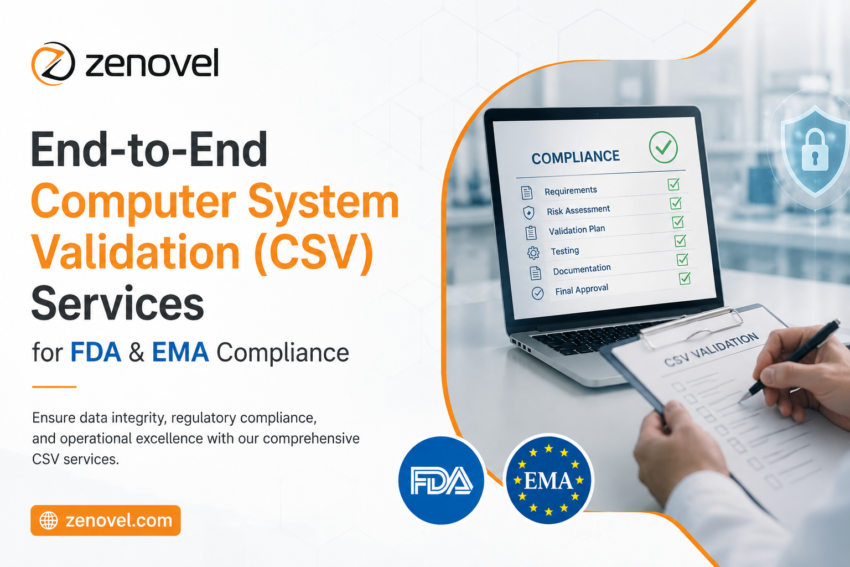
What is Computer System Validation (CSV)?
Computer System Validation (CSV) is a documented process that ensures software systems perform as intended and comply with regulatory standards. In industries regulated by the FDA (Food and Drug Administration) and EMA (European Medicines Agency), CSV confirms that electronic systems—used in production, data management, or quality control—meet rigorous compliance requirements.
Key Components of CSV
- Requirements Specification – Documenting user needs and regulatory expectations.
- Risk Assessment – Identifying potential system failures and their impact on compliance.
- Testing & Verification – Validating that software functions as intended.
- Documentation – Maintaining detailed records to demonstrate compliance during audits.
Ensure your systems meet FDA amp; EMA standards
Contact Zenovel today for expert Computer System Validation (CSV) support and maintain compliance with global regulatory requirements.
👉 Speak With Our CSV Specialists
Why End-to-End CSV is Crucial for Regulatory Compliance
End-to-end CSV ensures that every stage of a system’s lifecycle—from design and development to deployment and maintenance—is validated and compliant. Skipping any stage can lead to audit findings, fines, or even product recalls.
nbsp;Why is CSV required by FDA amp; EMA?
The FDA and EMA require CSV to guarantee data integrity, patient safety, and product quality. Validated systems minimize human error, reduce operational risk, and provide regulatory assurance.
Zenovel’s Role in Ensuring Compliance
Zenovel offers comprehensive end-to-end CSV services, covering everything from initial system assessment to full documentation and audit support. By partnering with Zenovel, companies can reduce compliance risks and streamline validation processes.
Stages of End-to-End Computer System Validation
1. Planning amp; Risk Assessment
The first stage involves defining the scope, objectives, and regulatory requirements. Risk-based approaches prioritize high-impact systems to optimize resources.
Zenovel’s risk assessment framework identifies potential vulnerabilities in your systems, ensuring compliance and efficiency from day one.
2. Requirements amp; Functional Specifications
Clearly documenting system requirements is critical. Functional specifications outline how the system will operate and integrate with existing processes.
3. Validation Testing
Validation testing confirms that the system behaves as intended. Key testing types include:
- Installation Qualification (IQ) – Ensures the system is installed correctly.
- Operational Qualification (OQ) – Confirms that functions operate within specifications.
- Performance Qualification (PQ) – Verifies that the system performs reliably in real-world scenarios.

Read Full article here:https://zenovel.com/end-end-computer-system-validation-csv-services-fda-ema-compliance/