
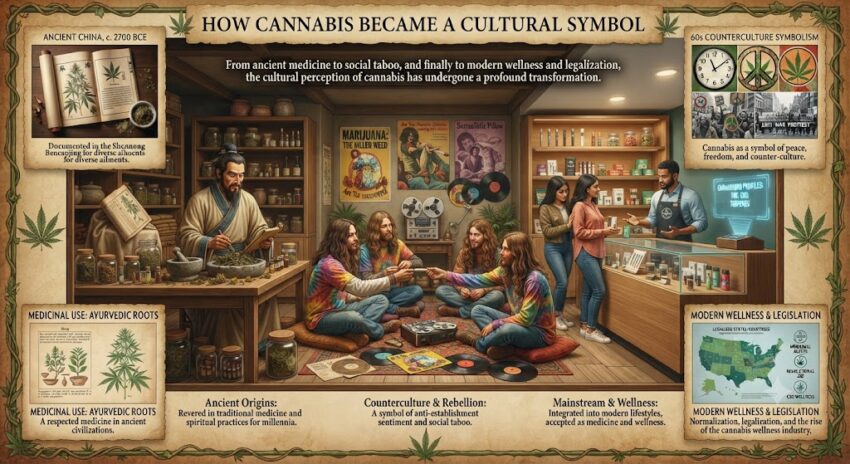
How Cannabis Became a Cultural Symbol
SEO Title
How Cannabis Became a Cultural Symbol: History, Music, Media, and Social Change
Meta Description
Explore how cannabis became a cultural symbol through history, music, art, social movements, media, changing laws, public attitudes, and modern cannabis culture.
Focus Keyword
How Cannabis Became a Cultural Symbol
URL Slug
how-cannabis-became-a-cultural-symbol
Cannabis has developed into a powerful cultural symbol through centuries of agricultural use, traditional practices, social movements, music, art, political debates, and changing public attitudes. Its meaning has differed considerably between societies and historical periods.
For some communities, cannabis has represented agriculture and traditional plant knowledge. In modern history, it became associated with counterculture, creativity, political activism, and debates about personal freedom. Today, cannabis culture is also connected with scientific research, regulated businesses, consumer education, and changing social attitudes.
Understanding how cannabis became a cultural symbol requires looking at the many historical influences that shaped its public image.
Cannabis as an Ancient Agricultural Plant
Long before cannabis became a modern cultural symbol, communities valued it as an agricultural resource.
Hemp was cultivated for materials such as:
-
Fiber
-
Rope
-
Textiles
-
Seeds
-
Oil
-
Paper-related materials
Its practical value helped establish cannabis as an important plant across different regions.
Cannabis and Traditional Cultural Practices
Cannabis also became part of traditional practices in several societies.
Historical uses varied significantly and could involve:
-
Herbal preparations
-
Cultural traditions
-
Community practices
-
Agricultural knowledge
-
Plant-based materials
These traditions contributed to the diverse cultural history surrounding cannabis.
Cannabis and Cultural Exchange
Trade and migration helped spread cannabis cultivation and knowledge across regions.
As communities interacted, they exchanged:
-
Seeds
-
Agricultural techniques
-
Preparation methods
-
Botanical knowledge
-
Cultural traditions
This movement helped create different regional interpretations of cannabis.
The Influence of Prohibition
Cannabis prohibition changed its cultural meaning dramatically in many countries.
As governments introduced stricter laws, cannabis became increasingly associated with:
-
Criminal law
-
Drug policy
-
Enforcement
-
Social controversy
-
Political debate
The contrast between legal restrictions and existing cultural practices helped make cannabis a subject of public discussion.
Cannabis and Counterculture
During the 20th century, cannabis became closely associated with counterculture movements in parts of the world.
For some communities, cannabis represented:
-
Rebellion
-
Individual expression
-
Opposition to established norms
-
Social change
-
Alternative lifestyles
This association helped transform cannabis from an agricultural and botanical subject into a broader cultural symbol.
Cannabis and Music
Music played a major role in shaping modern cannabis culture.
Cannabis became associated with various music communities and genres, where it sometimes appeared alongside themes involving:
-
Creativity
-
Freedom
-
Social gatherings
-
Personal expression
-
Cultural experimentation
Musicians and music communities helped introduce cannabis-related imagery and language to wider audiences.
Cannabis in Art and Literature
Artists and writers have also contributed to cannabis culture.
Cannabis has appeared in:
-
Paintings
-
Posters
-
Photography
-
Poetry
-
Literature
-
Graphic design
These creative representations helped establish recognizable visual and literary associations with cannabis.
Cannabis in Film and Television
Popular entertainment has had a major influence on public perceptions.
Film and television have portrayed cannabis through:
-
Comedy
-
Drama
-
Counterculture stories
-
Social commentary
-
Political discussions
Some portrayals reinforced stereotypes, while others presented more nuanced perspectives.
Cannabis and Political Activism
Cannabis became an important symbol within some political and social reform movements.
Activists advocated for changes involving:
-
Criminal justice
-
Medical access
-
Personal freedom
-
Scientific research
-
Legal reform
Political activism helped move cannabis from a cultural subject into broader public policy discussions.
Cannabis and the Medical Reform Movement
The growth of medical cannabis advocacy introduced another cultural dimension.
Patients, researchers, and advocacy groups increasingly discussed cannabis in relation to:
-
Medical research
-
Patient access
-
Regulation
-
Healthcare policy
-
Scientific evidence
This helped challenge the idea that cannabis could only be discussed through criminal or recreational contexts.
Cannabis Legalization and Cultural Change
Legalization in some jurisdictions created new forms of cannabis culture.
Regulated markets introduced:
-
Licensed retailers
-
Product testing
-
Consumer education
-
Professional businesses
-
Legal product categories
Cannabis became increasingly visible as a regulated commercial industry rather than only a subject of prohibition.
Cannabis as a Modern Lifestyle Symbol
Modern cannabis culture can involve a wide range of interests and identities.
Contemporary discussions may focus on:
-
Product preferences
-
Education
-
Wellness conversations
-
Food and beverages
-
Art and design
-
Technology
-
Sustainability
These developments have made cannabis culture more diverse than the counterculture image associated with earlier decades.
The Role of Cannabis Branding
Legal cannabis businesses have contributed to new forms of cultural expression.
Brands may use:
-
Distinctive packaging
-
Educational content
-
Modern design
-
Lifestyle-oriented marketing
-
Community engagement
Regulations, however, can restrict how cannabis products are marketed and advertised in different jurisdictions.
Cannabis and Consumer Education
Education is becoming an important part of modern cannabis culture.
Consumers increasingly encounter information about:
-
Cannabinoids
-
Terpenes
-
Product formats
-
Potency
-
Laboratory testing
-
Product labels
-
Responsible use
This educational focus is helping create a more information-oriented cannabis culture.
Cannabis and Scientific Research
Scientific research is also changing the way cannabis is discussed.
Researchers study areas including:
-
Plant genetics
-
Cannabinoid chemistry
-
Pharmacology
-
Product safety
-
Cultivation
-
Public health
As scientific knowledge expands, cultural conversations increasingly include evidence alongside personal experiences and historical traditions.
Cannabis and Social Media
Digital platforms have accelerated the spread of cannabis-related information and cultural content.
Online communities can share:
-
Educational resources
-
Product discussions
-
Cultural commentary
-
Industry news
-
Creative content
However, information quality can vary considerably online, making reliable sources important.
Changing Public Perceptions
Cannabis is no longer viewed in exactly the same way it was several decades ago.
Public attitudes have been influenced by:
-
Legal reforms
-
Scientific research
-
Generational changes
-
Media coverage
-
Personal experiences
-
Consumer education
Acceptance has increased in some communities, while significant disagreement and stigma remain in others.
Cannabis as a Symbol of Social Change
Cannabis has become a symbol of broader social debates involving:
-
Individual freedom
-
Public health
-
Criminal justice
-
Regulation
-
Cultural identity
-
Social reform
Its symbolic meaning continues to change as societies reconsider cannabis policies and traditions.
The Future of Cannabis Culture
Future cannabis culture may be shaped by:
-
Scientific discoveries
-
New technologies
-
Legal developments
-
Consumer expectations
-
Sustainability
-
Global cultural exchange
As the industry evolves, cannabis may become increasingly associated with research, regulated commerce, innovation, and education alongside its historical cultural meanings.
Weed Roads
For consumers looking for quality cannabis products, Weed Roads focuses on quality, transparency, and customer education. As cannabis continues to evolve as a cultural and commercial subject, access to clear product information can help consumers better understand the changing landscape.
Conclusion
Cannabis became a cultural symbol through a long combination of agricultural traditions, cultural exchange, prohibition, counterculture, music, art, political activism, medical reform, and changing public attitudes.
Its meaning has never been completely uniform. Different societies and generations have interpreted cannabis in different ways, and modern legalization and scientific research are creating additional cultural associations.
Today, cannabis culture includes historical traditions, creative expression, political discussions, scientific research, regulated commerce, and consumer education. Its cultural significance will likely continue evolving as laws, research, technology, and public attitudes change.
#CannabisCulture
#CannabisHistory
#CannabisEducation
#CannabisResearch
#CannabisIndustry