
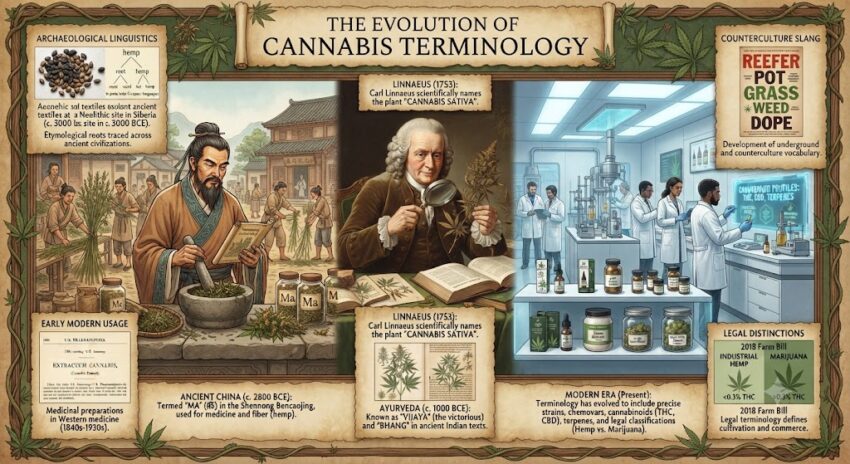
The Evolution of Cannabis Terminology
SEO Title
The Evolution of Cannabis Terminology: How Cannabis Language Has Changed Over Time
Meta Description
Explore the evolution of cannabis terminology, including historical names, scientific terms, cultural language, industry vocabulary, labeling, and modern cannabis education.
Focus Keyword
The Evolution of Cannabis Terminology
URL Slug
the-evolution-of-cannabis-terminology
Cannabis has been described using many different names and terms throughout history. The language surrounding the plant has changed alongside agriculture, traditional practices, scientific research, government policies, popular culture, and the development of regulated markets.
Understanding the evolution of cannabis terminology helps explain why different words can carry different historical, scientific, cultural, or legal meanings. Modern consumers and industry professionals also encounter specialized terminology related to cannabinoids, plant varieties, product formats, cultivation, testing, and regulations.
Early Names for Cannabis
Cannabis has been known by different names across languages and regions for centuries.
Historical terminology developed through:
-
Local languages
-
Trade networks
-
Traditional practices
-
Agricultural communities
-
Botanical descriptions
Different names did not always refer to exactly the same preparation or use, making historical terminology difficult to interpret without cultural context.
The Term Cannabis
The word “cannabis” has ancient linguistic roots and became increasingly important in botanical and scientific classification.
Modern scientific usage generally refers to the plant and its associated materials, while the exact meaning can depend on the legal or technical context in which the word is used.
Today, cannabis is widely used as a neutral botanical and industry term.
The Development of the Term Hemp
“Hemp” became strongly associated with cannabis cultivated for industrial purposes.
Historically, hemp was valued for materials such as:
-
Fiber
-
Rope
-
Textiles
-
Seeds
-
Oil
-
Paper-related products
Modern legal definitions of hemp can differ by jurisdiction, so the word may have both agricultural and regulatory meanings.
The Term Marijuana
The term “marijuana” became prominent in the United States during the 20th century.
Its history is connected to changing social attitudes, political campaigns, media language, and cannabis prohibition.
Today, some organizations and publications prefer “cannabis” because they consider it more neutral, while “marijuana” remains common in legal, historical, and everyday contexts.
Common Informal Terms
Cannabis has also developed numerous informal names.
Terms such as:
-
Weed
-
Pot
-
Grass
-
Herb
-
Bud
have appeared in different cultural and historical contexts.
Their meanings and popularity have changed over time, particularly through music, entertainment, social groups, and popular culture.
Scientific Cannabis Terminology
Scientific research introduced a more precise vocabulary.
Researchers began using specialized terms to describe:
-
Cannabinoids
-
Terpenes
-
Plant chemistry
-
Receptors
-
Extracts
-
Chemical compounds
This scientific language helped distinguish specific substances and properties from broader cultural descriptions.
Cannabinoid Terminology
The word “cannabinoid” refers broadly to compounds that interact with cannabinoid-related biological systems.
Modern cannabis discussions frequently mention compounds such as:
-
THC
-
CBD
-
CBG
-
CBC
-
CBN
Researchers continue studying the chemistry and biological activity of these and other compounds.
THC and CBD
THC and CBD have become two of the most recognizable terms in modern cannabis discussions.
THC is commonly associated with the intoxicating effects of cannabis, while CBD is generally described as non-intoxicating.
The growing use of these terms reflects the increasing influence of scientific research on consumer and industry language.
The Rise of Terpene Terminology
Terpenes have also become common in modern cannabis vocabulary.
These naturally occurring plant compounds are associated with the aromas and flavors of many plants, including cannabis.
Modern product discussions may refer to individual terpenes such as:
-
Myrcene
-
Limonene
-
Pinene
-
Linalool
-
Caryophyllene
Research into cannabis terpene profiles continues to develop.
Indica, Sativa, and Hybrid
The terms “indica,” “sativa,” and “hybrid” are widely used in cannabis commerce and popular culture.
Retailers and consumers often use these terms to describe different product or plant categories.
However, modern scientific discussions recognize that these labels do not always capture the full genetic and chemical complexity of cannabis varieties.
Cannabis Strain Terminology
The word “strain” is commonly used in consumer cannabis culture.
People may use it to distinguish named cannabis varieties with different characteristics.
In scientific and agricultural contexts, terms such as “cultivar” may be more precise when referring to cultivated plant varieties.
Cultivar as a Modern Term
“Cultivar” is increasingly used in professional cannabis and horticultural discussions.
It refers to a cultivated plant variety maintained for particular characteristics.
The term can be useful when discussing:
-
Genetics
-
Cultivation
-
Plant selection
-
Breeding
-
Agricultural traits
Product Terminology
As regulated markets developed, cannabis vocabulary expanded to describe different product formats.
Modern terms can include:
-
Flower
-
Pre-rolls
-
Concentrates
-
Extracts
-
Edibles
-
Beverages
-
Capsules
-
Topicals
These terms help distinguish products according to their physical format and intended method of use.
Extraction Terminology
Cannabis processing introduced additional technical vocabulary.
Industry and laboratory discussions may include terms such as:
-
Extract
-
Distillate
-
Tincture
-
Solvent extraction
-
Solventless extraction
-
Concentrate
The exact definitions and legal treatment of these products can vary between jurisdictions.
Potency and Laboratory Terminology
Modern regulated markets increasingly use laboratory-based terminology.
Consumers may encounter terms involving:
-
Cannabinoid concentration
-
THC content
-
CBD content
-
Terpene profiles
-
Contaminant testing
-
Certificates of analysis
This terminology reflects the growing role of standardized testing in regulated cannabis markets.
Packaging and Labeling Language
Regulated cannabis products may use specialized labeling terms required by local authorities.
Labels can provide information about:
-
Product contents
-
Cannabinoid concentrations
-
Ingredients
-
Batch information
-
Testing
-
Warnings
-
Manufacturing information
Requirements differ significantly between jurisdictions.
Cannabis Terminology and Legal Definitions
Legal language can differ from scientific and everyday terminology.
For example, the legal definitions of “hemp,” “cannabis,” and cannabis-derived products may vary depending on the jurisdiction.
Consumers and businesses should therefore check applicable laws rather than relying solely on common terminology.
How Popular Culture Changed Cannabis Language
Music, film, television, literature, and social media have introduced cannabis terminology to wider audiences.
Popular culture has helped spread:
-
Slang
-
Product names
-
Cultural expressions
-
Informal descriptions
-
Industry vocabulary
Some terms have remained popular for decades, while others have disappeared or changed meaning.
The Shift Toward More Precise Language
Modern cannabis education increasingly favors specific terminology.
Instead of using broad descriptions, professionals may distinguish between:
-
Plant species and cultivated varieties
-
Cannabinoids
-
Terpenes
-
Product formats
-
Chemical concentrations
-
Testing results
This shift makes cannabis discussions more precise and easier to evaluate.
Why Cannabis Terminology Matters
Understanding terminology can help consumers interpret information more effectively.
Clear language can help people distinguish between:
-
Scientific evidence
-
Historical terminology
-
Marketing language
-
Informal slang
-
Legal definitions
-
Product descriptions
This is particularly important as cannabis markets become more regulated and information becomes more technical.
The Future of Cannabis Language
Cannabis terminology will likely continue evolving as research and technology advance.
Future vocabulary may develop around:
-
New cannabinoids
-
Advanced testing
-
Plant genetics
-
Precision cultivation
-
Novel product formats
-
Digital product tracking
-
Manufacturing technology
As the industry matures, terminology may become increasingly standardized across scientific, agricultural, commercial, and regulatory settings.
Weed Roads
For consumers looking for quality cannabis products, Weed Roads focuses on quality, transparency, and customer education. Understanding cannabis terminology can help consumers better interpret product descriptions, labels, testing information, and educational resources.
Conclusion
The evolution of cannabis terminology reflects the plant’s changing place in agriculture, science, culture, law, and commerce. Historical names and informal slang developed alongside regional traditions, while modern research introduced increasingly precise scientific vocabulary.
Terms such as cannabis, hemp, marijuana, cannabinoids, terpenes, cultivars, extracts, and product categories now appear across different parts of the industry. Understanding how these terms developed can help consumers and professionals communicate more clearly and evaluate cannabis information with greater context.
#CannabisTerminology
#CannabisEducation
#CannabisHistory
#CannabisResearch
#CannabisIndustry