
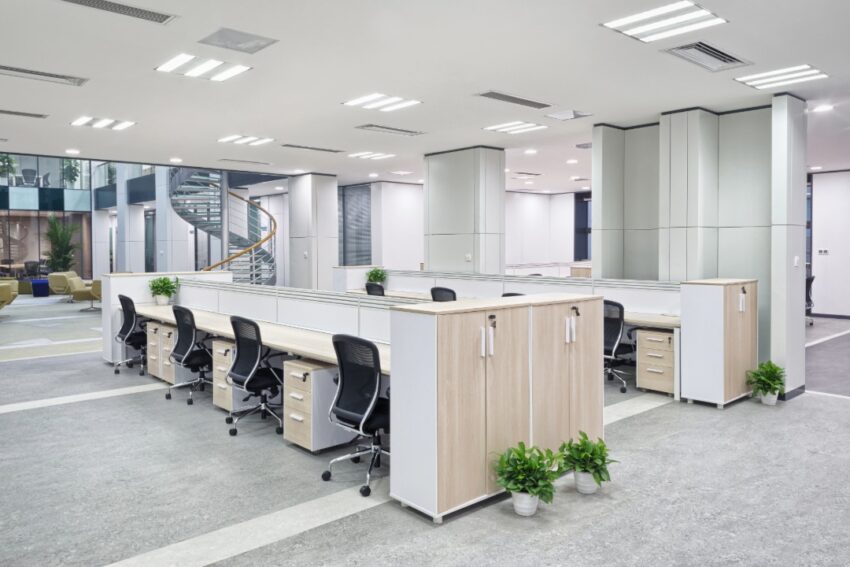
Working from home requires more than simply placing a desk and chair in an available corner. A well-designed home office should support concentration, comfort, organization, technology, and a healthy separation between professional and personal activities. Home office design solutions combine furniture, storage, lighting, ergonomics, and space planning to create a workspace that fits naturally into the home.
Many Office Interior Design Trends can also be adapted for residential workspaces, including ergonomic furniture, flexible layouts, integrated storage, layered lighting, acoustic considerations, and technology-friendly planning. Current 2026 home-office guidance emphasizes ergonomics, lighting, power and data planning, privacy, storage, and clear boundaries between work and rest.
Choosing the Right Location
The location of a home office has a major influence on its functionality. A dedicated room is ideal, but it is not always necessary. A quiet bedroom corner, living-room nook, hallway, or carefully planned cabinet workspace can also work effectively.
The desk should ideally be positioned where natural light is useful without creating screen glare. Separating the workspace from high-traffic household areas can also reduce distractions.
Ergonomic Furniture
Comfort should be a priority when designing a workspace used for several hours a day. A suitable desk and ergonomic chair can support a more comfortable working position.
The desk should provide adequate space for a computer, monitor, documents, and everyday accessories. Adjustable chairs, appropriate monitor positioning, and laptop stands can help create a more practical setup. Current home-office guidance specifically highlights desk and chair ergonomics as fundamental components of a productive workspace.
Smart Storage Solutions
Storage helps keep work materials organized and prevents the office from becoming visually cluttered. Depending on the available space, homeowners can use:
- Full-height cabinets
- Floating shelves
- Under-desk drawers
- Bookcases
- Filing cabinets
- Wall-mounted organizers
- Concealed storage units
Vertical storage can be especially useful in compact homes because it increases capacity without consuming additional floor space.
Compact Home Office Solutions
Not every home has a separate study room. Compact solutions can transform an unused corner into a functional workstation.
A wall-mounted desk, foldable table, built-in cabinet desk, or narrow workstation can provide a dedicated work surface while preserving floor space. A foldaway cabinet desk can even be closed after working hours, helping visually separate work from the rest of the home.
Lighting for Better Functionality
Lighting should be planned as an essential part of the home office rather than an afterthought. A combination of ambient and task lighting can provide suitable illumination for different activities.
A desk lamp can provide focused light for reading and writing, while ceiling or wall lighting can illuminate the wider room. Natural light can also be incorporated where possible, but the desk position should be planned to minimize glare and reflections on screens.
Technology and Cable Management
Modern home offices often contain laptops, monitors, printers, routers, chargers, speakers, and other equipment. Poor cable management can quickly make a workspace look untidy.
Power points and data connections should therefore be considered during the design stage. Cable trays, concealed channels, desk grommets, and integrated charging points can help maintain a cleaner setup. Current Indian home-office guidance also recommends planning power and data requirements as part of the workspace design.
Creating a Clutter-Free Workspace
A clean workspace can make everyday work more organized. Frequently used items should remain accessible, while documents, stationery, and equipment that are not used regularly can be stored away.
Closed cabinets can conceal visual clutter, while open shelves can be reserved for books, plants, artwork, or selected decorative objects. This creates a balance between practicality and personalization.
Acoustic Considerations
Noise can be challenging when a home office shares space with other household activities. Soft furnishings, curtains, rugs, bookshelves, and appropriate partitions can help manage sound within the room.
For video calls, the position of the desk and background should also be considered. A clean, organized background can create a more professional appearance without requiring elaborate decoration.
Flexible Furniture
A home office may need to serve multiple purposes. For example, the same room may function as a study, guest room, hobby area, or family workspace.
Modular desks, movable storage, foldable furniture, and multifunctional cabinetry can make the room easier to adapt. Flexible furniture is particularly useful in apartments where every room may need to perform more than one function.
Colours and Materials
The color palette and materials should complement the overall home interior. Neutral tones, natural wood finishes, soft textures, and subtle accent colors can create a comfortable environment without making the room visually overwhelming.
Materials should also be selected for durability and maintenance. Laminates, veneer, engineered boards, and other furniture finishes can be used according to the design style and budget.
Personalized Design
A home office should reflect the person using it. Bookshelves, artwork, plants, display objects, photographs, or a preferred color palette can add personality while maintaining functionality.
Recent home-office design guidance also highlights the value of combining practical work requirements with personal style, rather than treating the office as a purely functional room.
Professional Home Office Planning
Professional designers can coordinate furniture dimensions, storage, lighting, electrical requirements, materials, and room aesthetics into one cohesive plan.
This is particularly useful when a home office requires custom cabinetry or needs to fit into a small or irregular space. Professional planning can help make better use of available dimensions while maintaining a comfortable workflow.
Why Choose Home Office Design Solutions?
Home office design solutions can transform an ordinary corner or spare room into a practical and comfortable workspace. From ergonomic furniture and efficient storage to lighting, technology integration, acoustics, and flexible layouts, each element contributes to the overall usability of the office.
The objective is to create a workspace that supports professional activities while still fitting naturally into the home’s design.
Conclusion
A successful home office should balance comfort, productivity, organization, aesthetics, and flexibility. The right desk and chair, efficient storage, appropriate lighting, technology planning, cable management, and personalized details can create a workspace that is practical for everyday use.
With thoughtful home office design solutions, even a compact corner can become a well-organized and comfortable professional environment. By adapting relevant office design principles to the home, homeowners can create workspaces that support focused work while maintaining harmony with the rest of the interior.